This past week we looked at an example of two different masonry walls that are joined together. They weren’t actually intentionally built to be connected but since they were touching, they needed to be shielded to protect the exterior elements from entering into the space between them. This problem is very common, especially here in Washington DC where there are many examples of newer buildings in direct contact with historic masonry walls. That condition can be problematic if the buildings are not intrinsically joined or interlocked together by reworking the construction of the original older building.
Reworking the construction generally requires toothing in the new masonry to the old. The toothing-in process requires demolishing alternating sections of bricks or brick work. In some cases when the new building is being built with bricks of a similar size, the alternating bricks of the old building can be removed at the edge. Then the bricks of the same size of the new building can be set, one by one, in alternating courses running upwards throughout the joint at the facade. It’s very tedious and expensive work because it requires a high level of attention to detail. The work has to be done by hand and cannot be automated.
Even as building systems begin to be executed by robots in our future, this is one detail that will take extreme technological advancement to be able to be executed by something other than a skilled set of human hands. We generally think of the repointing process as a tedious and laborious process. The toothing in process of individual bricks is actually more complex.
Historic brick repointing is necessary for a wide range of historic masonry buildings. This type of interlocking joinery between buildings is only rarely needed though.
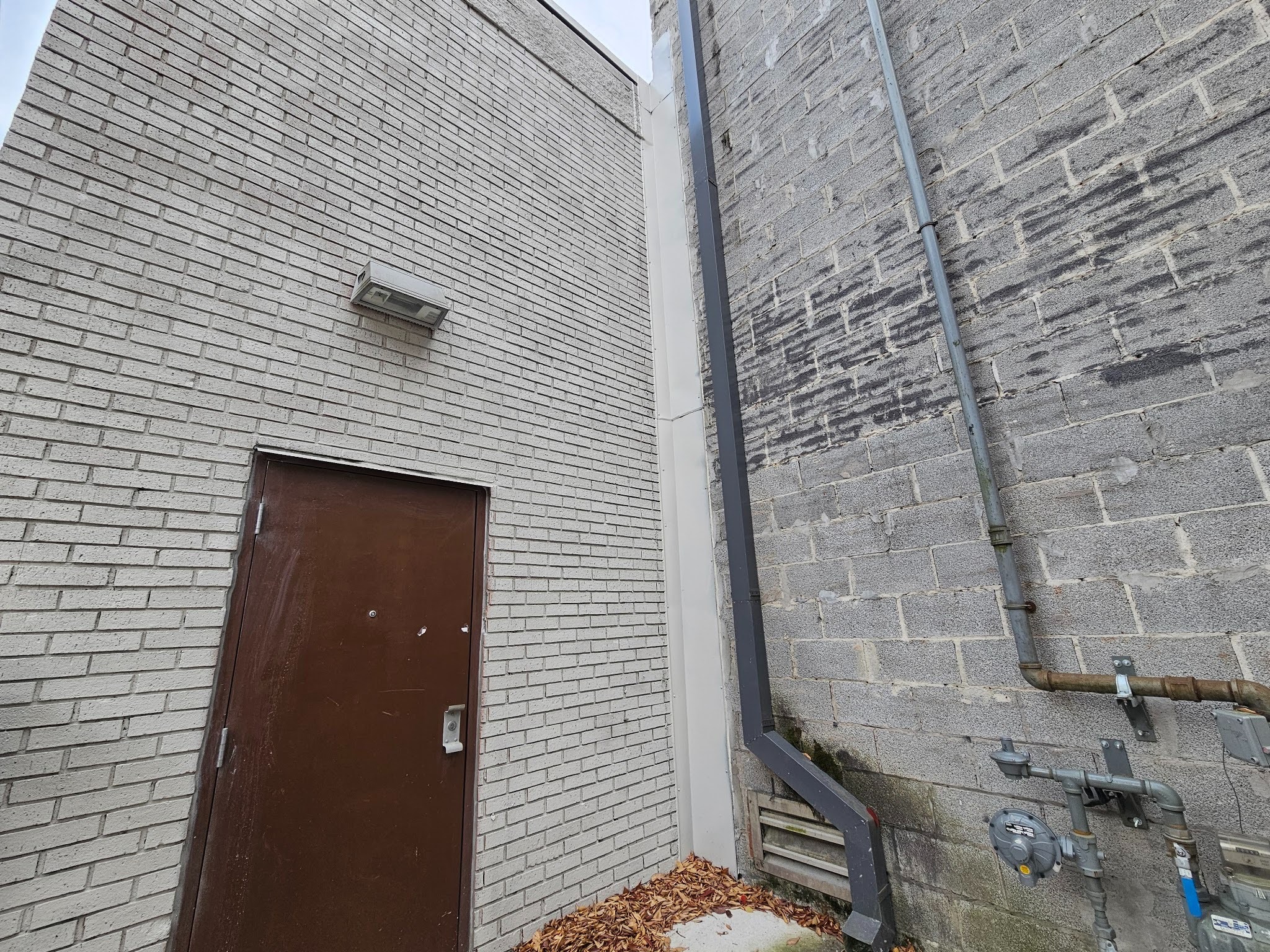
Here, in the next picture below, you can see a different angle of the same aluminum flashing that we looked at this past week. We mentioned, this past week, that this installation has some inherent weaknesses or flaws. One of the problems is that although it can help to keep water out, moisture will still get into that space. As the moisture gets in there it doesn’t have an easy way out now.
Even without the aluminum flashing spanning and covering on top of the opening between the walls, it would be difficult for moisture and water to relieve itself because it’s largely enshrouded or enclosed inside that trapped interstitial space. Now with the covering on it though it’s even more enclosed.
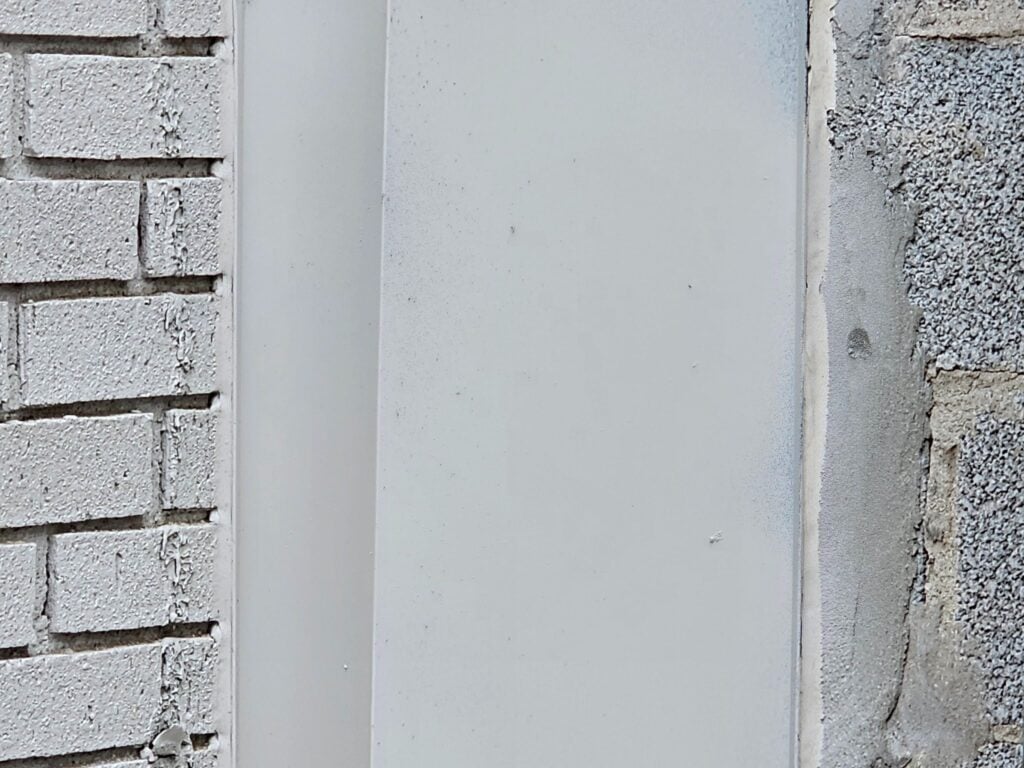
As we mentioned above, moisture can still get into that space. Even though the aluminum is working like a shield that deters rainwater from getting in from the outside, water can still make its way there. There are many different phenomenons in masonry that can lead to deterioration and damage. One of the common ways for moisture to enter into masonry, other than from the vertical facade, is from rising damp at the foundation.
Rising damp is a phenomenon where moisture will be wicked upwards through a mechanism inherent in masonry called capillary action. There’s a couple fundamental details of the nature of masonry that have to be understood to understand the bigger concept.
First, although masonry has varying degrees of porosity, depending on the exact type of masonry, you should generally assume that masonry has at least a degree of porosity. An extreme perspective, in understanding porosity, would be to look at masonry like a sponge. A sponge is filled with near limitless holes. Those holes, through a similar type of capillary action will absorb water. If you put a sponge on top of a tiny puddle of water, the sponge will suck the water upwards.
Bricks are hard and sponges are soft so they seem very different, but bricks actually do the same thing. They don’t do it to the same extent, nor they do they do it nearly as fast. Overtime though with exposure to precipitation and moisture masonry will absorb water. The problem with rising damp is that masonry will absorb water from the ground, below the actual building. The foundations of many of our historic buildings are built with masonry.
Today, the construction is similar but slightly different. Often, in most cases today, building footings will be built with cast in place concrete. Cast in place concrete has an even lower degree of porosity, but by itself is not completely watertight. Advanced synthetic roll and even fluid applied membranes can be applied to footings and building foundations today to limit the amount of subgrade absorption, but inherently, even hard concrete still has a degree of porosity. Historic buildings had even higher degrees of porosity. Especially with low temperature fired clay bricks and comparatively much softer lime mortar, historic buildings had much higher porosity.
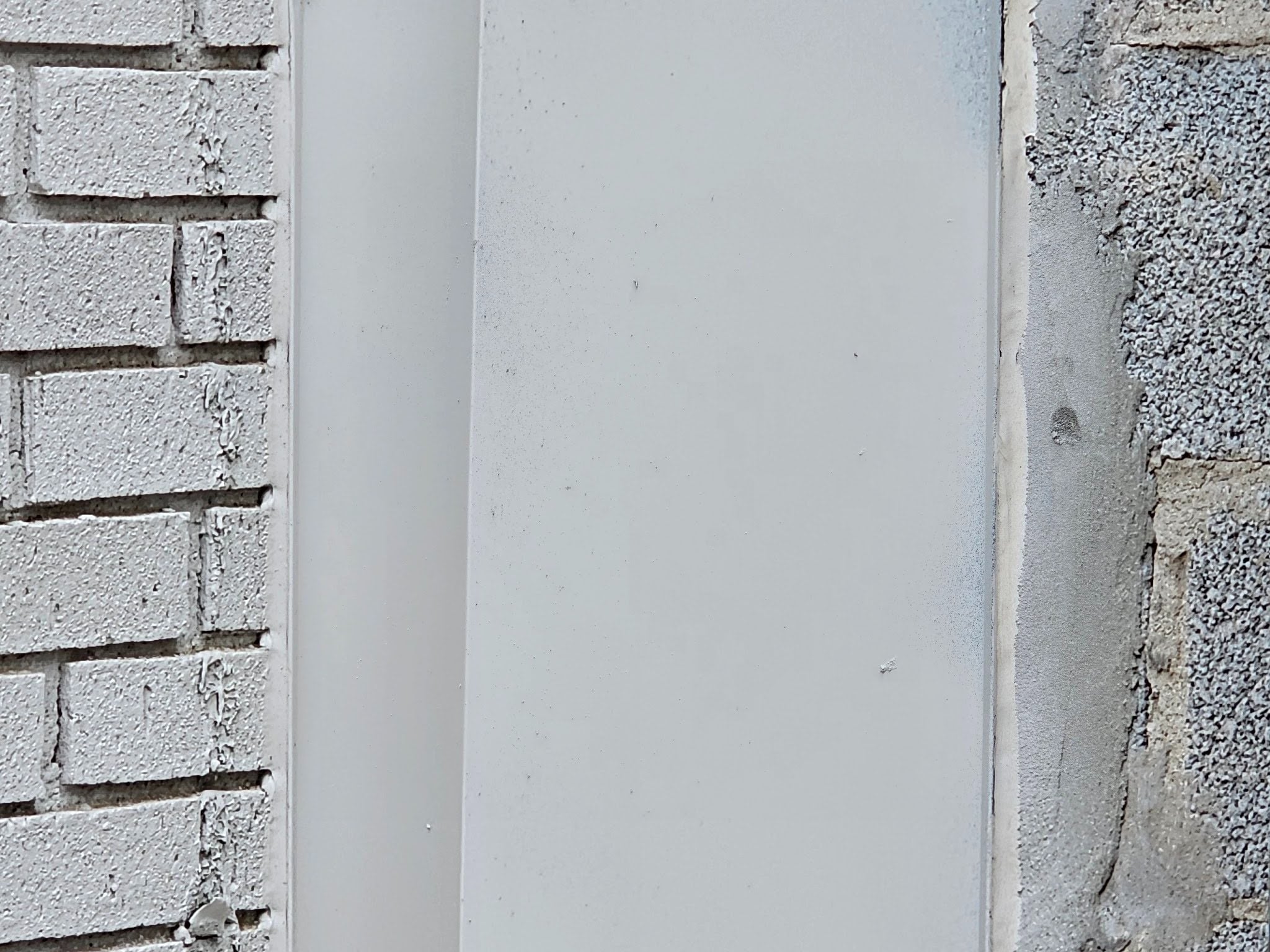
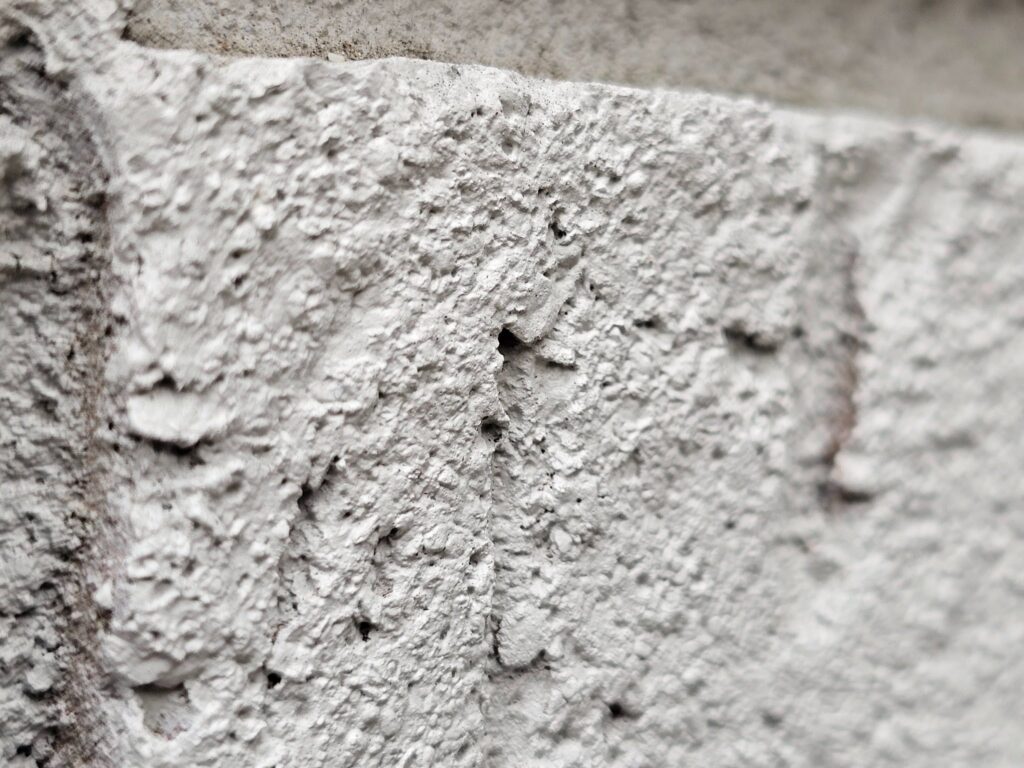
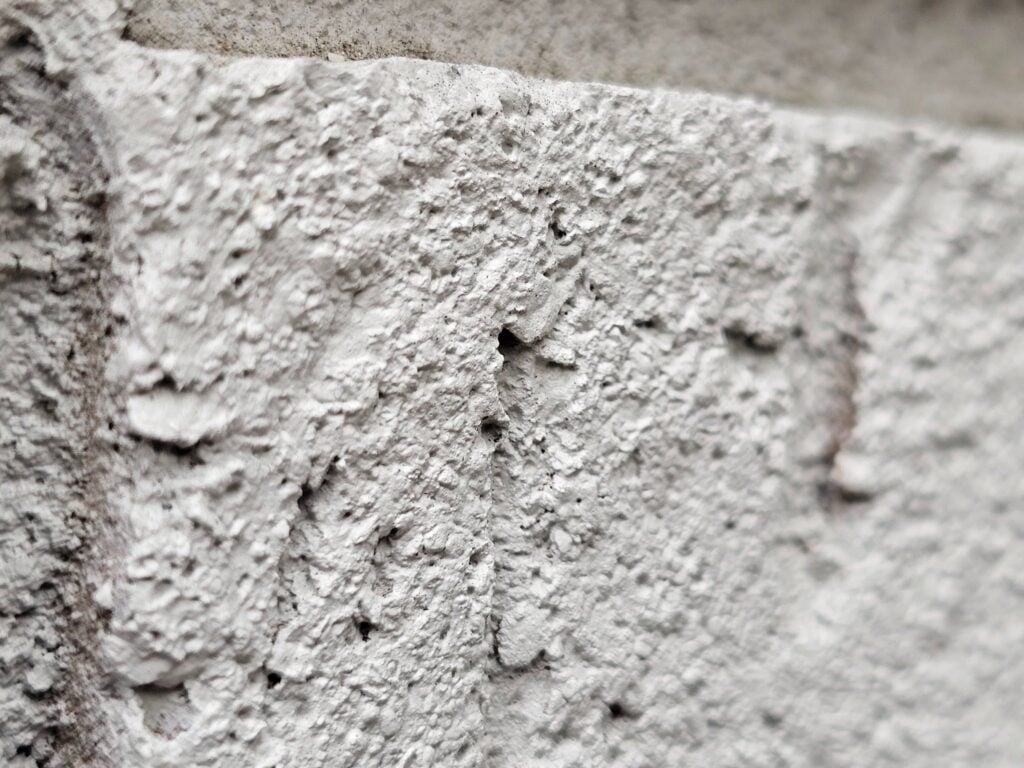
The picture below shows the vertical face of the cinder block wall. Cinder blocks are generally made with Portland cement which has much lower absorption coefficients. Nonetheless, by the nature of CMU / cinder blocks, there is still a significant degree of porosity that leads to absorption.
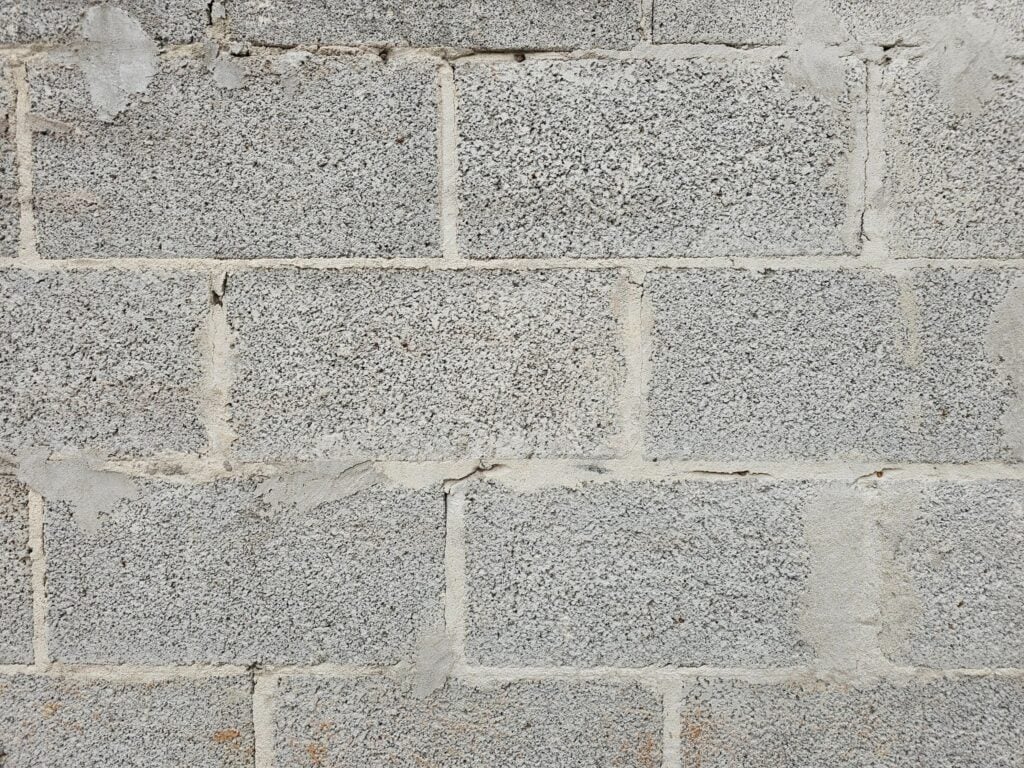
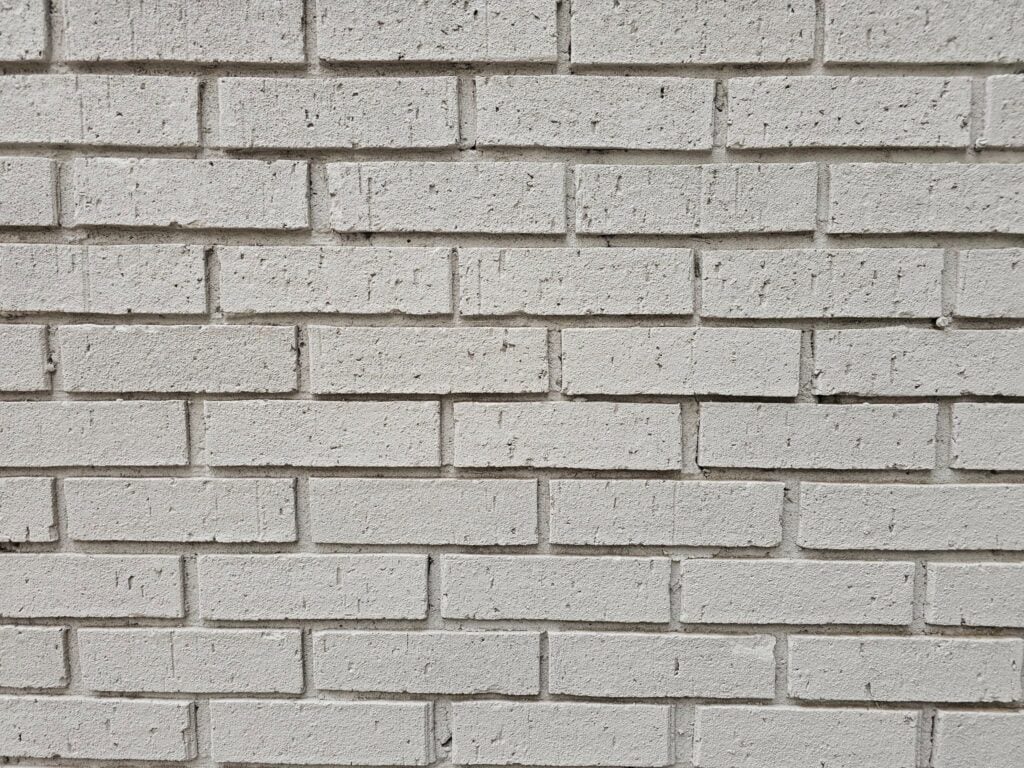
The same condition, as we explained above, applies to historic masonry. As that water absorbs upwards through rising damp accelerated by capillary action, the interstitial space between the different building envelopes becomes excessively hydrated. That excessive hydration then leads to destruction of the masonry. These conditions and processes can take many years, even many decades. Nonetheless, it leads to problems on the interior of the building in the meantime and eventually leads to accelerated deterioration of the building assemblies. Without this type of water moisture problem, these masonry buildings can almost last indefinitely.
Since our company, Dupont Tuckpointing and Masonry, specializes in masonry restoration, historic brick repointing, and tuckpointing services in the Washington D.C. area, we make it a point to study these types of issues. These buildings are uniquely historic, and their preservation requires skilled masons who are technically trained in the best practices and knowledge of proper restoration techniques.
We understand the significance of maintaining the architectural integrity of these historic structures, and our team of experienced professionals is dedicated to delivering exceptional craftsmanship. Whether you require masonry restoration, tuckpointing, or brick repointing services, we are here to help.
At Dupont Tuckpointing and Masonry, we take pride in our work and strive to ensure that every project is executed with the utmost care and attention to detail. We are committed to preserving the rich heritage of Washington D.C.’s built environment for generations to come.
If you have any questions or needs regarding masonry restoration, historic brick repointing, or tuckpointing services, please do not hesitate to reach out to us. We would be delighted to assist you and provide you with the expertise and quality workmanship that your historic property deserves.
You can reach us by telephone at (202) 796-7644 and you can reach us by email from the contact form on our website.