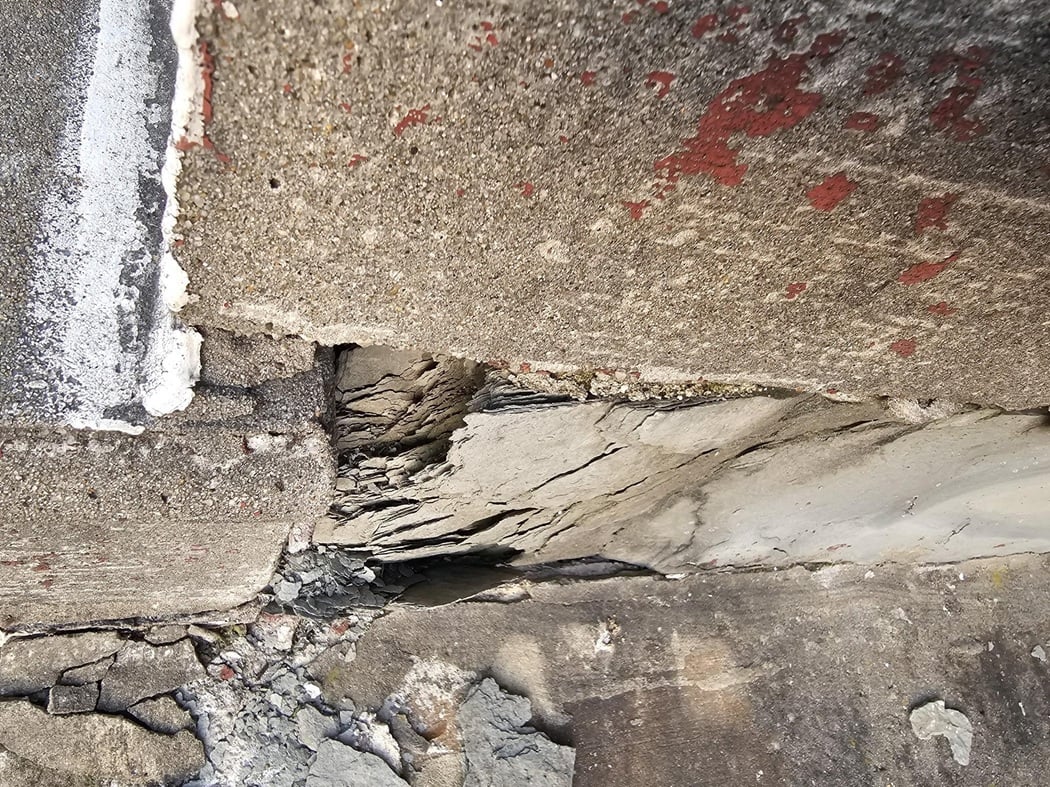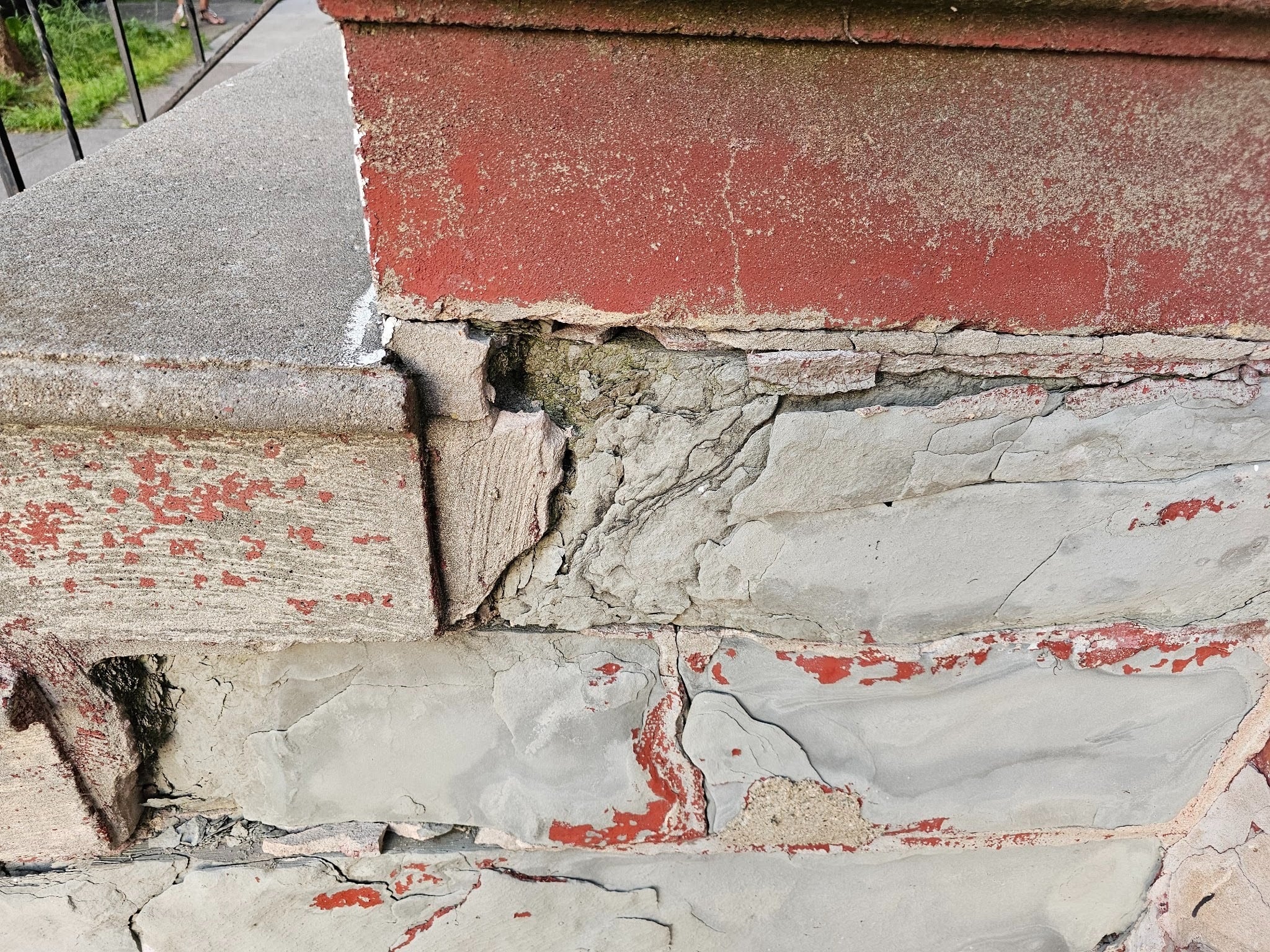
This past week, we began looking at the sides of the stoop and stairway at the front of a historic brick masonry building. We also took a look at the treads and risers which are built with concrete. At a quick glance, it may look like they’re actually built with stone. You can see some variation because the aggregate within the concrete has become exposed. Essentially the top surface and vertical surface of the risers has worn off at the outer face of the exposed concrete.
This past week we discussed several different types of deterioration or slow damage that happens to masonry, naturally, over time. When exposed to typical exterior elements, these materials slowly break down. We discussed how water infiltration leads to dissolution and how freeze-thaw cycles can forcibly break elements of masonry apart. This applies not just to stone masonry, but also to concrete and brick masonry as well. We also talked about issues of subforescence related to dissolution and crystallization which is a type of recombination of the elements of masonry after breaking down.
We introduced the topics of acid in induced decay and chemical weathering. Today we’re going to talk more about those two types of deterioration and also talk about some of the human caused problems related to masonry deterioration. Most of the human caused problems go back to the initial installation.
In the picture below, you can see a closer view of the treads and risers of the concrete stairway. Although the sides of this stair are built with stone cladding, the structure of the main flight of the stairs itself is built with concrete. The surface of the concrete has worn away through chemical deterioration. In some cases there are increased amounts of acid in our rainfall. Of all the different types of masonry deterioration, you could argue that acid rain is one of the most politically driven issues.
Acid rain was really bad during the 1970s and 1980s. And what today we may consider an unbelievable move, in 1989 the Republican president broke with Republican big business focused inertia and supported parts of what became the1990 Clean Air Act Amendments and its Acid Rain Program.
It’s probably hard for our readers to imagine that sort of thing happening today because that particular political party seems to be willing to sacrifice anything, just to stick with their particular inertia of the day.
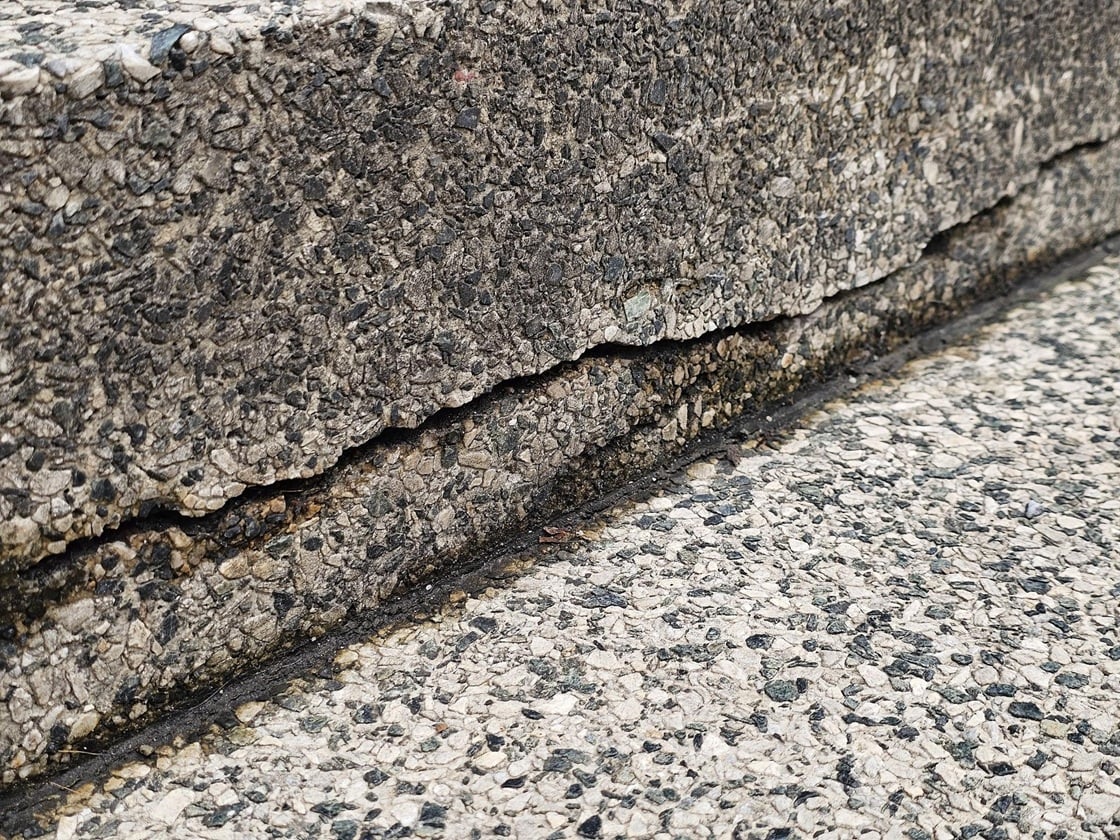
That legislation was really focused on regulating coal emissions and in the end result, it reduced acid rain drastically. Here in Washington DC though, we still have slightly elevated acidity in typical rains. Acidic rain or precipitation is particularly destructive to masonry because many different elements of masonry have high levels of calcium carbonate. The most susceptible types of stone and masonry have relatively strong molecular bonds between elements. Acidity weakens those bonds though. It essentially takes the calcium carbonate and breaks the individual elements free to off’gas and leaves the substrate weak. At the surface of the steps in the picture below, you can see the significant amount of granite aggregate within the concrete slurry has become exposed.
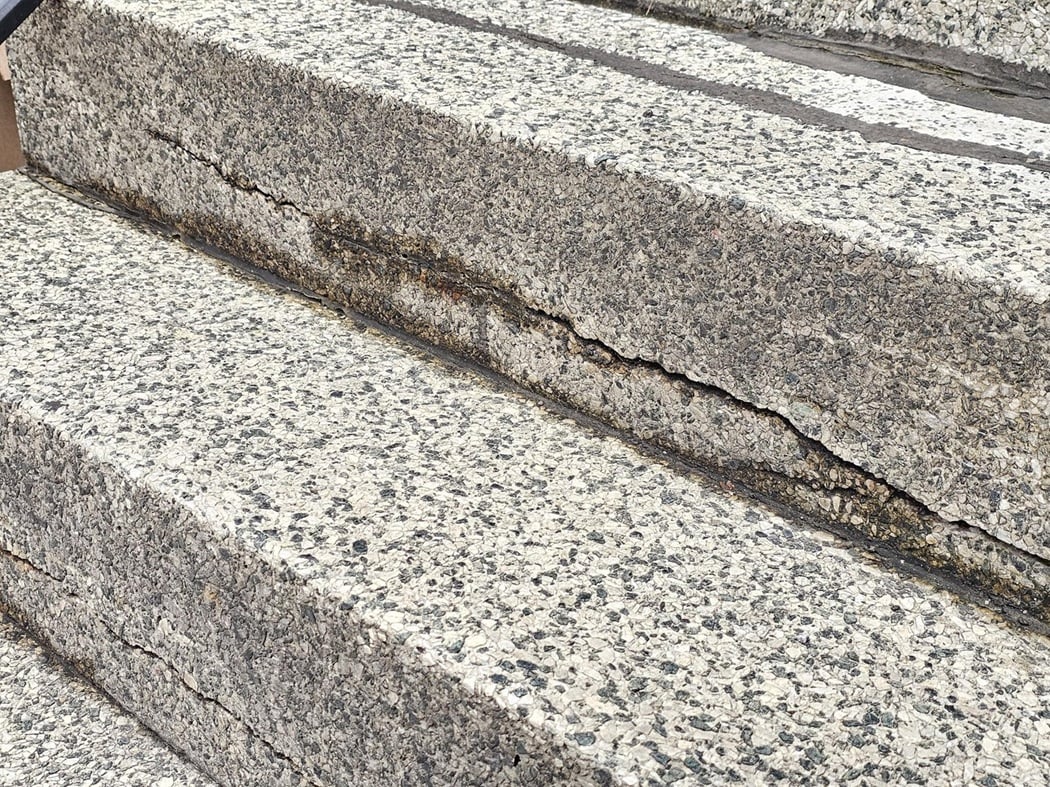
You see this crack running longitudinally across the bottom of the riser, it isn’t just because too much pressure was applied to the steps. In fact, concrete has an incredibly high ability to resist compressive pressures like that. Instead, this crack came from an expansive pressure from within. Generally, in engineering and construction we refer to that type of resistance as tensile strength. Concrete has relatively inherently weak tensile strength. The internal steel reinforcement bars provide tensile strength instead though. Those bars are susceptible to chemical deterioration in the typical form of oxidation.
When those bars oxidize, they expand significantly and with great pressure. That force causes damage similar to the type of damage from freeze-thaw cycles with infiltrating water. The difference though is that if concrete is properly installed it will not have a high degree of internal air pockets or voids. Concrete doesn’t really have much space for water to accumulate on the interior, in most cases. Instead, this problem is related to over hydration which has caused oxidation and therefore expansive forces against a low amount of tensile resistance.
Since our company, Dupont Tuckpointing and Masonry, specializes in masonry restoration, historic brick repointing, and tuckpointing services in the Washington D.C. area, we make it a point to study these types of issues. These buildings are uniquely historic, and their preservation requires skilled masons who are technically trained in the best practices and knowledge of proper restoration techniques.
We understand the significance of maintaining the architectural integrity of these historic structures, and our team of experienced professionals is dedicated to delivering exceptional craftsmanship. Whether you require masonry restoration, tuckpointing, or brick repointing services, we are here to help.
At Dupont Tuckpointing and Masonry, we take pride in our work and strive to ensure that every project is executed with the utmost care and attention to detail. We are committed to preserving the rich heritage of Washington D.C.’s built environment for generations to come.
If you have any questions or needs regarding masonry restoration, historic brick repointing, or tuckpointing services, please do not hesitate to reach out to us. We would be delighted to assist you and provide you with the expertise and quality workmanship that your historic property deserves.
You can reach us by telephone at (202) 796-7644 and you can reach us by email from the contact form on our website.