Structural Clay Tile in Historic Washington DC
Today we’re looking at structural clay tile, a type of masonry that isn’t really common in most of the historic parts of Washington DC. It was mostly used years after the original construction of the most historic parts of the city. Once in a while though, in these old homes and buildings, we’ll see some places where this type of masonry was used. Generally, where we find it, is at infill walls that were not necessarily part of the original construction. Today, we’re looking at a particular area that’s kind of in the area where you wouldn’t expect it, in an attic that was built completely unfinished but later converted to be used as an interior space.
This is a typical kind of location where people are looking for more space to add on. Historic row homes and many of the urban buildings in the historic parts of Washington DC are limited in square footage. That space is also at a higher demand than it would be pretty much anywhere outside of the city.
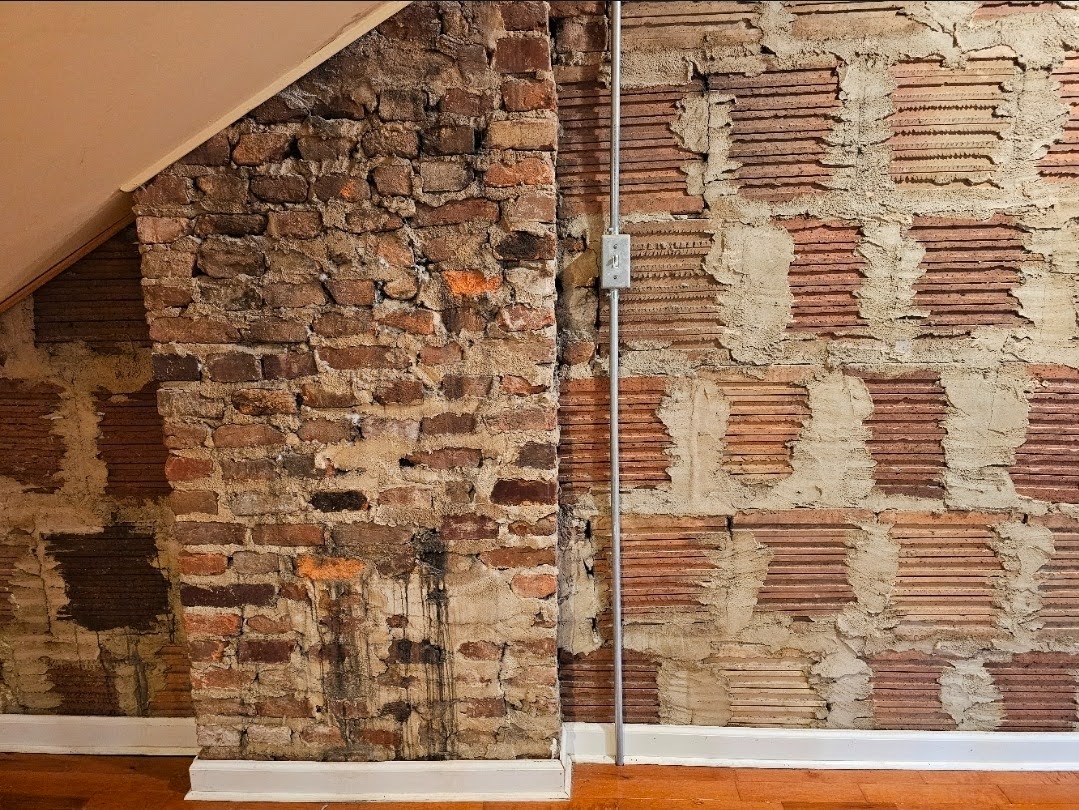
In the picture above you can see the historic chimney which ran from the lower finished areas of the building all the way up through the attic and through the roof. As we mentioned above, it’s one of the many places where people go looking for more space to add on. Other spaces may include the basement of a historic building or home. These basements were generally completely unfinished. Many of them didn’t even have concrete floors.
Instead they had just compacted dirt. Even without floors or finished walls though, they were often used as auxiliary storage space and as root cellars and places to keep long lasting food supplies. Another place that people also convert to storage spaces is the enclosed area under stairways. It was just left as wasted space. Nowadays people add little cubby doors and even drawers inside of that otherwise unused space.
One of the signs that this type of terracotta clay masonry is newer than the original historic brick masonry is the marks and extrusion dye imprints left on the masonry. It is essentially more plastic, not like the plastic we know of today, but more malleable than the clay used in historic brick formation.
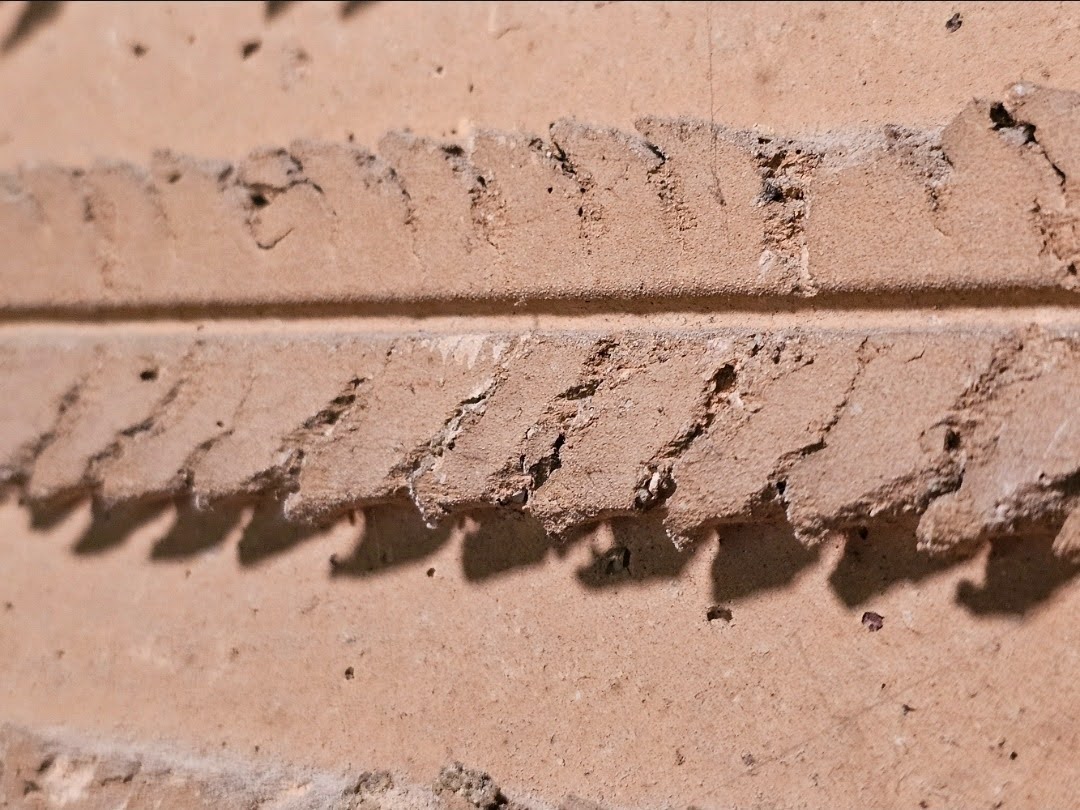
Even though these rough edges were made from the typical extrusion process, they’re really helpful to the installation of plaster. Plaster needs a substrate with a key. The key is essentially a three-dimensional type of texture that gives the plaster a place to harden on to and bite a hold of.
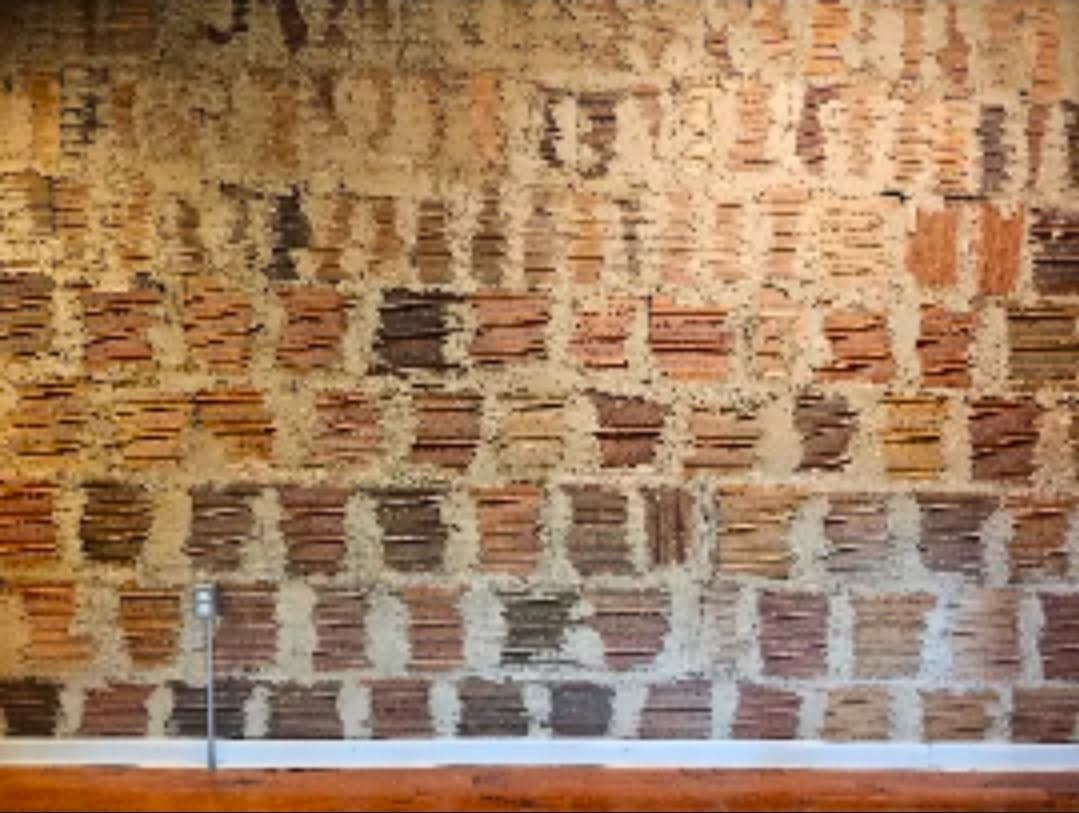
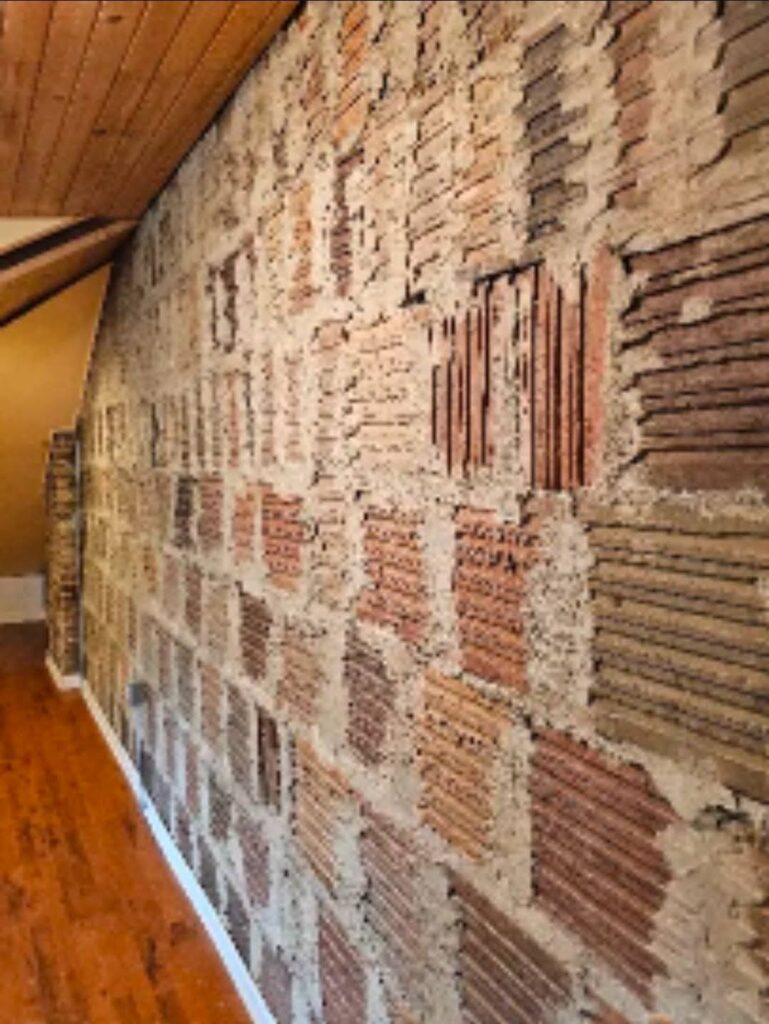
When you look at the pattern of this masonry installation, the pictures above and below, without even knowing anything about the internal composition of the masonry units, you should be able to instantly tell that this wall isn’t structural. It doesn’t take much background experience or deep knowledge of masonry to understand that.
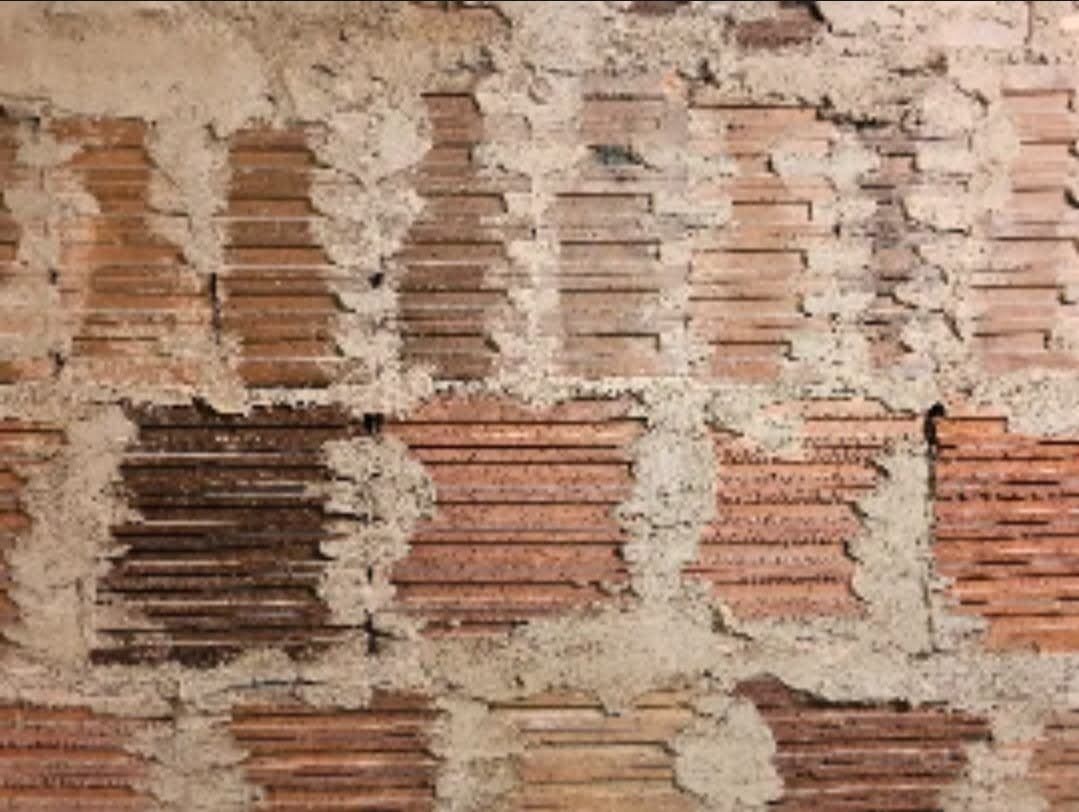
With the weird barely staggered joints between alternating courses of the masonry, you can just intuitively tell that the bond is weak. We often talk about the bond of masonry when we’re discussing options for repointing and historic masonry restoration. Repointing involves removing elements of the old mortar.
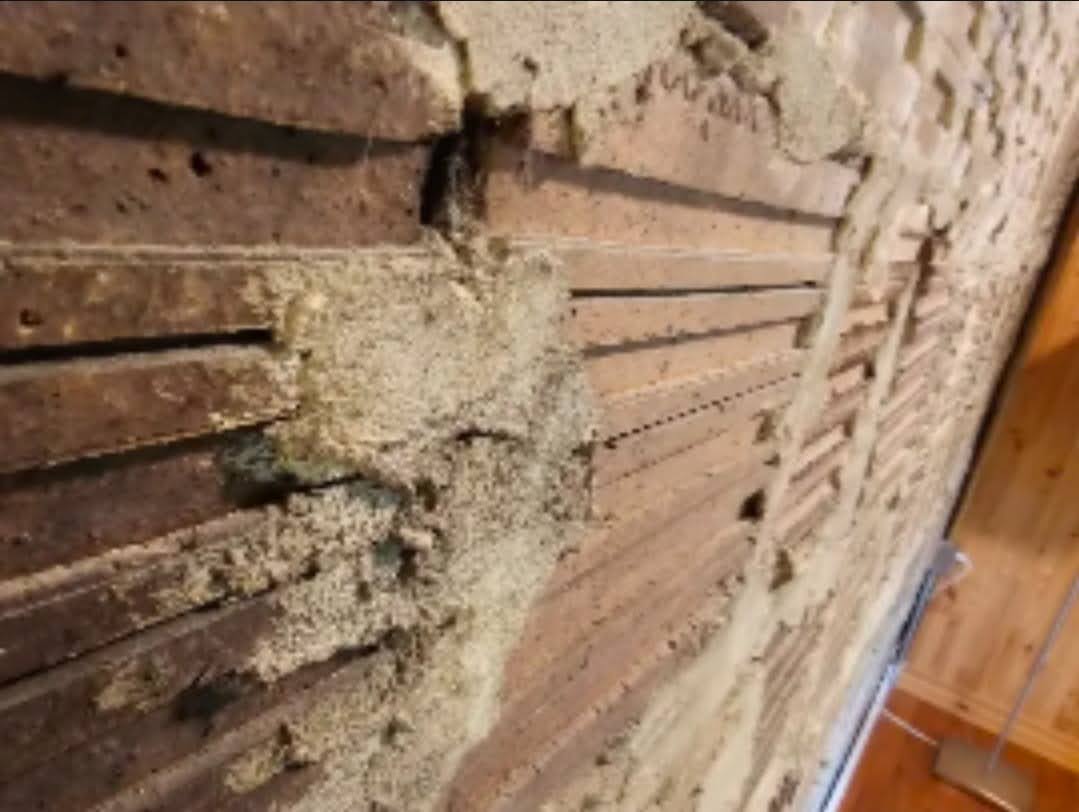
Then the old mortar, once removed, is replaced or refreshed with a newer mortar that has characteristics of compressive strength and structural details similar to the original mortar. At this type of wall, repointing would never really be an option. Once that mortar becomes deteriorated a full rebuild is basically required.
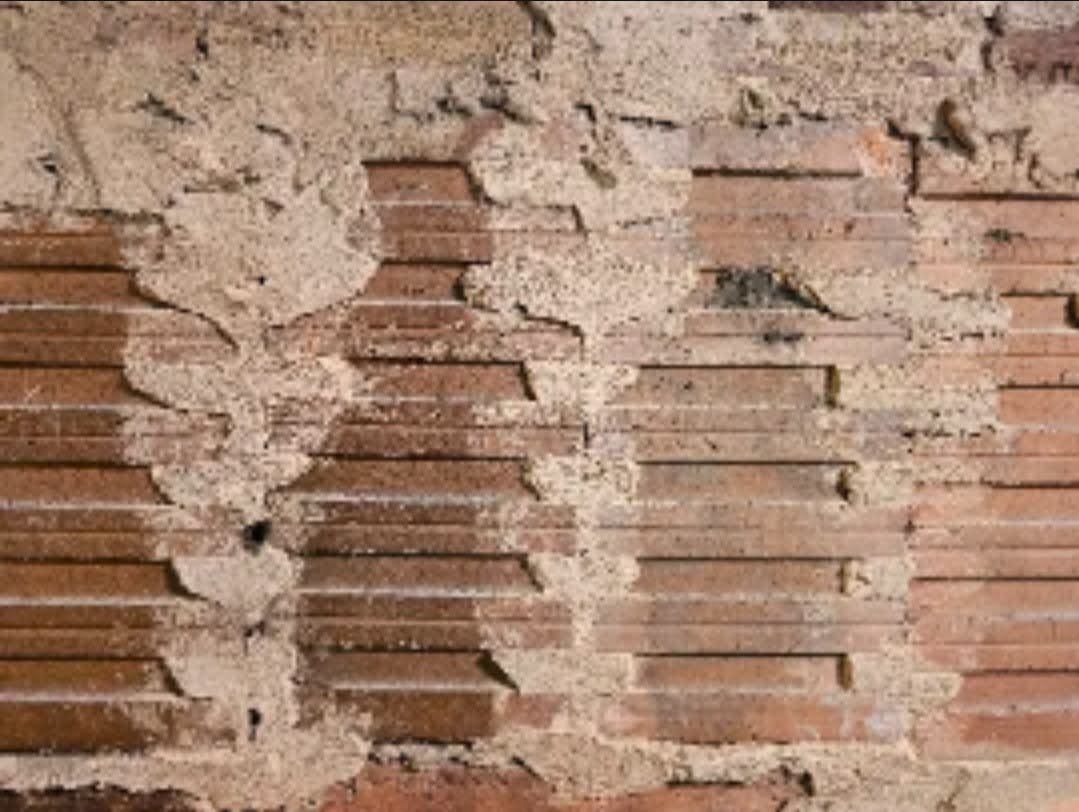
As this attic was renovated, it was like basically creating an addition to the building. The structure wasn’t new at all, but interior partitions were added. Once some finishes were added, new living space existed where it never had been before. Even though the remainder of the space was mostly finished, here they intentionally left this rough looking wall exposed. People have a surprising interest in interior exposed masonry surfaces. It’s just a bit different and a bit unique nowadays. In the old and historic days, where people had the means to add finishes, they almost never left masonry exposed on the interior of the building.
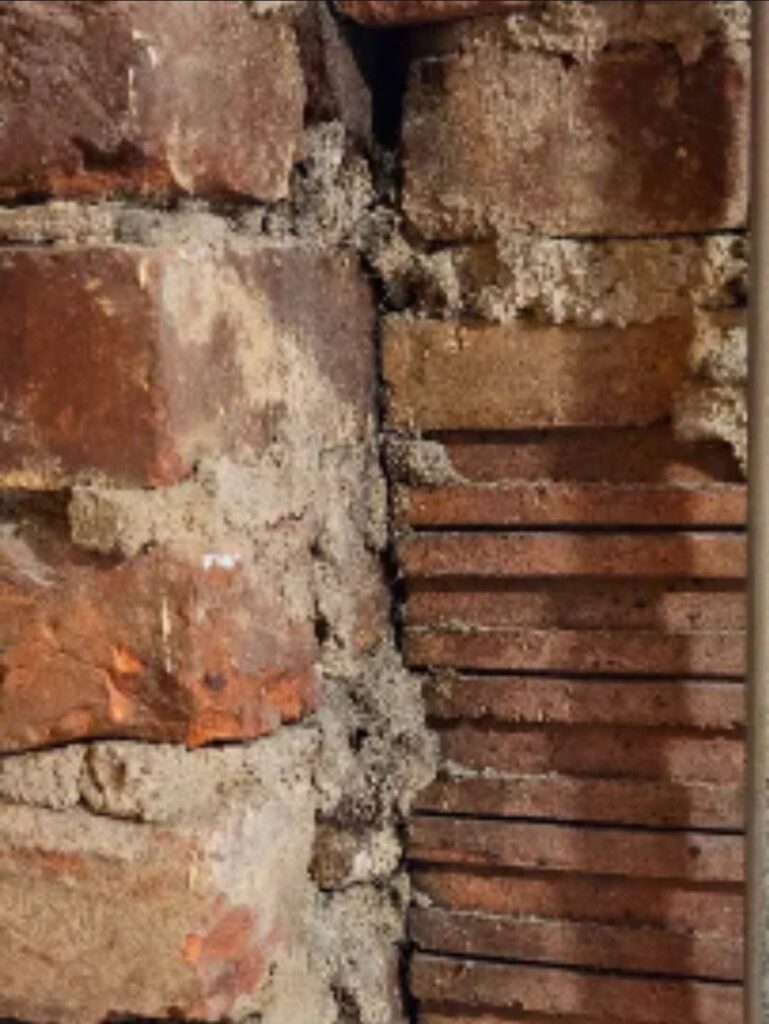
Here you can see a very rough and open inside corner joint where the newer masonry was abutted against the original chimney. If it were to have been built all the same time these two different masonry elements would have been toothed-in together.
Since our company, Dupont Tuckpointing and Masonry, specializes in masonry restoration, historic brick repointing, and tuckpointing services in the Washington D.C. area, we make it a point to study these types of issues. These buildings are uniquely historic, and their preservation requires skilled masons who are technically trained in the best practices and knowledge of proper restoration techniques.
We understand the significance of maintaining the architectural integrity of these historic structures, and our team of experienced professionals is dedicated to delivering exceptional craftsmanship. Whether you require masonry restoration, tuckpointing, or brick repointing services, we are here to help.
At Dupont Tuckpointing and Masonry, we take pride in our work and strive to ensure that every project is executed with the utmost care and attention to detail. We are committed to preserving the rich heritage of Washington D.C.’s built environment for generations to come.
If you have any questions or needs regarding masonry restoration, historic brick repointing, or tuckpointing services in Washington DC area, please do not hesitate to reach out to us. We would be delighted to assist you and provide you with the expertise and quality workmanship that your historic property deserves.
You can reach us by telephone at (202) 796-7644 and you can reach us by email from the contact form on our website.