Overhydrated Concrete: Causes of Concrete Failure
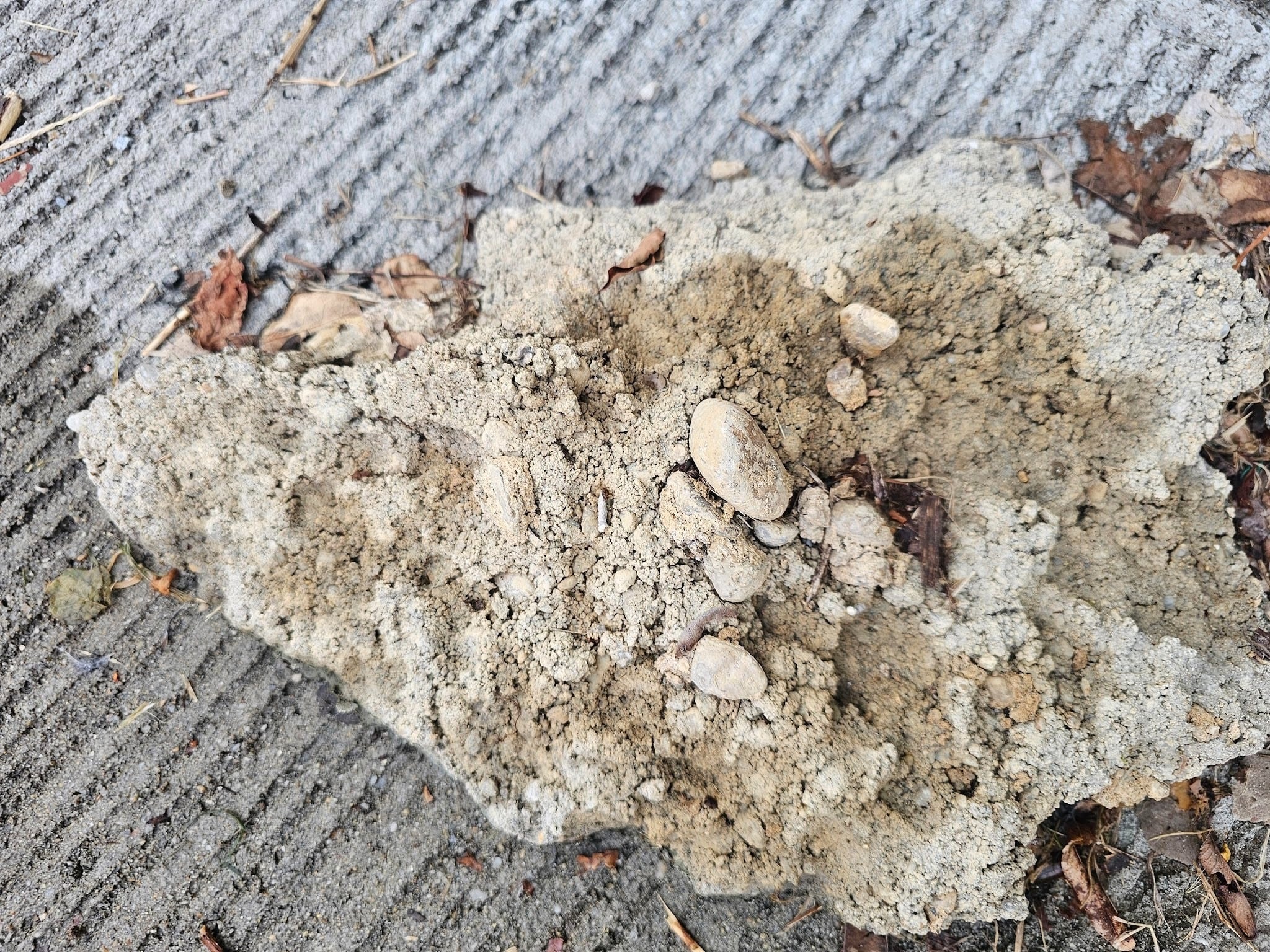
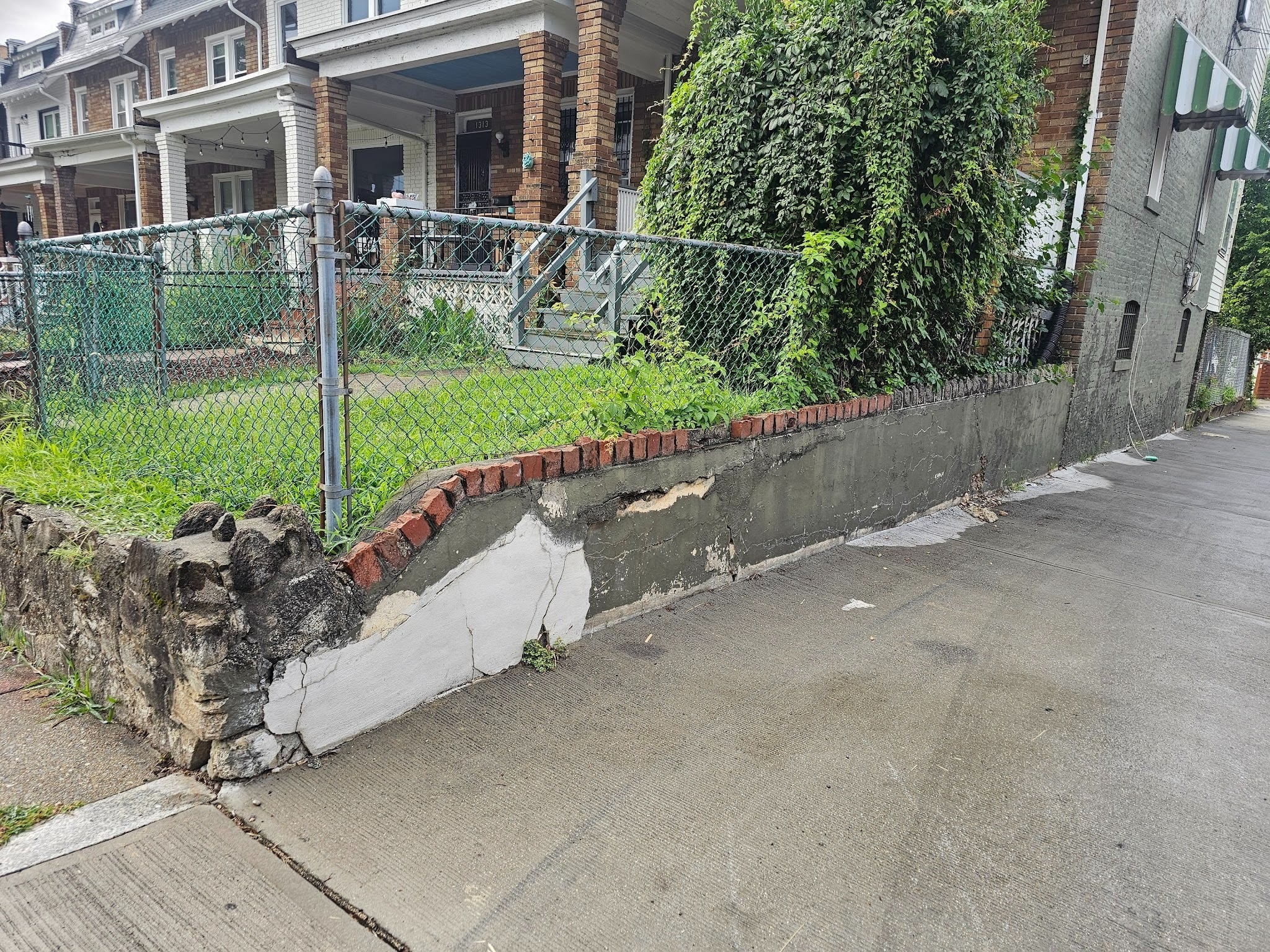
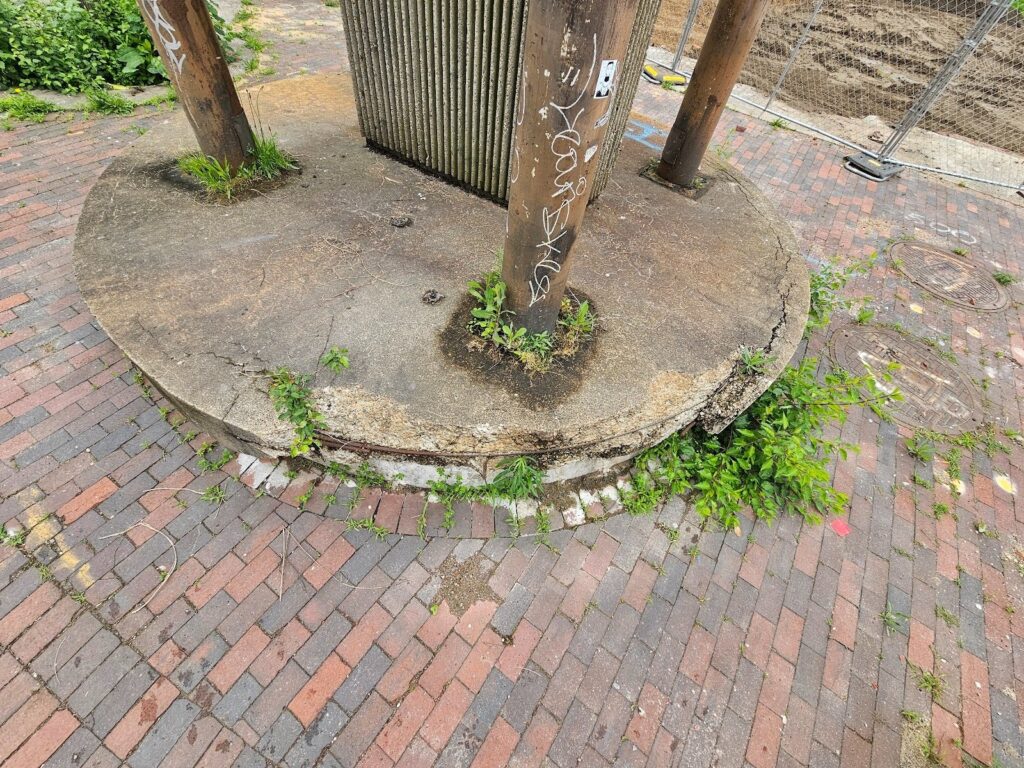
We looked at different angles of the same concrete area of construction shown in the pictures below, this past week. We didn’t get deep into the microstructural elements of why this concrete has spalled and broken. It basically completely failed. But that failure is really also prolific through the structure of this concrete. It’s related to over-hydration. It’s much easier to mix concrete when it’s excessively wet but it ruins the microstructure.
We aren’t necessarily trying to say that building science and engineering are simple subjects, but some of this is intuitive and some of it is often just missed by people. We should start by saying that good quality control doesn’t just happen because of good intentions. It requires programs and systems. We aren’t talking about computers, apps or anything like that.
We’re talking about the more boring and laborious programs like having systems in place and rules and regulations around frameworks of the execution of construction. That requires significant effort and execution. In fact if it were as simple as just using some kind of computer or app to make sure everything happens the way it’s supposed to then it would be really easy but it doesn’t actually work that way in construction.
Ai will probably take over the whole world pretty soon. But construction is going to be one of those areas that holds out longer than other areas. Soon, the billionaires will own and control everything including all of our work and all of our attention. But construction will be one of the last areas they get. Because it’s not just about having software and the AI data centers, it also takes actual hardware in robotics to take over construction. For a variety of reasons, concrete construction has had quality control challenges.
In the meantime, construction is basically left to its own human devices to do better. Our company strives to make inroads in quality improvement by looking at work by others like this, where accelerated failure is taking place. This helps us understand the complicated nuances of the subcomponents of concrete and cement construction.
One of the really interesting aspects of hydration of concrete is that it takes much less water, mixed together with cement, for it to be optimally hydrated than it does for it to be workable. The amount of water needed for it to be workable is more than it actually needs for it to be chemically hydrated. When you cross past the minimum amount of water needed for workability though, it leads to life cycle disabilitation, increasingly so as the amount of hydration increases.
All of this is a technical way of explaining that the line between the right amount of water and too much water mixed into concrete has some tolerance but naturally tends to lead towards over hydration. Workability is the amount of water needed to move tools through the concrete to mix it, and even for machines to mix the concrete. In the hydration process, water is mixed into cement and through bonding with the chemicals in the cement creates calcium silica hydrate and calcium hydroxide. These materials work as binders in the cementitious mixture.
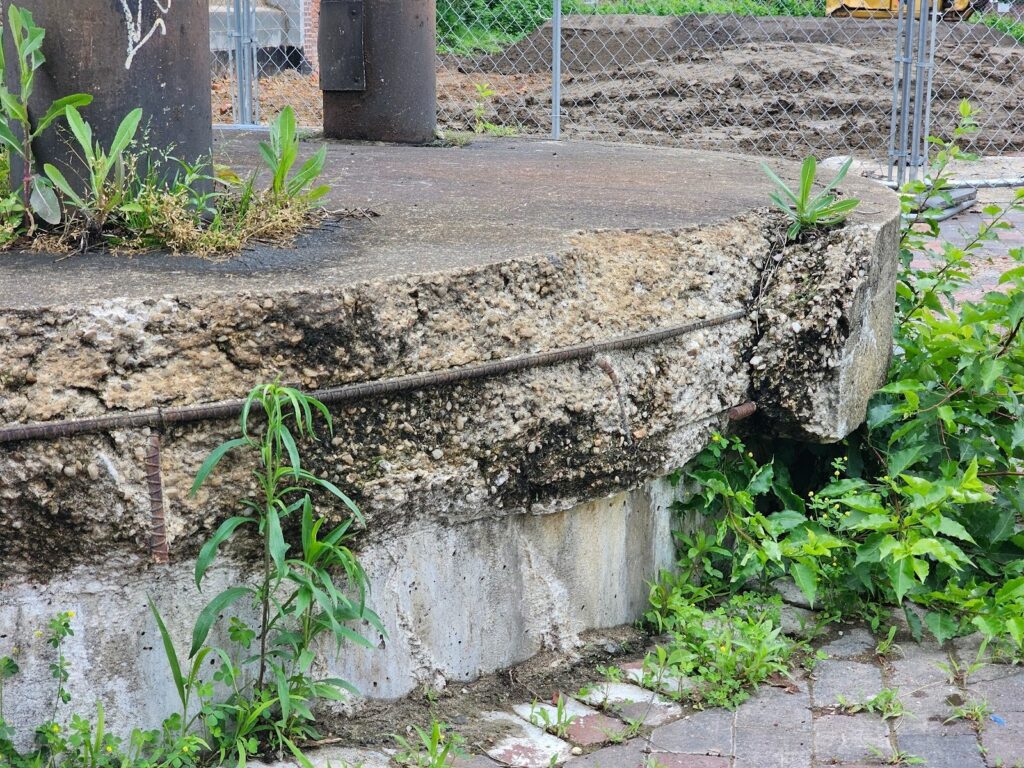
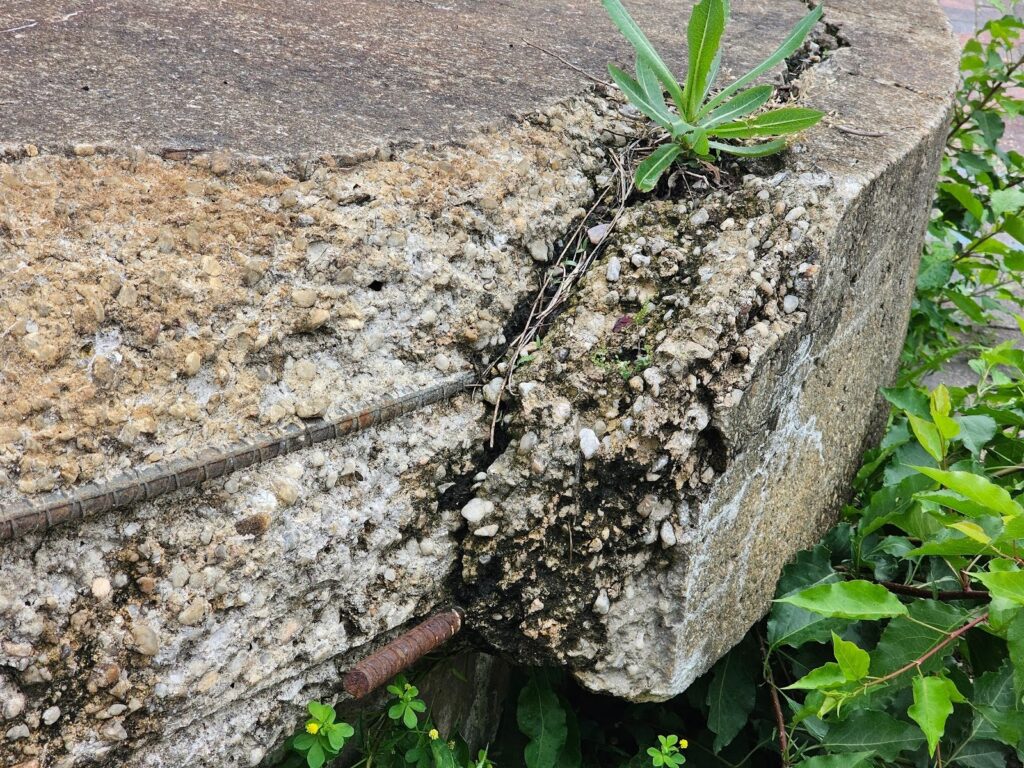
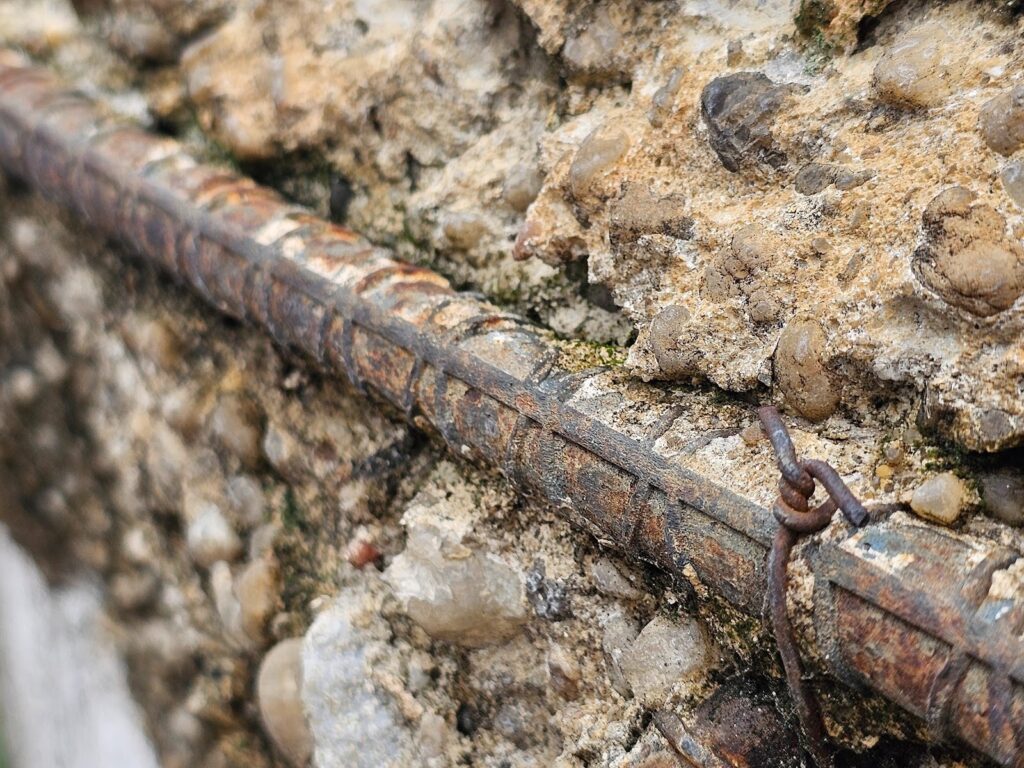
In the pictures above and below you can see that the concrete has failed early. That means it has failed on a timeline that is accelerated and preliminary. The concrete should have lasted longer. If it’s not clear how this determination is made. Regarding its advanced deterioration, you can simply look at the rebar that remains exposed in this concrete. The rebar here is actually in good shape.
On the surface, you can see there’s a bit of rust on the rebar, but the rebar hasn’t deteriorated. Even the thin tie wire, also made from steel and iron, hasn’t rusted through. That means that even though this concrete broke apart around the rebar, the concrete ruin wasn’t caused by the expansion of the rebar. Generally, when concrete is exposed to excessive amounts of water, the iron or steel reinforcement inside of the concrete will oxidize and expand. That expansion happens at a force so great that that alone can cause the concrete to break.
Here though the concrete has broken without the destructive force of expanding oxidized reinforcement. These are all signs that the concrete has deteriorated for reasons outside of porosity and excessive exposure after initial construction.
The problem caused by excessive water during mixing is that that water takes up a space. Inside of the matrix or the mix and blend of the concrete, the excess water doesn’t have calcium silica hydrate and calcium hydroxide molecules available to bond with. Imagine you are building flat ship furniture. You may need a vast amount of nuts and bolts. And when you pull them all out of their little packets, you have to pair them up. But if you have too many of one, it will lead to a problem.
You can’t just go and install the nuts without the bolts nor the bolts without the nuts. You have to have the right balance. If there’s too many of one, you can try to set them into the furniture but they won’t hold. They’ll be inside the furniture but they’ll be loose. It doesn’t help and it doesn’t work.
In engineering terms, this is called stoichiometric balance. If you put too much water into concrete, it leads to small bubbles of water mixed throughout the concrete. Even worse than being evenly mixed, that excess water might be concentrated in certain areas. Here in this example of the slab, shown in the picture below, that excess water was concentrated near the edge. Where the water was, in that balance, both at the time of being mixed into the concrete and then still at the time when the concrete was placed, was excessive.
Because of all the excess water, the concrete later cured with millions of small little bubble-sized pockets of water. Then, later after curing, as the excess moisture dried away, the millions or billions of little water droplet pocket spaces left empty voids. Then, later, in times of precipitation those empty pockets fill up with more water which led to the deterioration and destruction of the weakened concrete.
This is the problem with overhydrated concrete. It destroys the strength of the concrete by not mixing properly or having too many excess water components left over after being fully mixed. Those little pockets of the excess water later lead to voids which create weakness and tiny little reservoirs throughout the concrete which later become hydrated and damaged the concrete.
Since our company, Dupont Tuckpointing and Masonry, specializes in masonry restoration, historic brick repointing, and tuckpointing services in the Washington D.C. area, we make it a point to study these types of issues. These buildings are uniquely historic, and their preservation requires skilled masons who are technically trained in the best practices and knowledge of proper restoration techniques.
We understand the significance of maintaining the architectural integrity of these historic structures, and our team of experienced professionals is dedicated to delivering exceptional craftsmanship. Whether you require masonry restoration, tuckpointing, or brick repointing services, we are here to help.
At Dupont Tuckpointing and Masonry, we take pride in our work and strive to ensure that every project is executed with the utmost care and attention to detail. We are committed to preserving the rich heritage of Washington D.C.’s built environment for generations to come.
If you have any questions or needs regarding masonry restoration, historic brick repointing, or tuckpointing services, please do not hesitate to reach out to us. We would be delighted to assist you and provide you with the expertise and quality workmanship that your historic property deserves.
You can reach us by telephone at (202) 796-7644 and you can reach us by email from the contact form on our website.