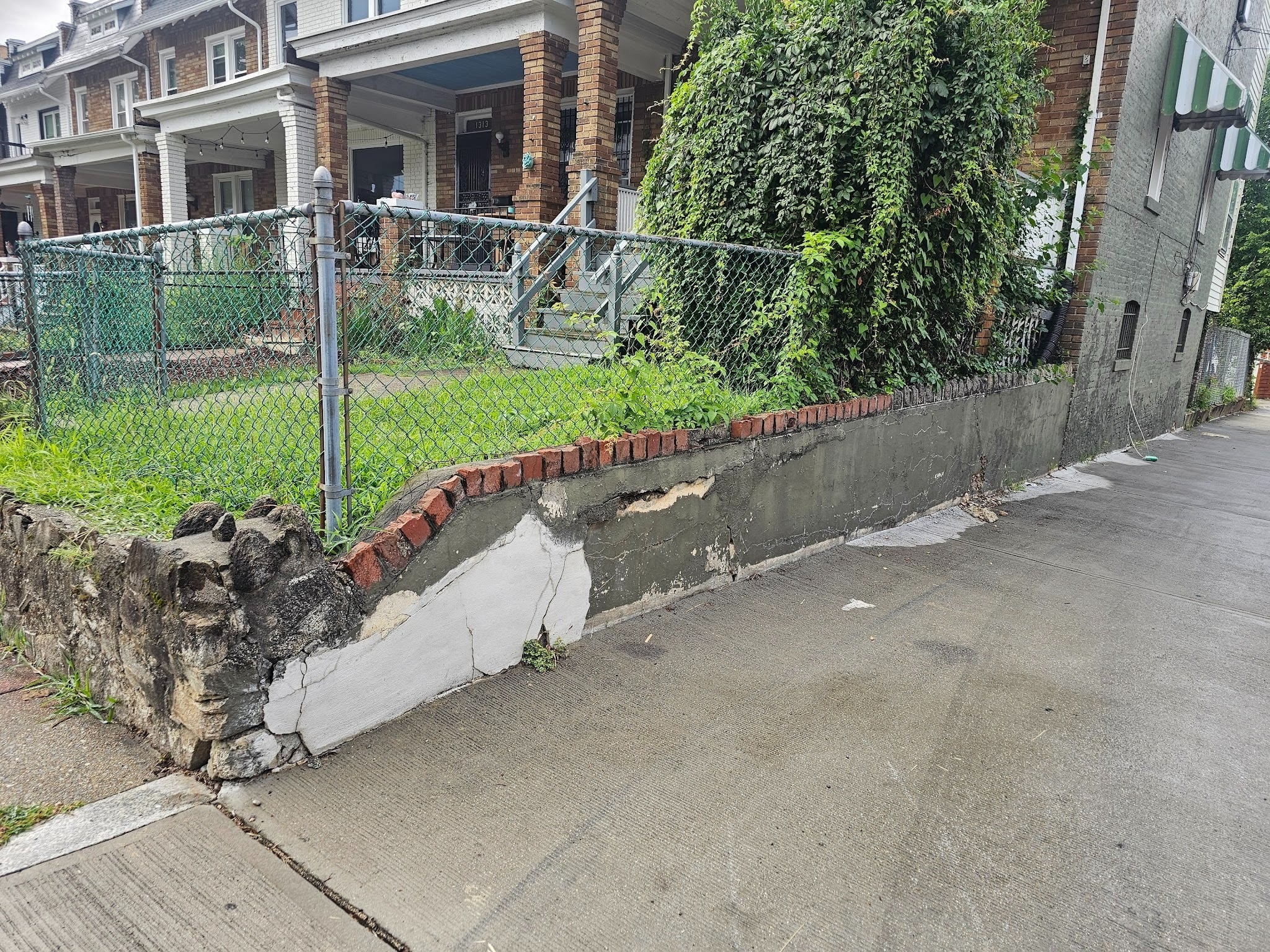
We’ve looked at many examples of historic brickwork in bad condition. One of the biggest takeaways is that if it isn’t cared for on a proactive schedule, with good maintenance, it will get bad. When we say it’ll get bad, we mean it’ll get exponentially worse at a very fast rate. You may have heard the expression that a ounce of prevention is worth a pound of cure. Historic masonry deterioration is the quintessential example of the nonlinearity of this deterioration. When we talk about nonlinearity, in this context, we’re basically using a fancy word to say that the masonry deteriorates much faster as it gets worse. That means that it’s deteriorating faster at an increasing rate at which it gets worse and worse and worse happens faster and faster as it gets worse. Increments of restoration along the way can easily keep it in better condition, but missing those important few steps can be detrimental.
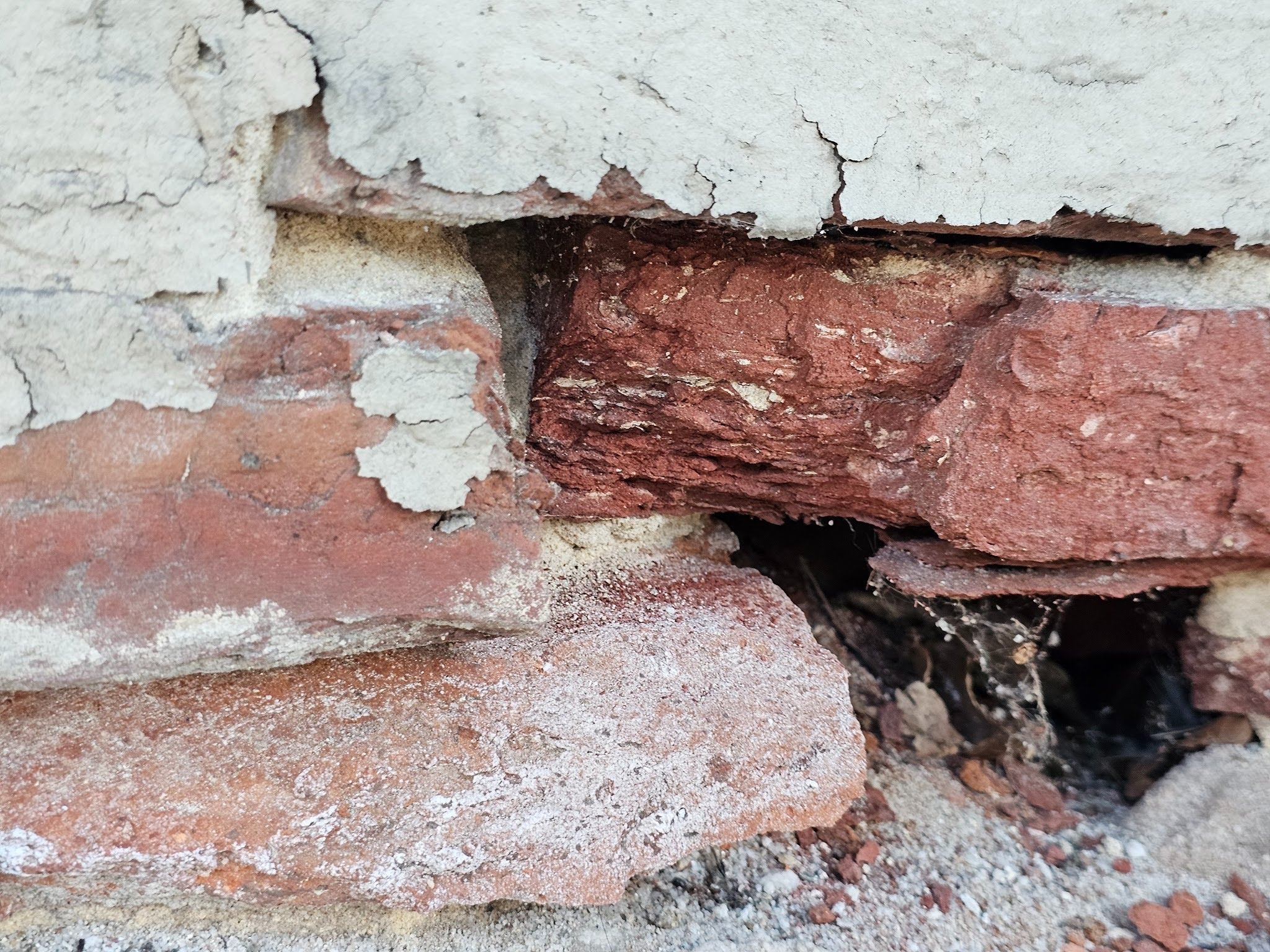
You can see a few different things that have happened in the picture below. There is an area of two rows of brick where the brick faces have spalled off and fallen away from the face of the wall. The mortar joints are deeply recessed. Not just the mortar at the base of the wall is wearing away, but actual chunks have fallen out of the wall. Those areas have deteriorated and spalled away with the brickwork.
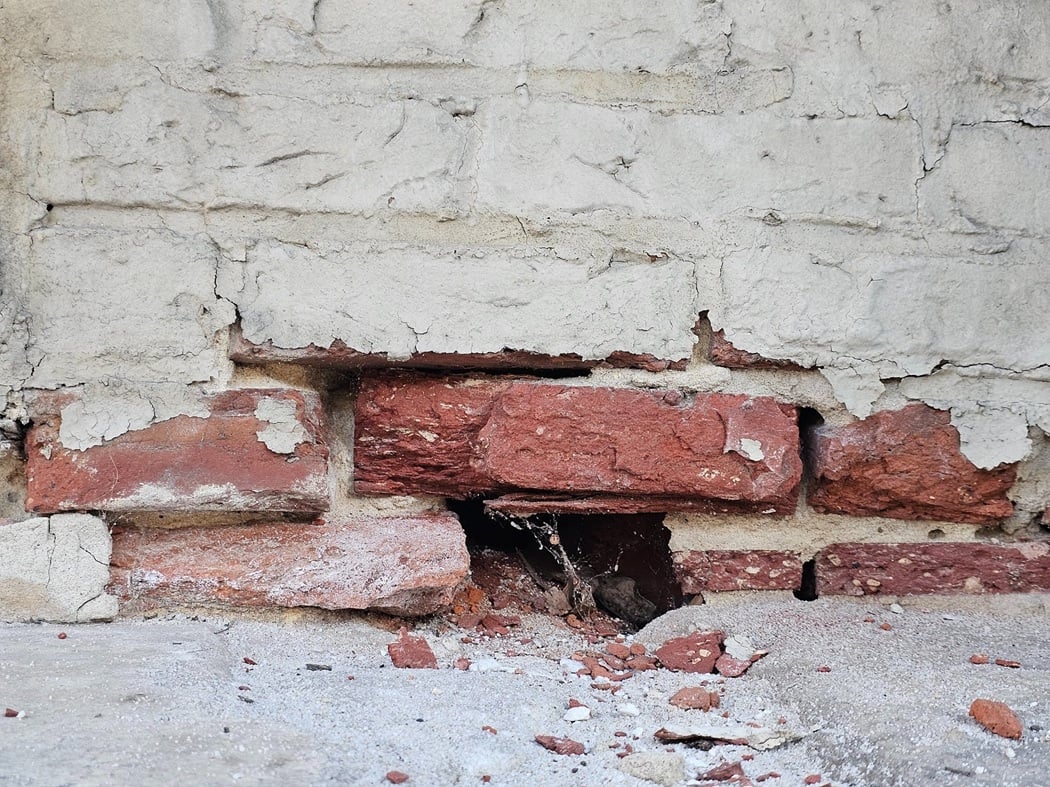
At a glance, it looks like the area behind the painted portions of the wall are still in the OK shape, and the really bad parts are not covered with paint. If you misunderstand what you’re seeing, you might erroneously think that the paint is somehow protecting the other parts of the brick. You can get the wrong idea here. Basically, the parts without paint are seriously deteriorated. It’s just a coincidence though. The parts of the wall that have the paint are also deteriorating. If you look very closely at the edges of the paint where the paint stops next to a portion of unpainted significant deterioration, you can see that it’s not a clean demarcation. The areas behind the paint are also going to fall off as well in time if not protected and restored.
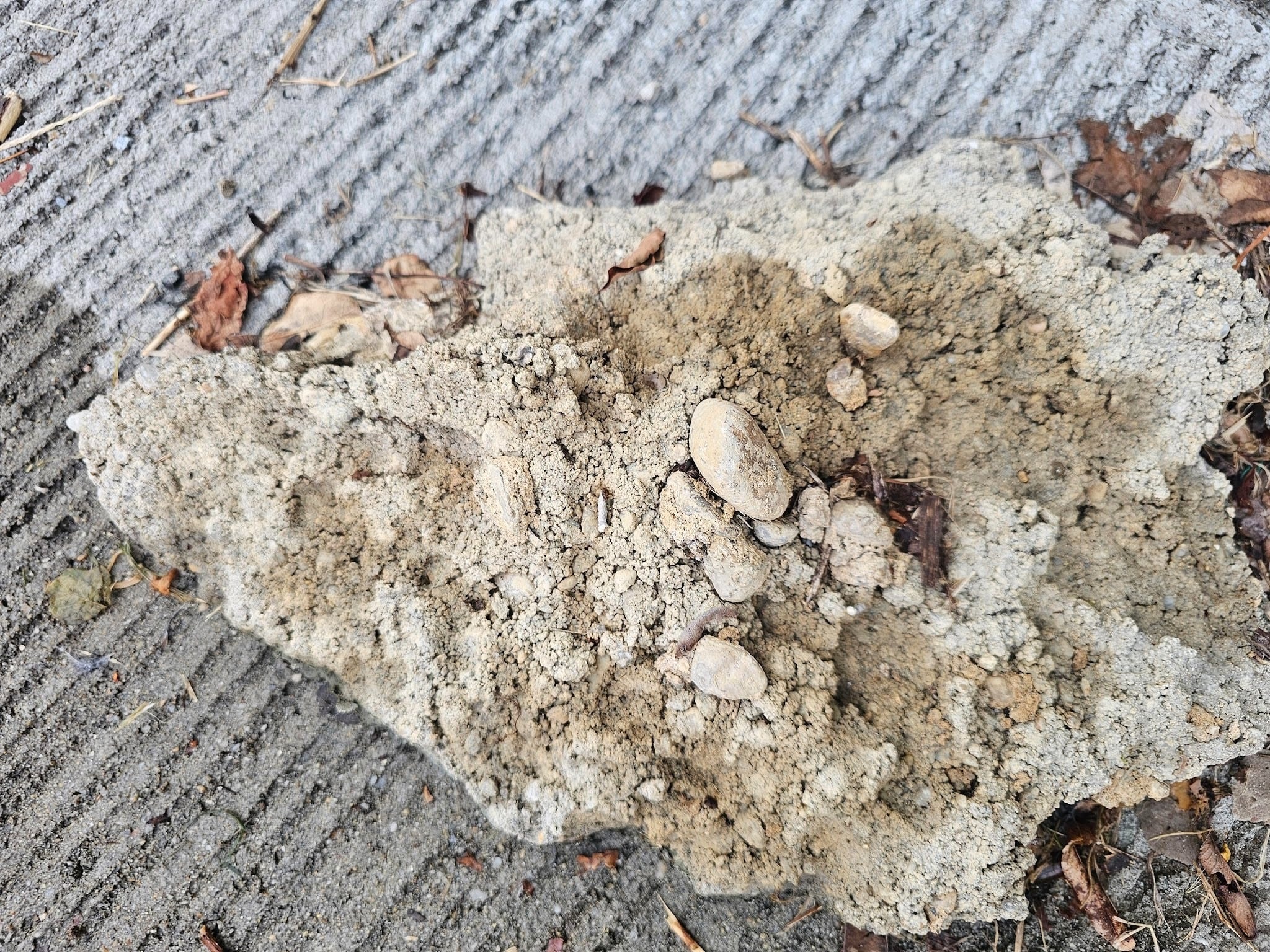
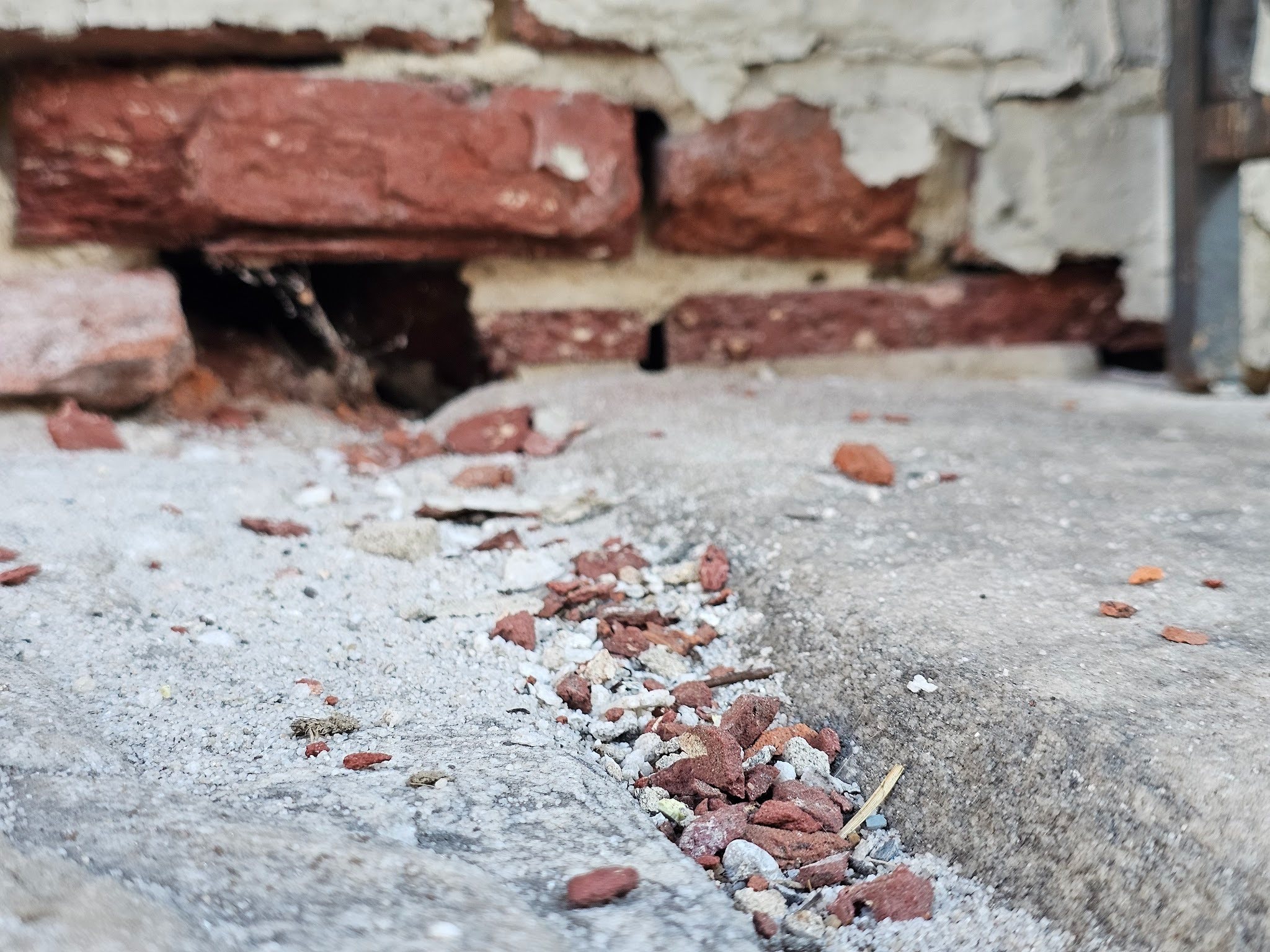
The next picture below shows a divot or recess in the paving. That crevice is filled up with both small granules of deteriorated masonry and larger chunks of the clay brick. These little debris that are left behind tell us a little bit about the nature of the deterioration. The big chunks mean that some pieces have completely spalled away, in other words they’ve broken off in large chunks.
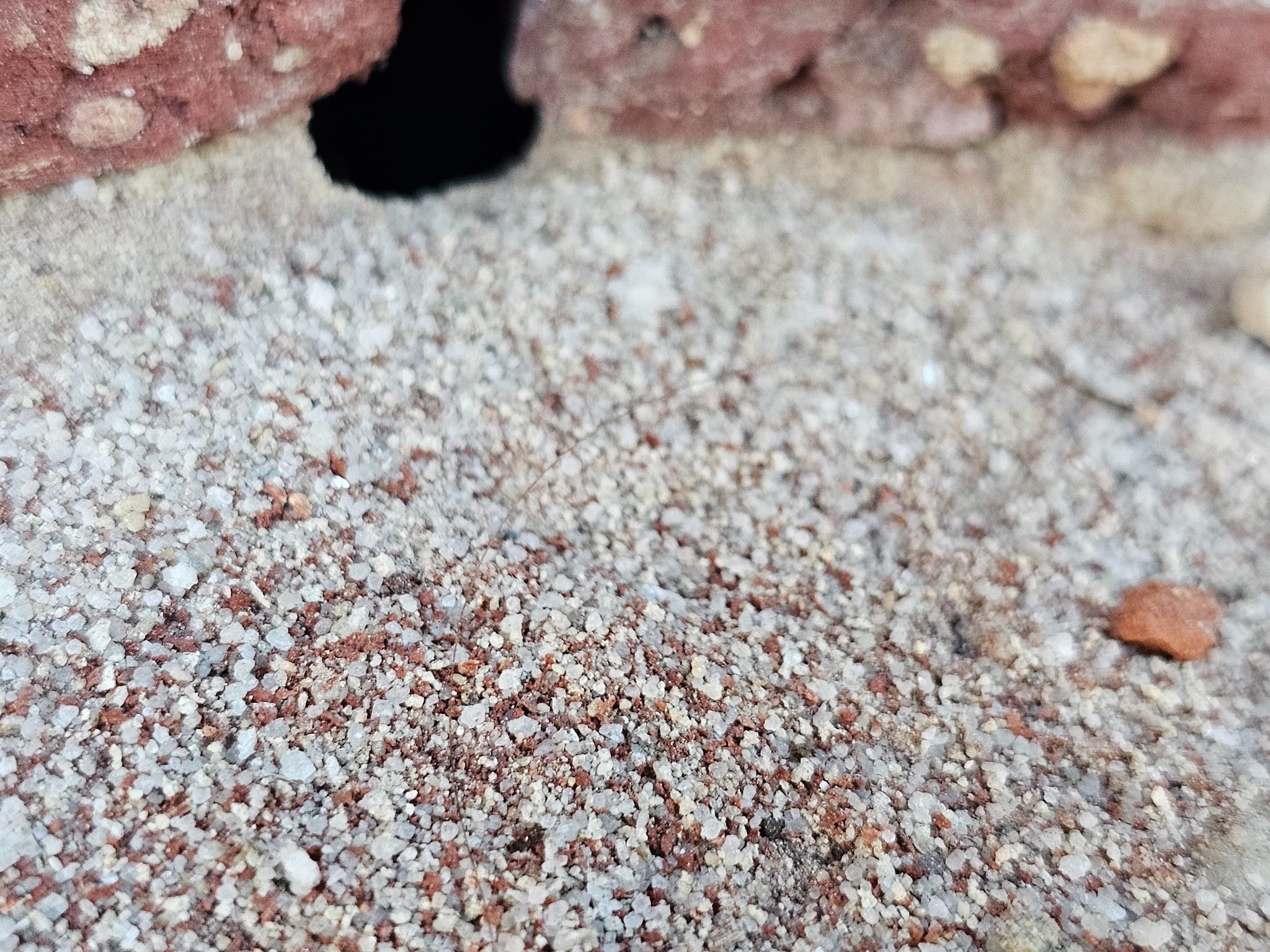
These smaller pieces of debris indicate that when the big pieces fell, some small pieces also came apart with the big chunks and or the big chunks cracked up into smaller pieces as well. There’s also probably a degree of smaller pieces that have broken off bit by bit. That means that in some cases even though the most significant deterioration is happening to large sections, there’s also surface areas where that’s happening in little bits. In a picture farther below, we show larger piles of sand like granules of debris.
The big open areas in the parts of this wall should have shown signs of problems, a long time ago, to the stewards are stakeholders in the use of this property and building that maintenance and or upkeep was needed.
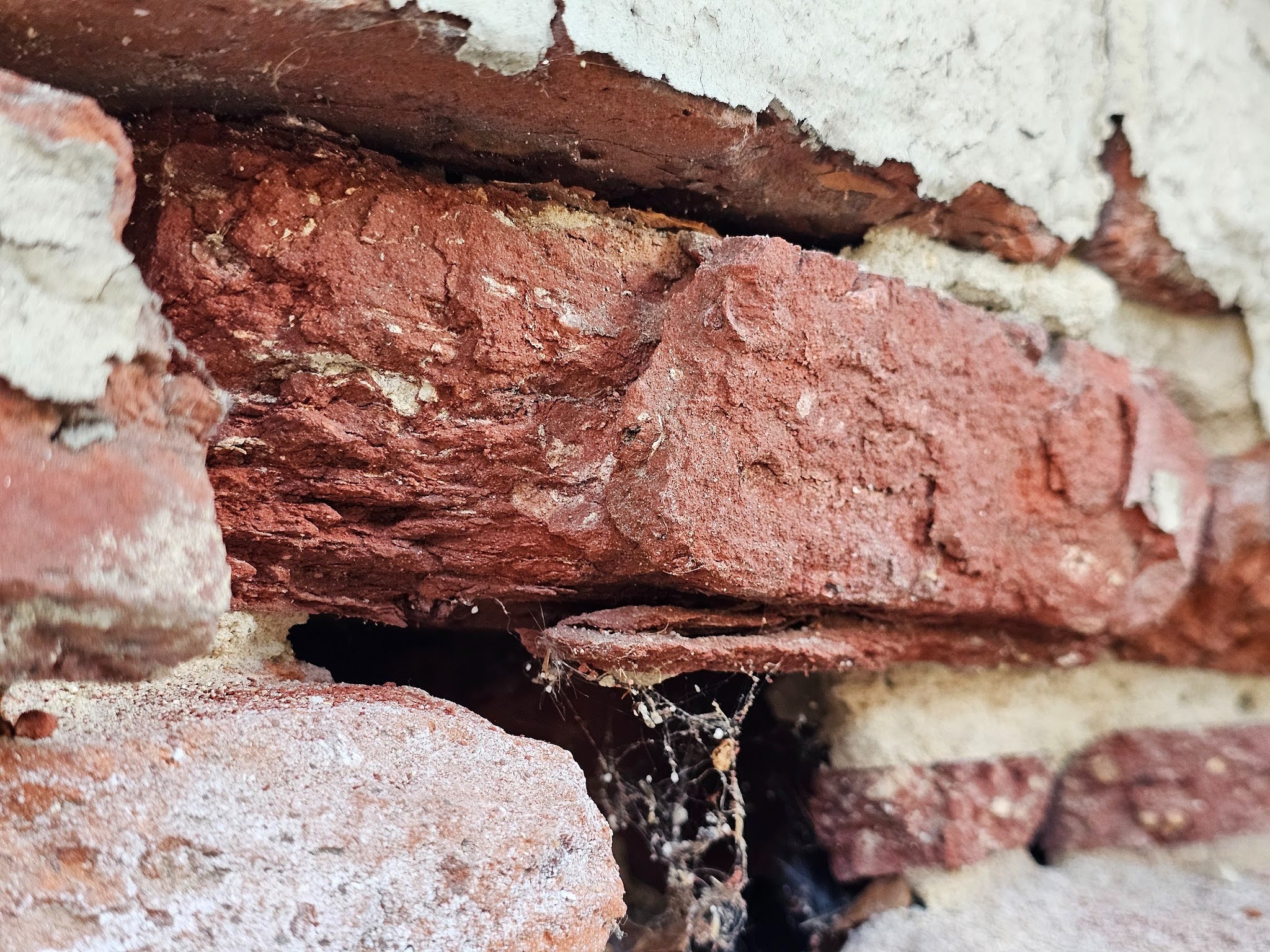
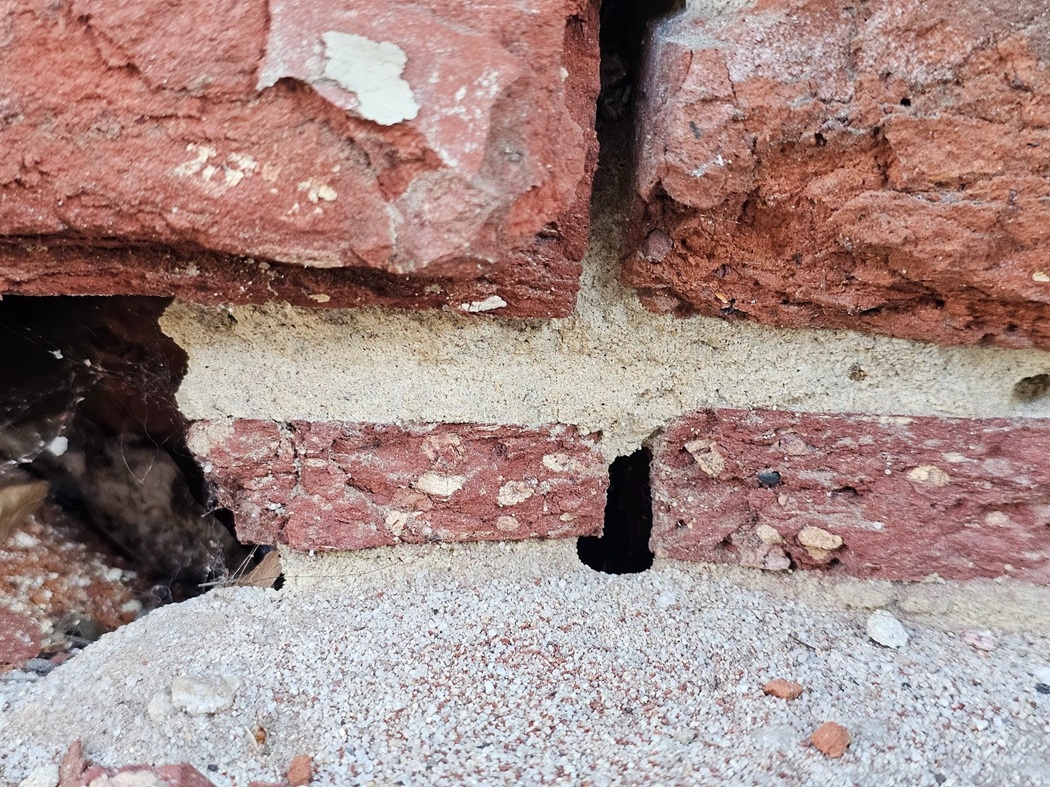
When we normally think of spalling and deterioration associated with spalling, we think of chunks of masonry cracking off the face of the wall. Here though, this deterioration is actually happening slowly, in small pieces, bit by bit. It doesn’t always happen like this. Sometimes pieces will fall in larger chunks. There’s been a bit of both chunks and small pieces that have deteriorated and fallen away from this wall. Here though in the next picture below, you can see a pile of small materials, like thick grains of sand that has accumulated and built up from the deterioration, bit by bit.
Since our company, Dupont Tuckpointing and Masonry, specializes in masonry restoration, historic brick repointing, and tuckpointing services in the Washington D.C. area, we make it a point to study these types of issues. These buildings are uniquely historic, and their preservation requires skilled masons who are technically trained in the best practices and knowledge of proper restoration techniques.
We understand the significance of maintaining the architectural integrity of these historic structures, and our team of experienced professionals is dedicated to delivering exceptional craftsmanship. Whether you require masonry restoration, tuckpointing, or brick repointing services, we are here to help.
At Dupont Tuckpointing and Masonry, we take pride in our work and strive to ensure that every project is executed with the utmost care and attention to detail. We are committed to preserving the rich heritage of Washington D.C.’s built environment for generations to come.
If you have any questions or needs regarding masonry restoration, historic brick repointing, or tuckpointing services, please do not hesitate to reach out to us. We would be delighted to assist you and provide you with the expertise and quality workmanship that your historic property deserves.
You can reach us by telephone at (202) 796-7644 and you can reach us by email from the contact form on our website.