Shutter Dogs: How They Work on Historic Homes
In the first part of this series, we looked at a historic masonry facade where shutters used to be installed. None of the shutters remain though. They had all since been removed. It’s likely that they had rotted and deteriorated. Original historic shutters were generally made out of wood and wood doesn’t hold up as long as historic masonry. Historic masonry, in many cases, has lasted for hundreds and even in some cases thousands of years. Over time, the thin wood elements of which shutters are composed will begin to absorb water, swell and expand.
In some cases the swelling and expansion will happen in twisting and warping. As that wood will then begin to shift and move in shape. It will increasingly take one more moisture at each successive precipitation event. Once the wood becomes inflated to the point that it’s soft and losing shape at least certain spots, it will begin to rot. Once rot sets in it also continues to happen at an increasing rate. In some cases historic shutters were coated with oils and paints to help preserve them.
Historic materials for coatings did not have a strong performance and resistance the deleterious effects of ultraviolet rays. Ultraviolet is a type of light frequency present in regular sunlight. It breaks down materials like wood and most organic materials. Brick happens to be one of the few types of building materials that is almost completely undamaged by exposure to ultraviolet rays. You can look at buildings that have been around for over 100 years and see that the north side of the buildings, in some cases, look to be in the same condition as the south side.
In most cases the north side of historic buildings, at least here in Washington DC, will receive much less direct sunlight than the south side of the buildings. In some cases, some circumstances even occur to make the north side of a building deteriorate faster where there isn’t direct sunlight on a masonry facade; there will often be prolonged periods of dry out.
If all other circumstances are the same, the north side of the building might have lower overall summer temperatures. Particularly, this becomes important during the long winter season here in Washington DC. We generally have reduced sunlight for roughly 50% of the year, here in Washington DC. The days become very short starting as early as October and don’t become long again all the way until April or May. During those longer periods of sunlight, even with varying amounts of rainfall, the building will dry out much more thoroughly. The north side though generally has much less direct sunlight therefore dries out less or at least slower.
Here, in the next picture below you can see that we’re looking at a different building today. This particular building happens to be built with a red brick and there are elements where there are both painted trims and also exposed brownstone accents. This building is also historic, over 100 years old there are shutter dogs in place holding back open the shutters shown in the pictures below. In the case of the building we looked at last week, all the shutters were gone, but here there are shutters still in place. These may not be the original shutters, it’s very likely they were replaced somewhere in the lifespan of the building. They may have been replaced multiple times.
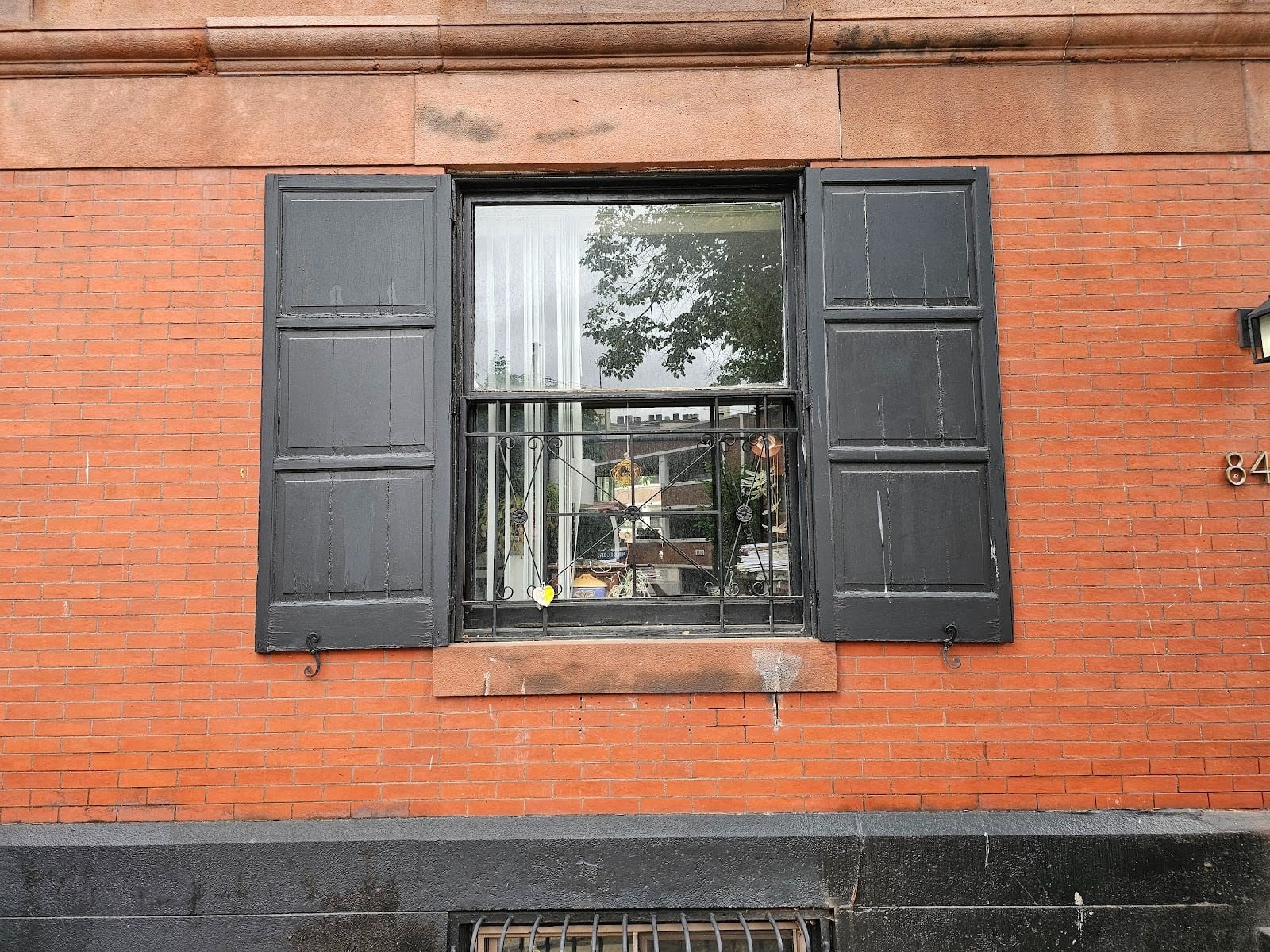
The shutter dog shown in the next picture below is positioned to keep the shutter open. This is an example of exactly how these hardware elements for used, going all the way back to historic times.
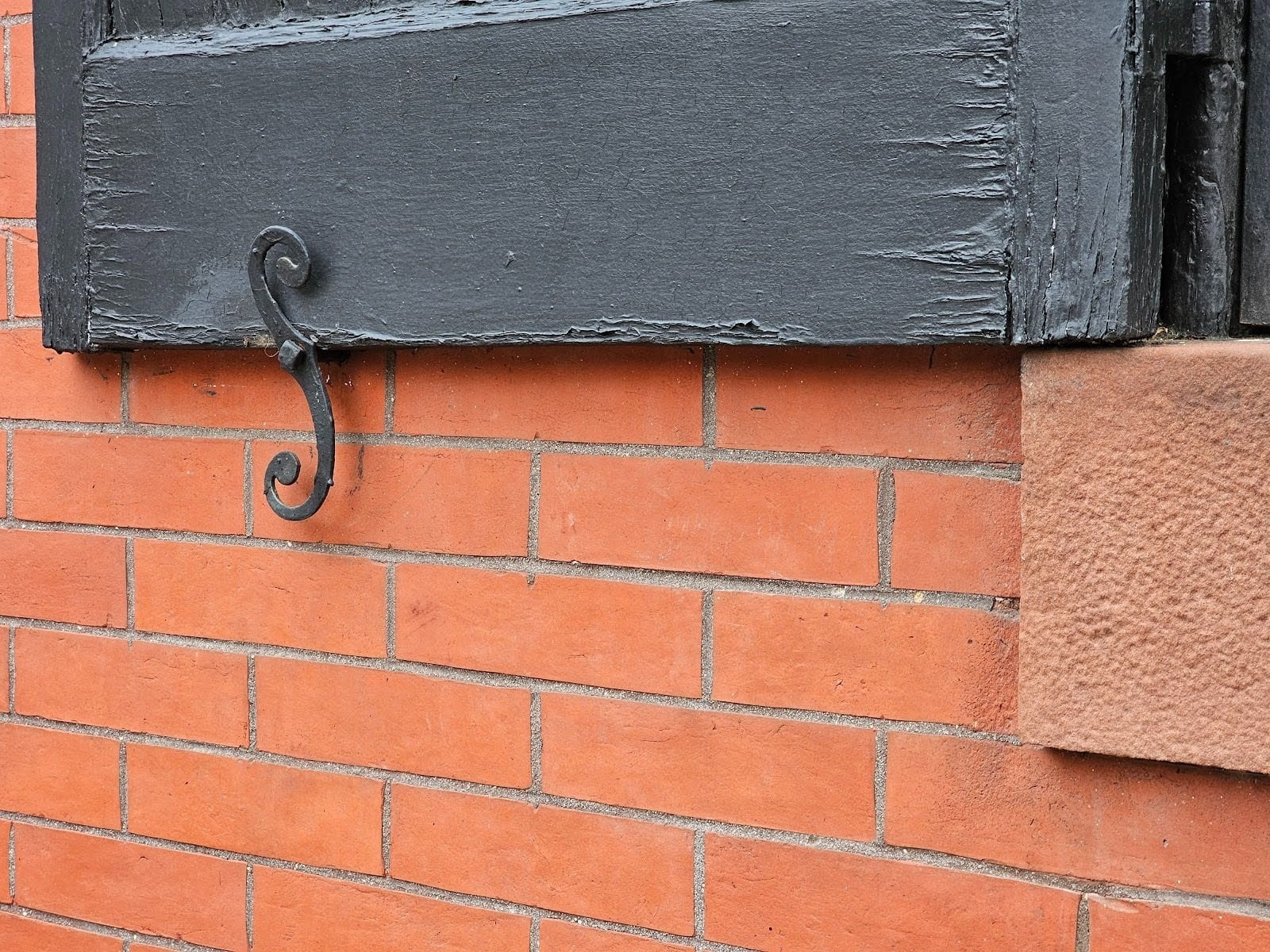
This past week we talked about the spacing required between the offset of the shutter dog and the wall. Here you can see this spacing being used for the actual purpose of keeping the shutter in place.
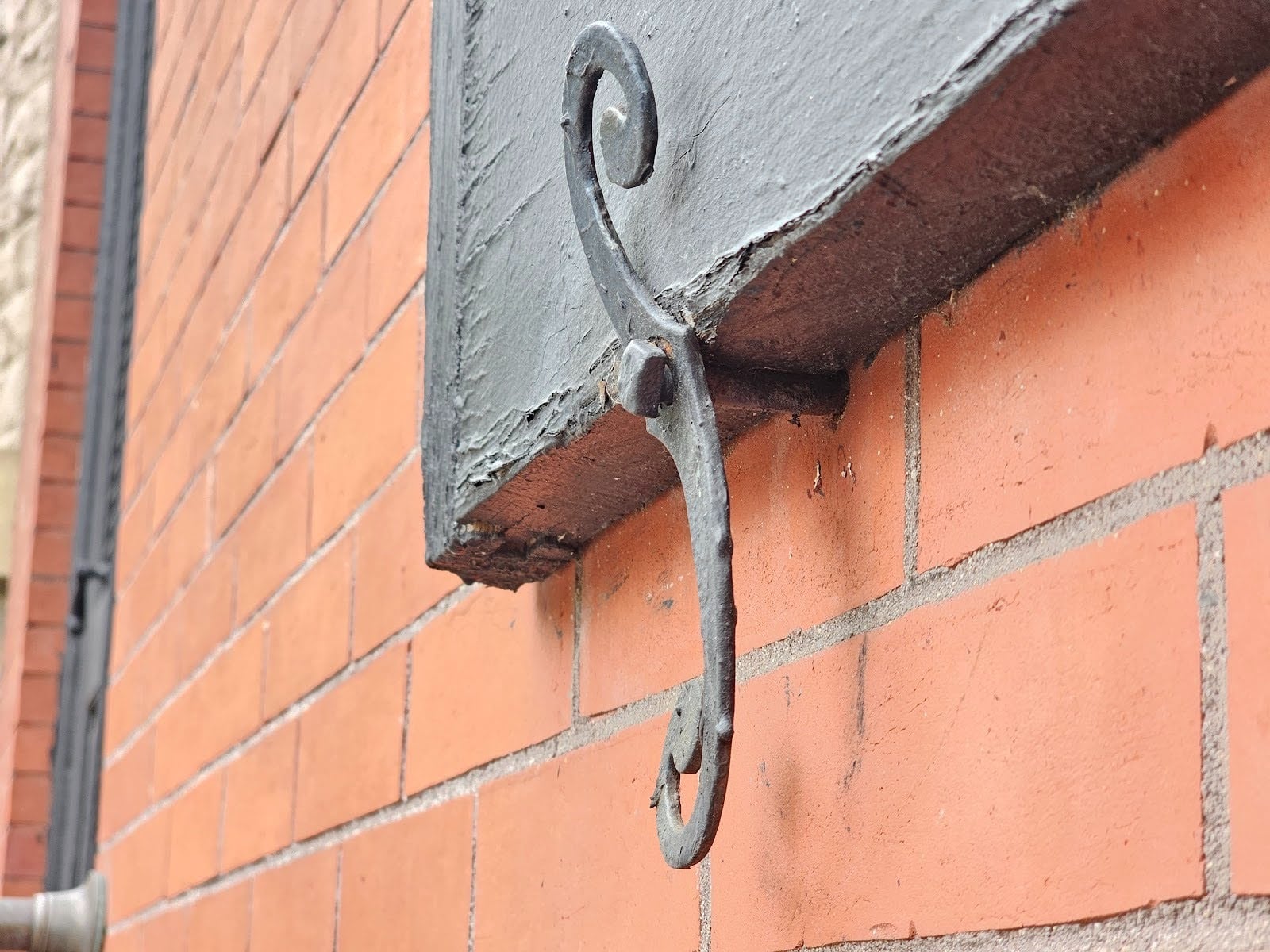
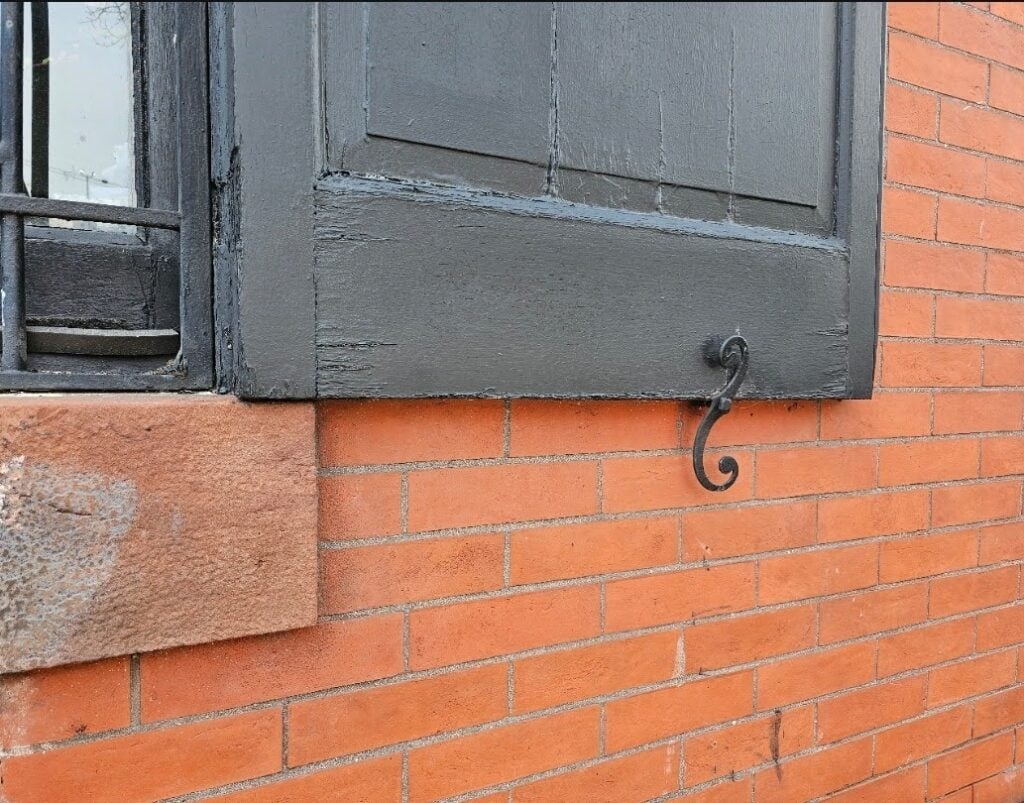
Here you can see the same type of real world case shown in the next picture below on the other side of the opening.
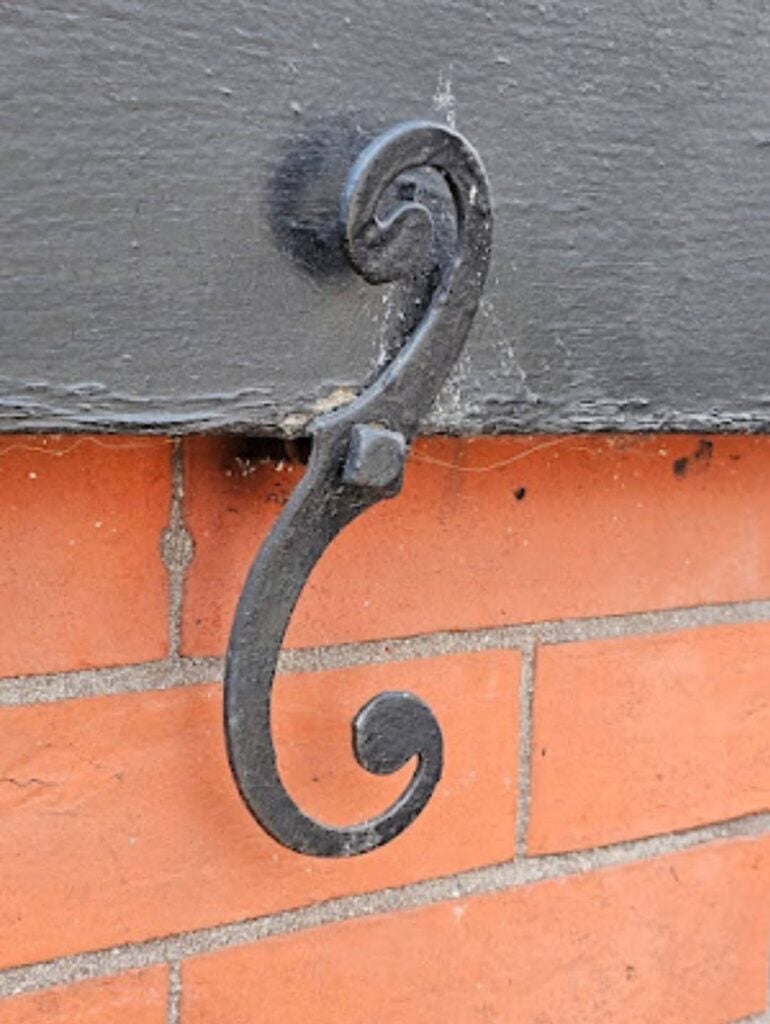
You may notice that the screw head in this application happens to be square. It would be very rare to see that type of square head used in a modern fastener. There are some examples where we still use square heads, particularly for drivers, but it’s much less common for typical lags, today.
Since our company, Dupont Tuckpointing and Masonry, specializes in masonry restoration, historic brick repointing, and tuckpointing services in the Washington D.C. area, we make it a point to study these types of issues. These buildings are uniquely historic, and their preservation requires skilled masons who are technically trained in the best practices and knowledge of proper restoration techniques.
We understand the significance of maintaining the architectural integrity of these historic structures, and our team of experienced professionals is dedicated to delivering exceptional craftsmanship. Whether you require masonry restoration, tuckpointing, or brick repointing services, we are here to help.
At Dupont Tuckpointing and Masonry, we take pride in our work and strive to ensure that every project is executed with the utmost care and attention to detail. We are committed to preserving the rich heritage of Washington D.C.’s built environment for generations to come.
If you have any questions or needs regarding masonry restoration, historic brick repointing, or tuckpointing services, please do not hesitate to reach out to us. We would be delighted to assist you and provide you with the expertise and quality workmanship that your historic property deserves.
You can reach us by telephone at (202) 796-7644 and you can reach us by email from the contact form on our website.