Shutter Dogs: Function, Style & Masonry Integration
Here on our website, in the past, we have looked at a couple different examples of really interesting historic hardware at both doors and shutters. In some cases, there are examples where historic building shutters have been removed from the building yet the historic shutter dogs that held those shutters in place remain. It doesn’t make much sense from a functional perspective to leave the shutter dogs in place, but they are more difficult to remove and they don’t deteriorate as quickly as shutters. Therefore, there are many examples of where the shutter dogs have been left behind.
Shutter dogs are basically metal clips mostly made of ferrous materials that were used to just hold a shutter open and in place. Most of the old shutters had latches that could hold them secure when in the closed position, but without the shutter dogs they would just flop around in the wind when they were in the open position.
Letting things like doors or anything that’s on a hinge flop around in the wind is problematic. When a strong wind gust comes, even with a louvered shutter, it can still create a incredible force, strong enough to injure somebody or even smash the shutter into pieces if it were to slam with the great force caused by the wind.
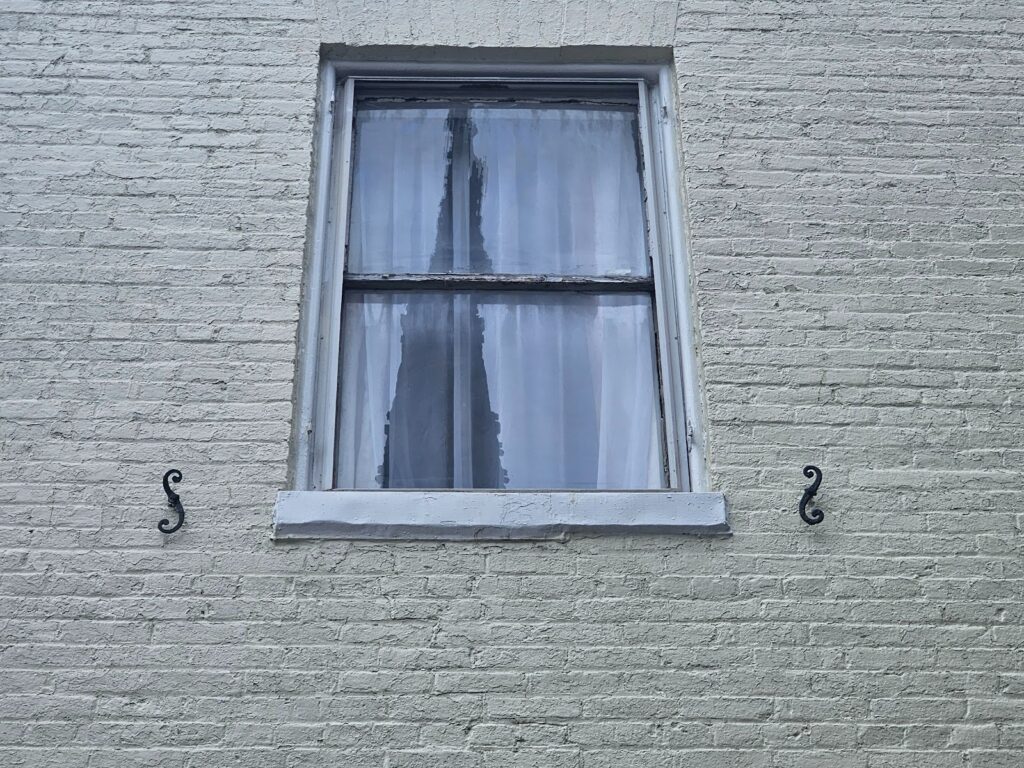
In the case of a door, a shutter dog might just be considered or called a hold-open. Door hold-opens are basically just like they sound, they hold the door open but in place. The picture below shows a historic brick facade, here in Washington DC, where the many window openings on the facade have shutter dogs left in place but yet the shutters are all gone. This is one of those examples where the shutters have deteriorated and or broken into pieces and been removed from the building. Yet, they shutter dogs have been left behind in the original position.
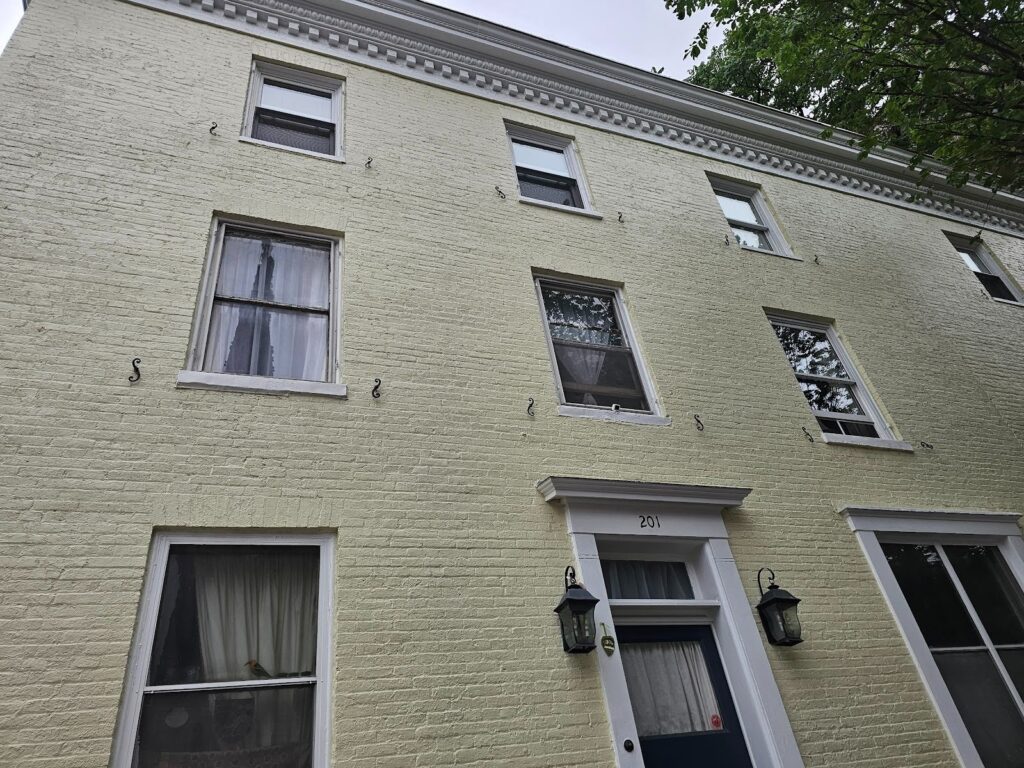
Here you can see the two shutter dogs left at the sides of an original windowsill. This window is a single hung double sash opening. The bottom sash can lift up to roughly or almost halfway of the overall height of the window. From there, somebody can reach out or have a relatively wide opening that can be used for ventilation. If the shutters were still in place, when they were put into the open position, the shutter dog would keep them positioned when twisted from its horizontal position to its vertical position.
In the vertical position it is taller and when the shutter is placed in the open position the vertical dog will twist to be taller and come in front of that shutter, holding it in place and preventing it from closing.
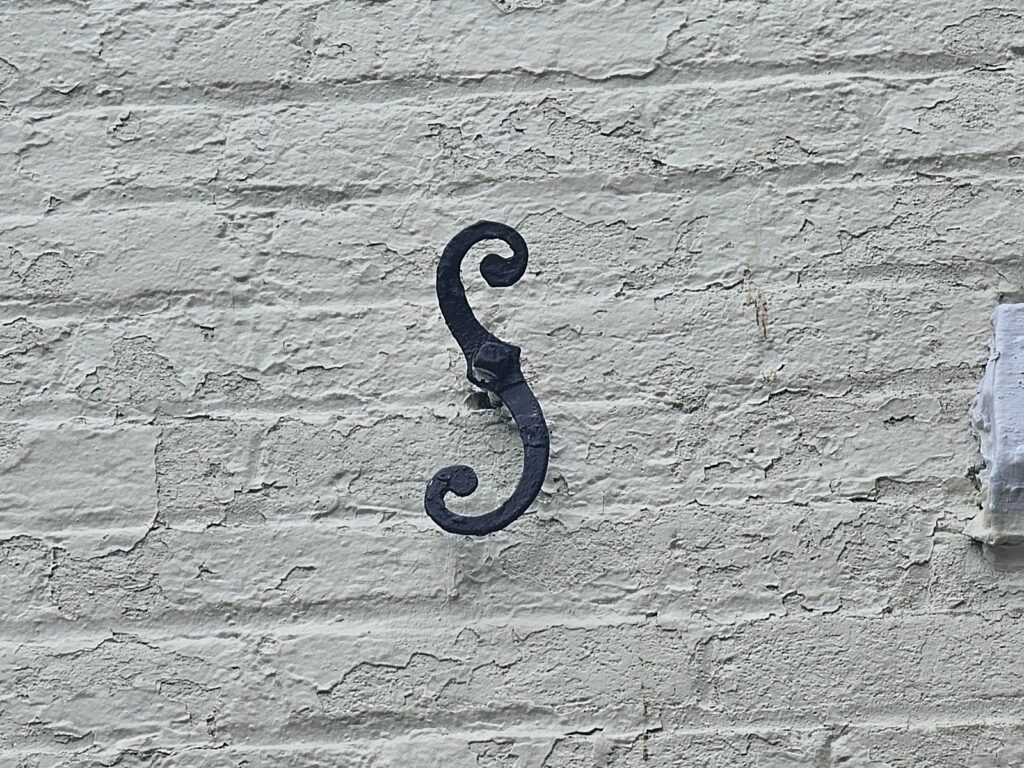
A close-up view of one of the shutter dogs follows in the next picture below. Many technological advancements happened here in the United States in the early part of our country. Our country was once a leader in the world. From an industrial perspective, we made massive leaps forward. Many of the historic architectural details had roots in Europe. In England, they referred to this type of holdback or anchor as a pattress plate.
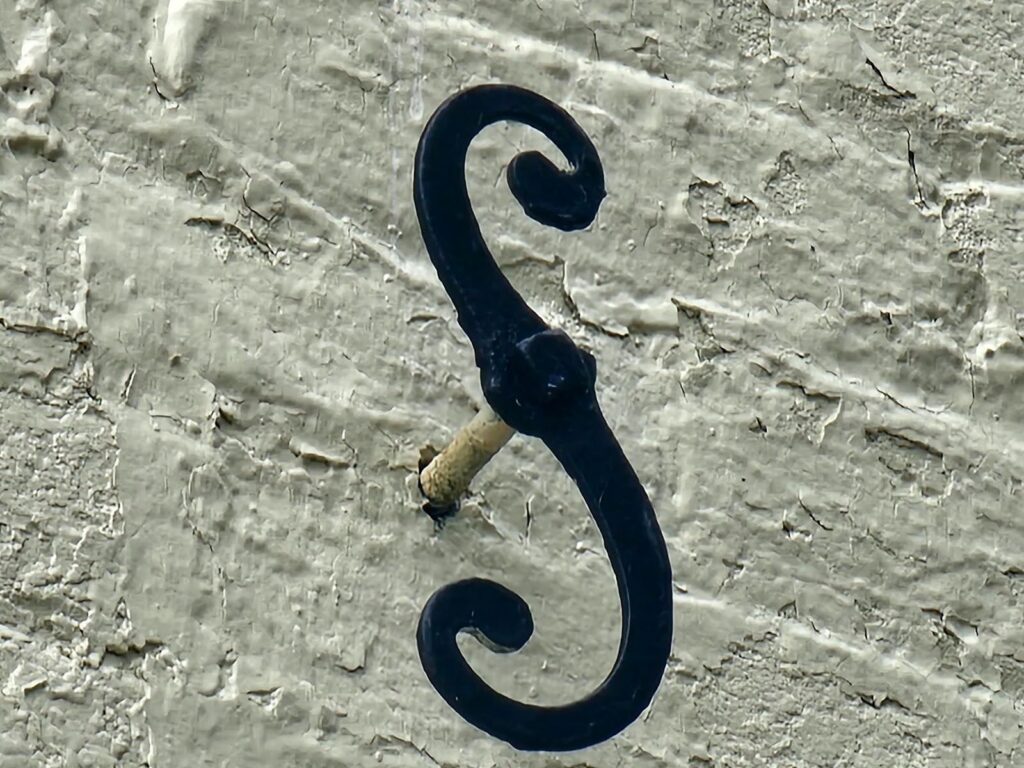
If you look closely at the shutter dog from an angle, you can see that it is mounted on a metal standoff. This standoff keeps the shutter dog positioned away from the wall. That distance allows a space for the shutter itself to sit, positioned against the wall. With this distance, the shutter can be opened fully against the wall and then the shutter dog can hold it in that position. If the shutter dog didn’t have this spacing built into its mounting then it would essentially be bent outwards away from the brickwork to hold the shutter in place.
You may notice that the texture of the brickwork looks rough. It looks like these mortar joints have not been repaired or repointed.
Since our company, Dupont Tuckpointing and Masonry, specializes in masonry restoration, historic brick repointing, and tuckpointing services in the Washington D.C. area, we make it a point to study these types of issues. These buildings are uniquely historic, and their preservation requires skilled masons who are technically trained in the best practices and knowledge of proper restoration techniques.
We understand the significance of maintaining the architectural integrity of these historic structures, and our team of experienced professionals is dedicated to delivering exceptional craftsmanship. Whether you require masonry restoration, tuckpointing, or brick repointing services, we are here to help.
At Dupont Tuckpointing and Masonry, we take pride in our work and strive to ensure that every project is executed with the utmost care and attention to detail. We are committed to preserving the rich heritage of Washington D.C.’s built environment for generations to come.
If you have any questions or needs regarding masonry restoration, historic brick repointing, or tuckpointing services, please do not hesitate to reach out to us. We would be delighted to assist you and provide you with the expertise and quality workmanship that your historic property deserves.
You can reach us by telephone at (202) 796-7644 and you can reach us by email from the contact form.