Horizontal Movement Joints: Prevent Brick Cracks
Historic brick facades, particularly those constructed using double wythe construction, were designed as structural brick walls, where the masonry brick itself served as a crucial component of the structural load path often have no movement or control joints. In such construction, the load path refers to the sequence of structural elements that transfer loads from one part of the building to another, ultimately reaching the foundation. Each brick wythe, or layer of bricks, contributes to the overall strength and stability of the wall.
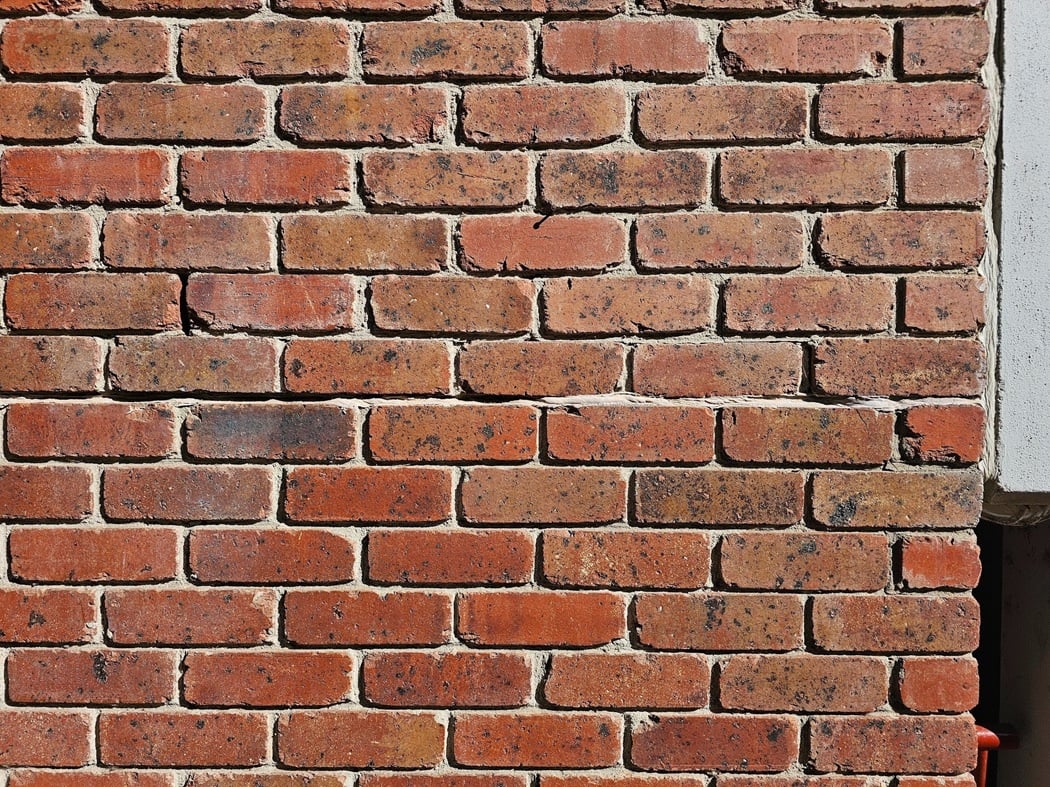
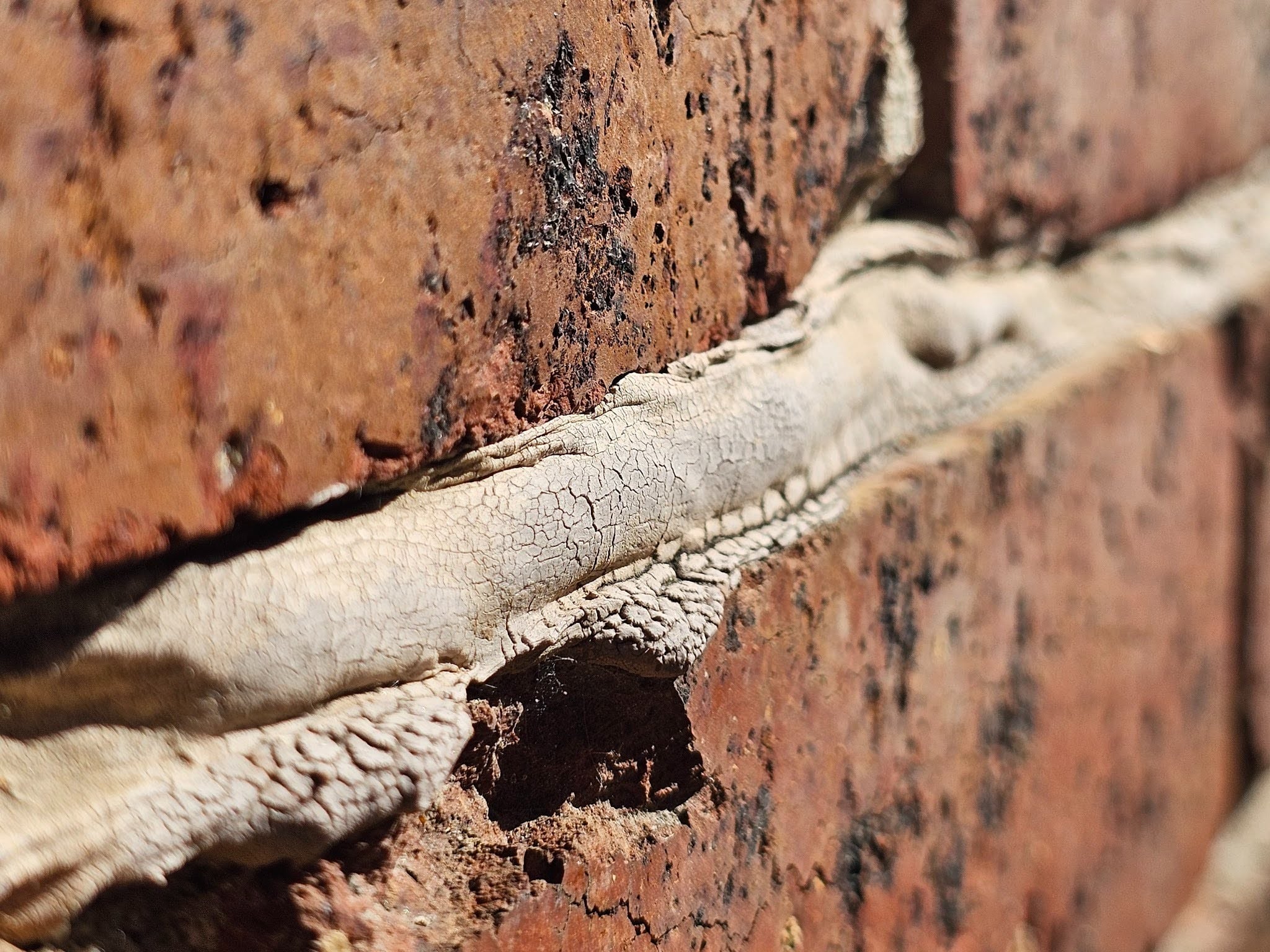
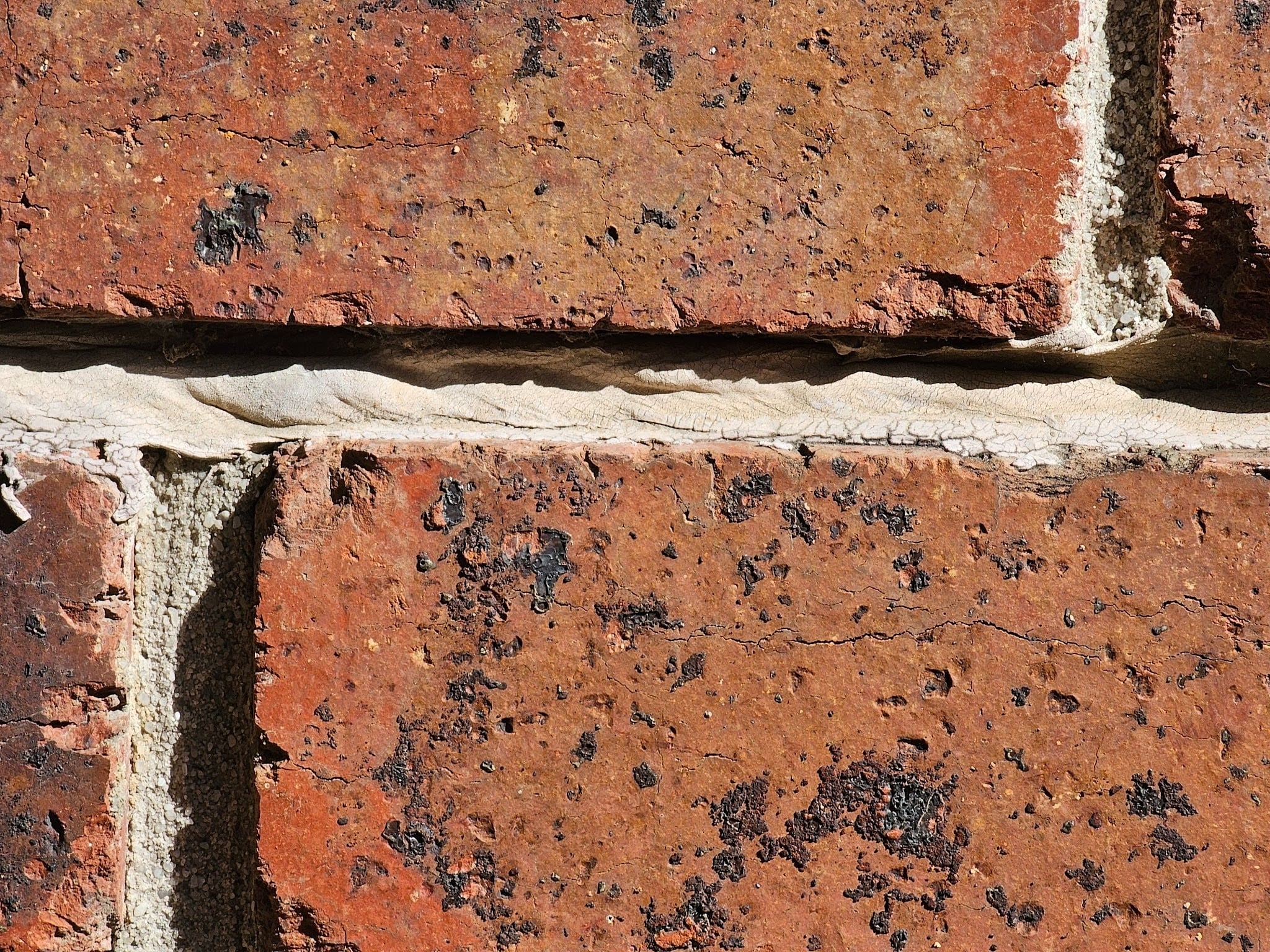
It almost blends in, but there is a horizontal joint in the picture below where the mortar appears to be a little bit more pronounced than the other areas. That horizontal joint is a messy sloppily applied application of gun sealant or caulking. That was applied at that location because that location is a horizontal control or movement joint.
Understanding the Types of Brick Walls:
Historically, brick walls were often built with single, double, or even triple wythe construction. Single wythe walls consist of a single layer of bricks, while double and triple wythe walls incorporate two or three layers, respectively. Double wythe construction, in particular, was common in older buildings, providing enhanced structural integrity, single wythe walls would not work in a structural assembly and triple white walls are generally excessively thick at above grade installations with limited spans found in typical row homes, for example.
In commercial construction where brick is utilized primarily as a skin rather than a structural component, steel shelf angles support the weight of the brick wall above them. These shelf angles, typically made of red-iron primed and painted A36 structural steel or galvanized steel for corrosion resistance, are installed horizontally at each level of brickwork along the facade.
The installation process involves mounting the steel shelf angles to either the edge of a concrete slab or to a structural element of the building, such as a steel frame or concrete beam. The angles are anchored to the building’s structure using fasteners such as bolts or screws, or connected to cast embedded threadwell plates for a strong and stable connection.
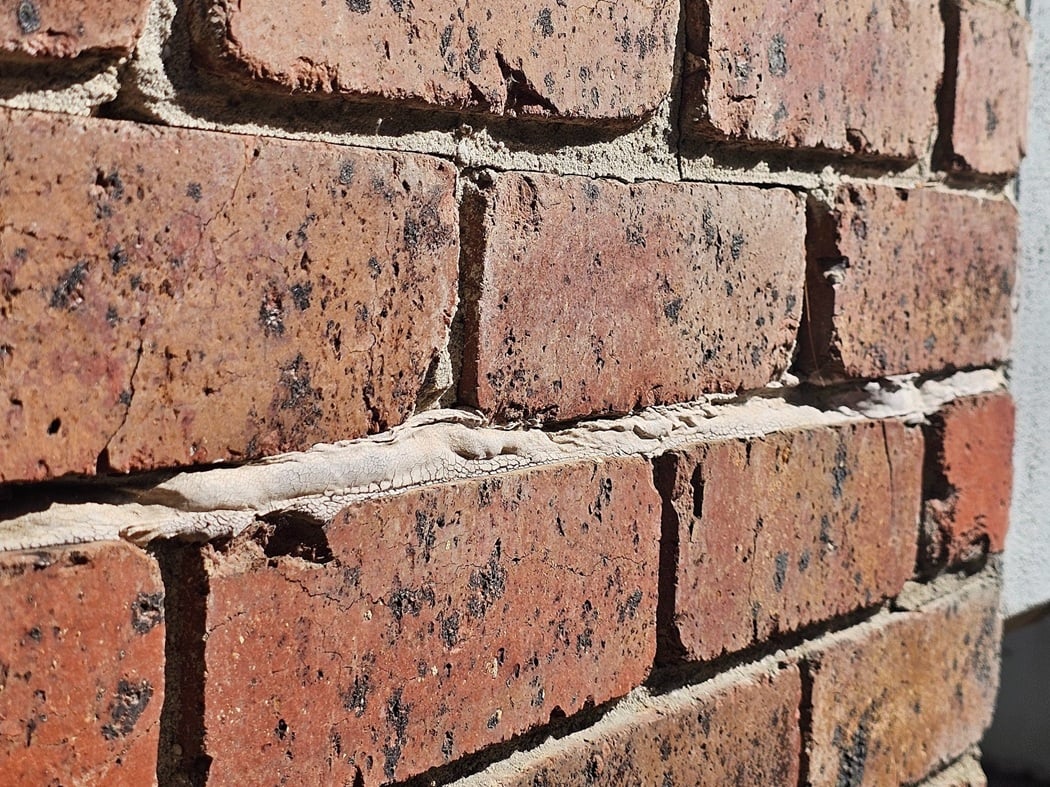
The next picture below it sure is a close-up view of that horizontal control joint and obviously clearly see the pronounced application of sloppily applied gun sealant.
Once in place, the steel shelf angles provide a strong support system for the brick wall above. As each course of bricks is laid, it rests directly on the horizontal flange of the shelf angle. This distribution of weight helps to evenly distribute the load across the entire length of the angle, minimizing stress concentration points and ensuring structural stability.
The horizontal orientation of the shelf angles allows them to effectively transfer the vertical load of the brick wall to the building’s structure below. By distributing the weight evenly, the shelf angles help prevent excessive deflection or deformation of the brick facade, ensuring its long-term integrity and durability.
In addition to providing structural support, steel shelf angles also serve as a means of accommodating movement within the brickwork. As buildings undergo thermal expansion and contraction, as well as other forms of structural movement, the shelf angles flex slightly to accommodate these changes without compromising the stability of the brick wall. Coincident with the location of the steel angles, or in close proximity the brick movement joint will allow a level of brick facade to move or slide past the other level below or above just slightly enough that it can accommodate natural building movement without breakage.
Furthermore, steel shelf angles are connected with a role in preventing moisture infiltration and water damage within the building envelope. By supporting the brick wall above ground level, they create a cavity between the brickwork and the building’s structure, allowing for proper drainage and ventilation. Brick is semivitreous so it has a degree of water resistance but still condensation water can get behind the brick surface but because this type of assembly is built with a cavity, a full waterproofing system and cartridge or similar type weep drain system can be built between the different layers of the exterior facade allowing a waterproof assembly with proper drainage.
This helps to mitigate the risk of water penetration and moisture-related issues such as efflorescence, mold growth, and deterioration of building materials.
Overall, steel shelf angles are essential components of brick facade systems in commercial construction, providing structural support, accommodating movement, and promoting moisture management. Their proper installation and integration into the building’s design are critical for ensuring the long-term performance and durability of the brick cladding system.
Evolution of Building Practices:
In modern construction practices, particularly in urban areas like Washington, DC, buildings are often constructed using cast-in-place superstructure frames, with brick exteriors serving primarily as decorative or protective elements rather than structural components. In these cases, the internal frame of the building bears the primary load, with the brick facade hanging on the superstructure. Despite their aesthetic appeal, these brick facades require careful consideration of movement and expansion to prevent structural issues.
Horizontal Movement Joints:
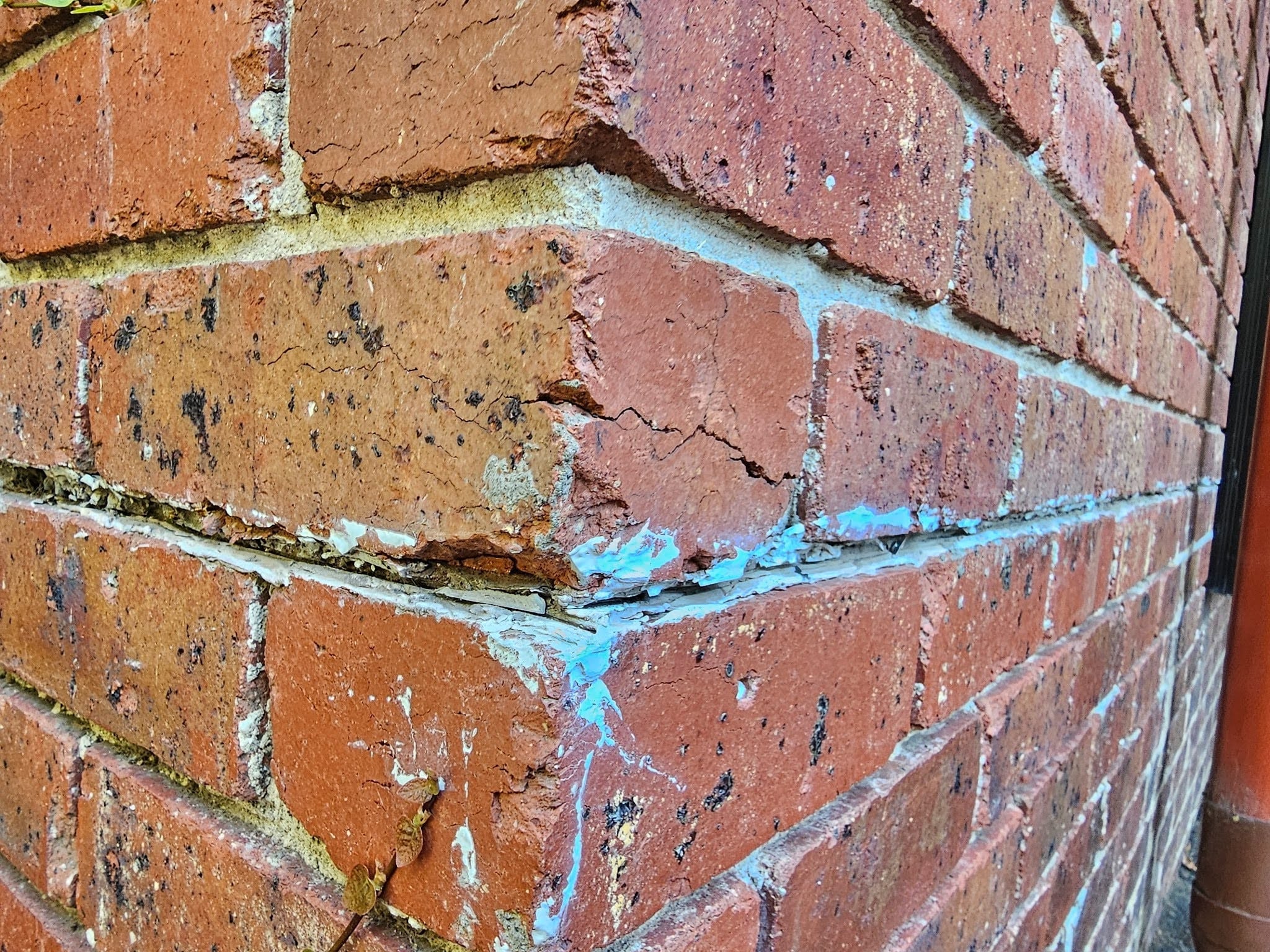
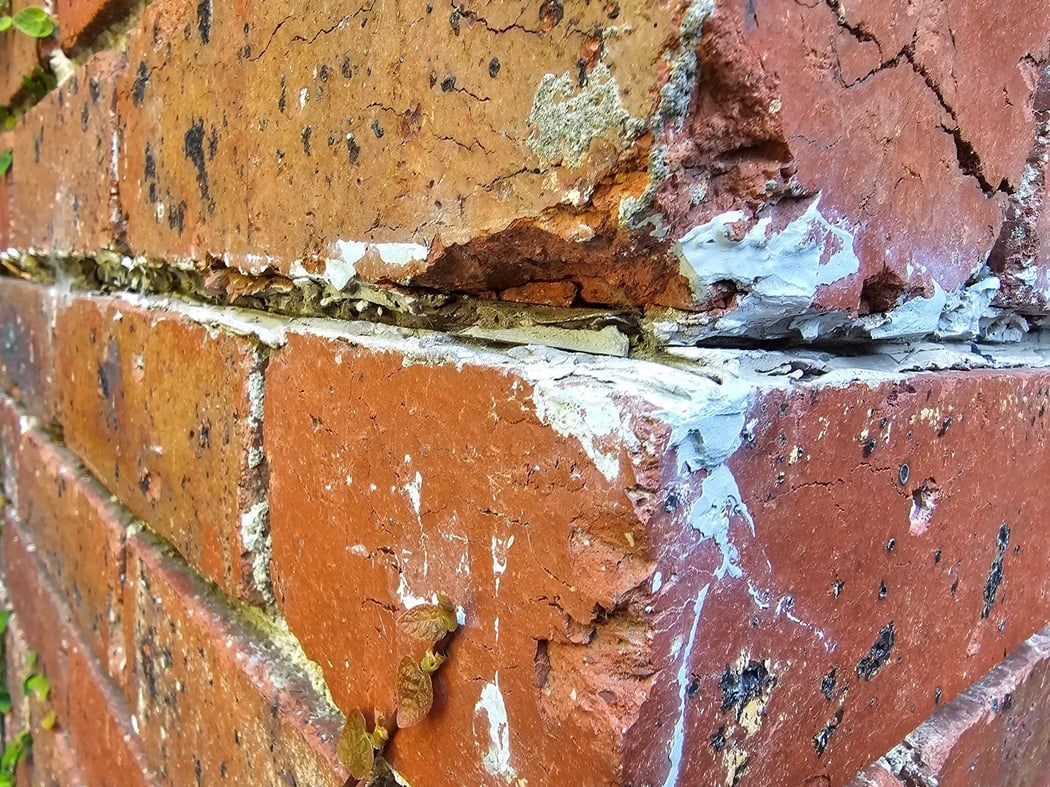
Horizontal movement joints are essential components of brick building skin construction, particularly in structures with non-structural brick facades. These joints allow for controlled movement and expansion of the brickwork, reducing the risk of cracking and structural damage. Typically, horizontal movement joints are spaced at regular intervals along the facade, with the specific spacing determined by factors such as building height, material properties, and environmental conditions.
Importance and Benefits:
The primary purpose of horizontal movement joints is to accommodate thermal expansion, moisture-related swelling, and other forms of building movement without compromising the integrity of the brick facade. Without adequate movement joints, the built-up stresses within the brickwork can lead to unsightly cracks, water infiltration, and even structural instability over time. By incorporating horizontal movement joints, builders can ensure the long-term durability and performance of the brick facade.
Application and Materials:
Horizontal movement joints are typically filled with gun-applied caulking or elastomeric sealant, which provides flexibility to accommodate movement while maintaining a weather-resistant seal. The sealant is applied to the edge of the joint, forming a barrier against moisture intrusion and preventing debris from accumulating within the joint. Engineering considerations such as material compatibility, joint design, and sealant properties are crucial for ensuring effective performance and longevity.
Horizontal movement joints allow a building physical flexibllilylty and avoid unnecessary damage, preserving the structural integrity and aesthetic appeal of brick facades in modern construction. By allowing for controlled movement and expansion, these joints help mitigate the risk of damage and deterioration, ensuring the longevity of the building envelope. Proper design, spacing, and maintenance of horizontal movement joints are essential for maximizing their effectiveness and minimizing the potential for costly repairs in the future.
Our Company and Upcoming Articles
As specialists in masonry restoration, our company has the experience to manage and prescribe wholistic and precise preservation work plans for historic brick and stone structures. Our team is highly trained and qualified in critical areas like repointing mortar joints, tuckpointing, and restoring deteriorated masonry. With decades of collective experience working on iconic historic buildings in Washington DC, we take pride in our quality craftsmanship. Together with our clients, we can develop custom solutions to repair and maintain the structural integrity and historic charm of your building. Our team has tackled some of the toughest challenges, so you can rely on our skills for your masonry restoration project.
In an upcoming series of articles, we will examine the principles of historic masonry masonry restoration. Follow us as we look at the science behind aging masonry and discover solutions to slow deterioration and maintain the structural integrity of our cherished historic buildings here in Washington, DC. You can contact here, right at outer website.