Unrefined Clay Tile in a Running Bond: Rustic Brick-Look Tile Design
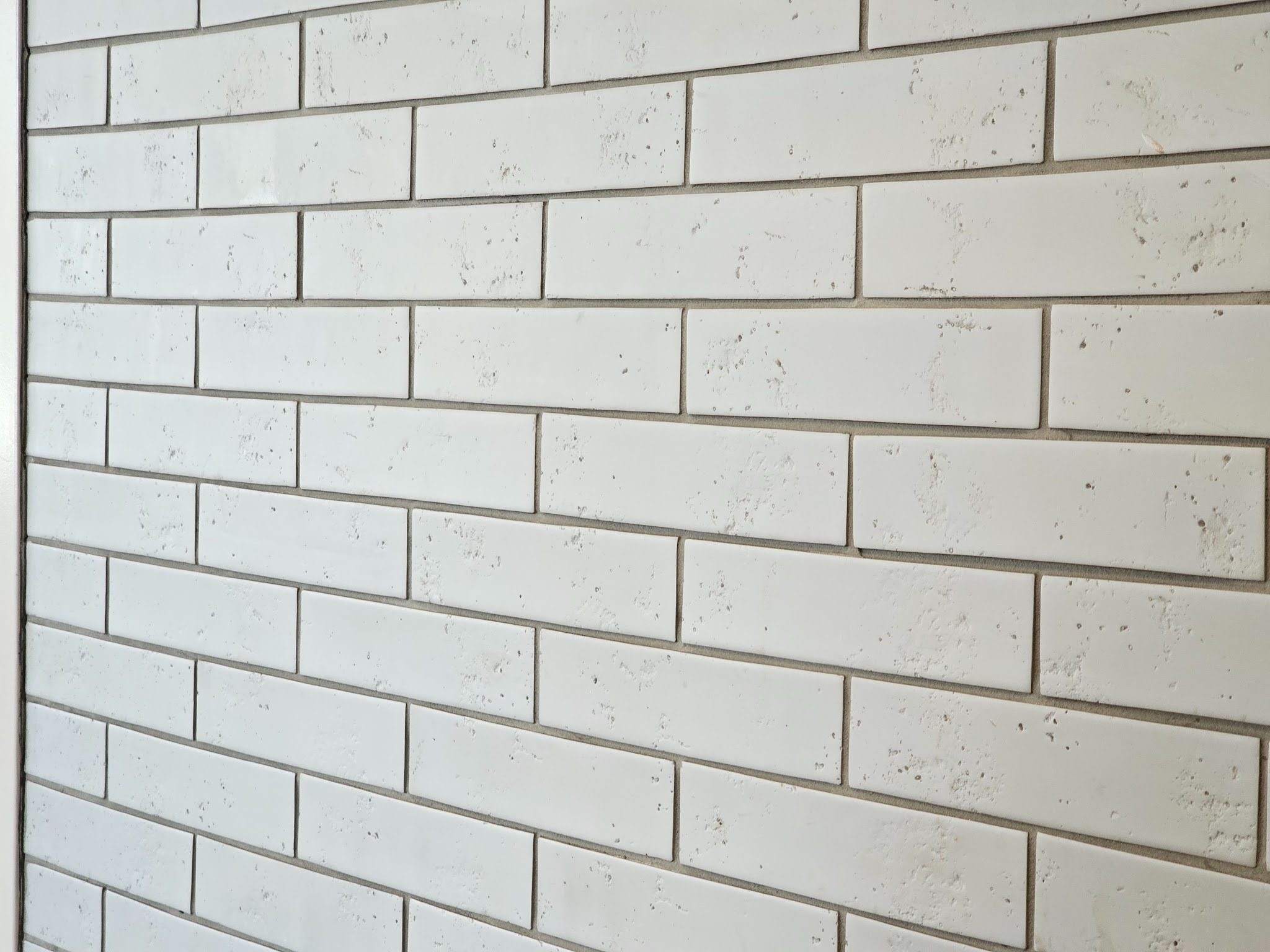
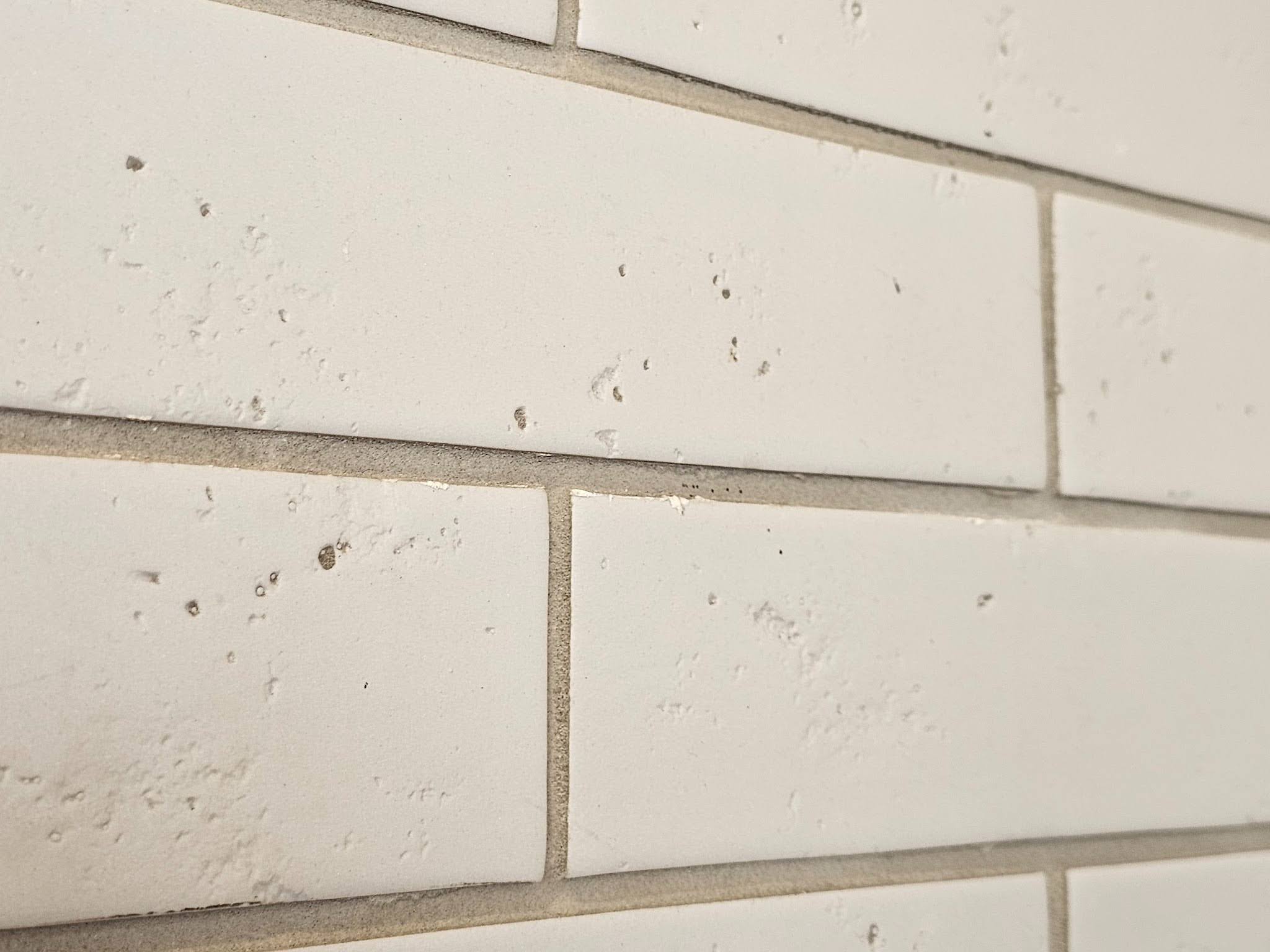
Recently, we had an opportunity to take a look at a particular type of wall tile with a faux rustic surface texture. It is subtle. The tile is versatile. This neutral nature makes it effective for use in a wide range of design styles.
One of the big takeaways from looking at this particular facade is understanding simply why people would put so much effort into making a replica of brick. It would be easier, from most perspectives, just to install a tile that didn’t resemble brick. By using a tile that resembles a brick, it is smaller and therefore has a higher labor coefficient to installation. The area of a brick face is just generally smaller than the typical or most common types of tiles.
When you look at it from a perspective of labor cost optimization, it’s important to start with a default of the least expensive tile installation. It depends, and conditions vary depending on materials, substrates, and the context. You could argue though that 12 inch x 12 inch tile or 12 inch x 24 inch tile is some of the most labor cost effective tile types to install.
We generally recommend that the grout color reflects or compliment the darkest color within the range or gradient of the colors in the field of the tile. In this case, there is not a wide range of colors in the tile itself. Instead, there are relatively tiny pockmarks that have a shadow on top of the recess. Those small marks are darker than the remainder of the tile and in this case the grout line complements those darker accent marks.
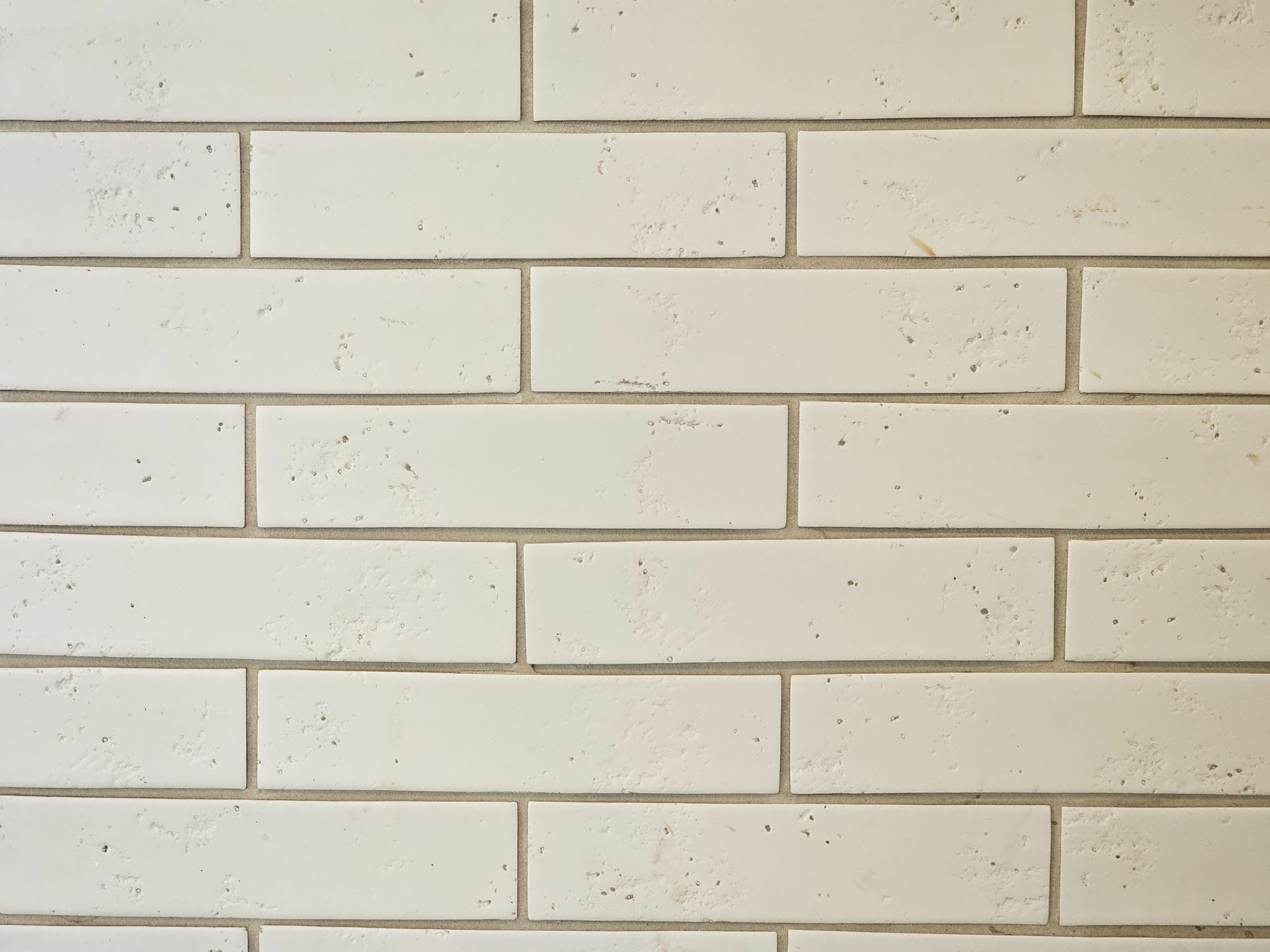
If you look at the proportions of this tile, in the ratio of width to height, you may notice they’re a bit more elongated than typical bricks. Typical bricks have a height of about 2.25 inches and are about 7.75 inches wide. By comparison, these tiles have a slightly lower height but a much wider width. They’re about 40% longer than typical bricks. There’s not just one type of brick though. Particularly here in Washington DC, we both have the typical modern bricks that we described, but we also have many buildings built with historic bricks.
Historic bricks, by comparison, have a similar height to modern bricks. They are a bit wider though. They are generally about 8-3/8 of an inch wide.
There are also even wider bricks with a much longer than typical width to height ratio, common here in Washington DC. They’re not so common that we see them used in construction on every block, but once in a while we happen to see historic Roman bricks.
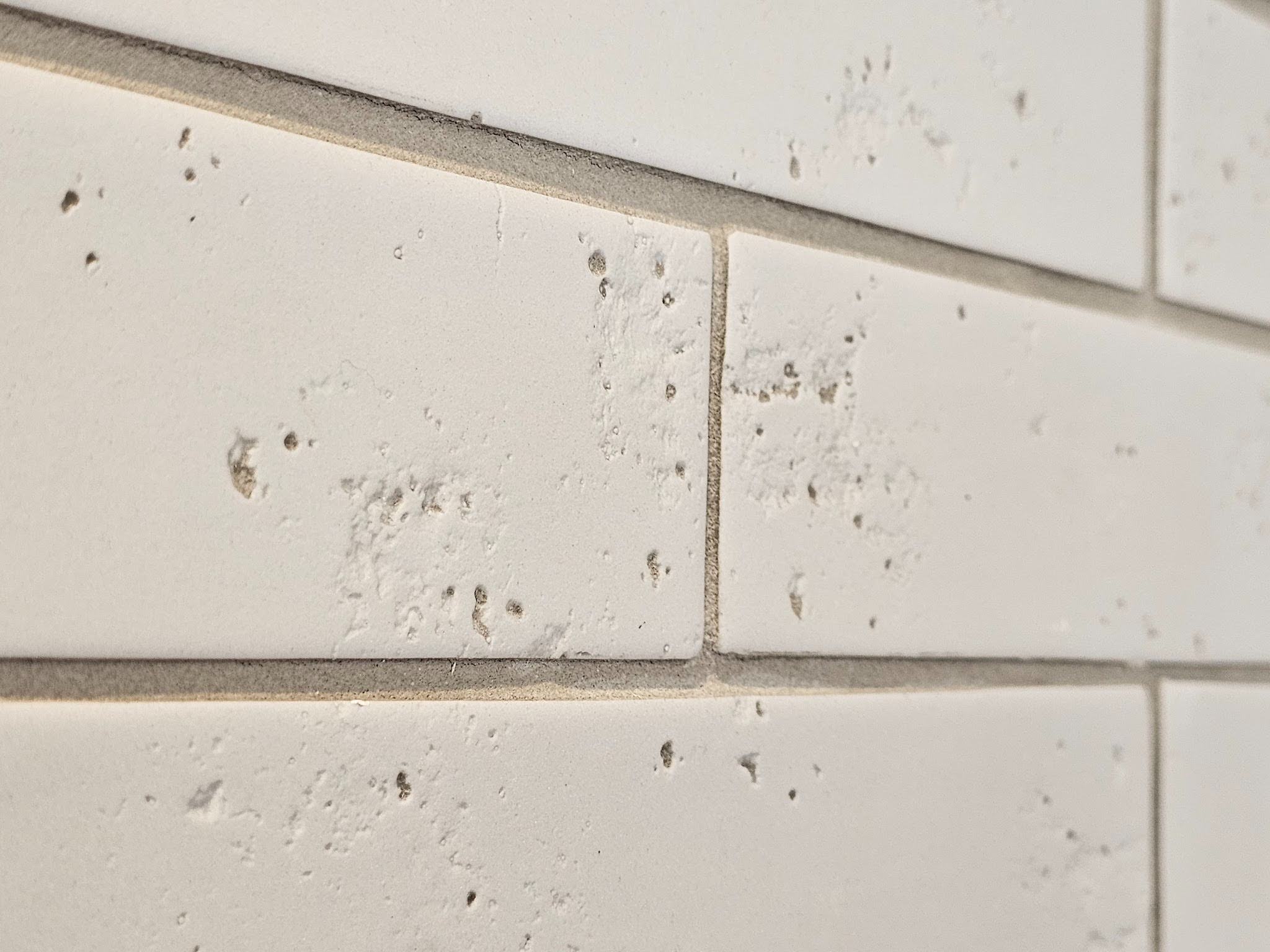
There are several different varieties of tile grout. To simplify though, you can generally break up the tile grout options in a few distinct classes or groups. One way to classify the grouts Is by looking at them in terms of sanded or non-sanded. The non-sanded grout may be a bit more common for wall tile installations, but here a sanded grout has been used.
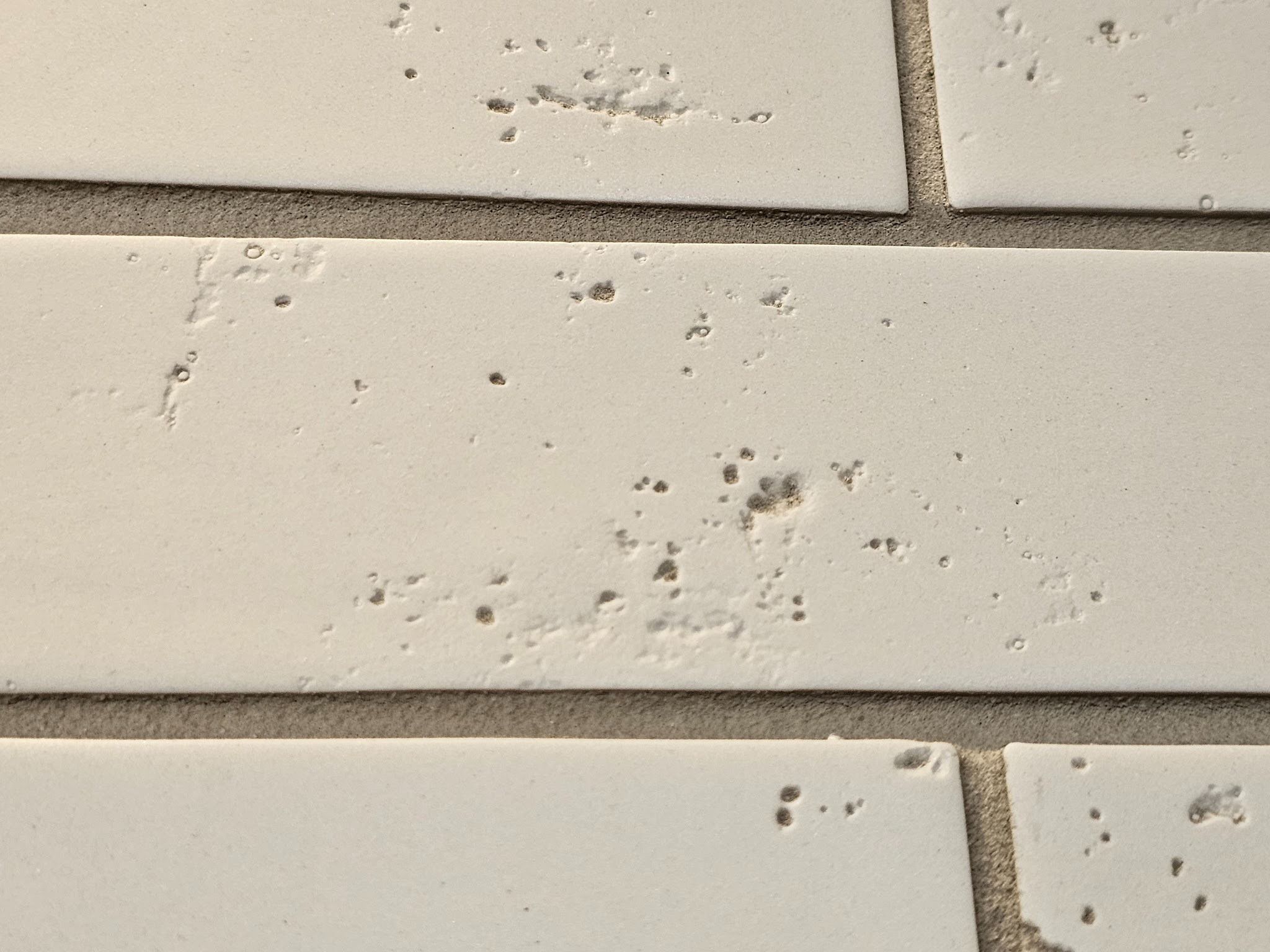
Most often, when we analyze brickwork, we’re looking at the conditions of the brick, both at the surface, and also at the mortar between the bricks. When the mortar has deterioration at the surface, it generally needs to be repointed. This specifically applies when the deterioration is related to untreated for unprotected exposure to the elements.
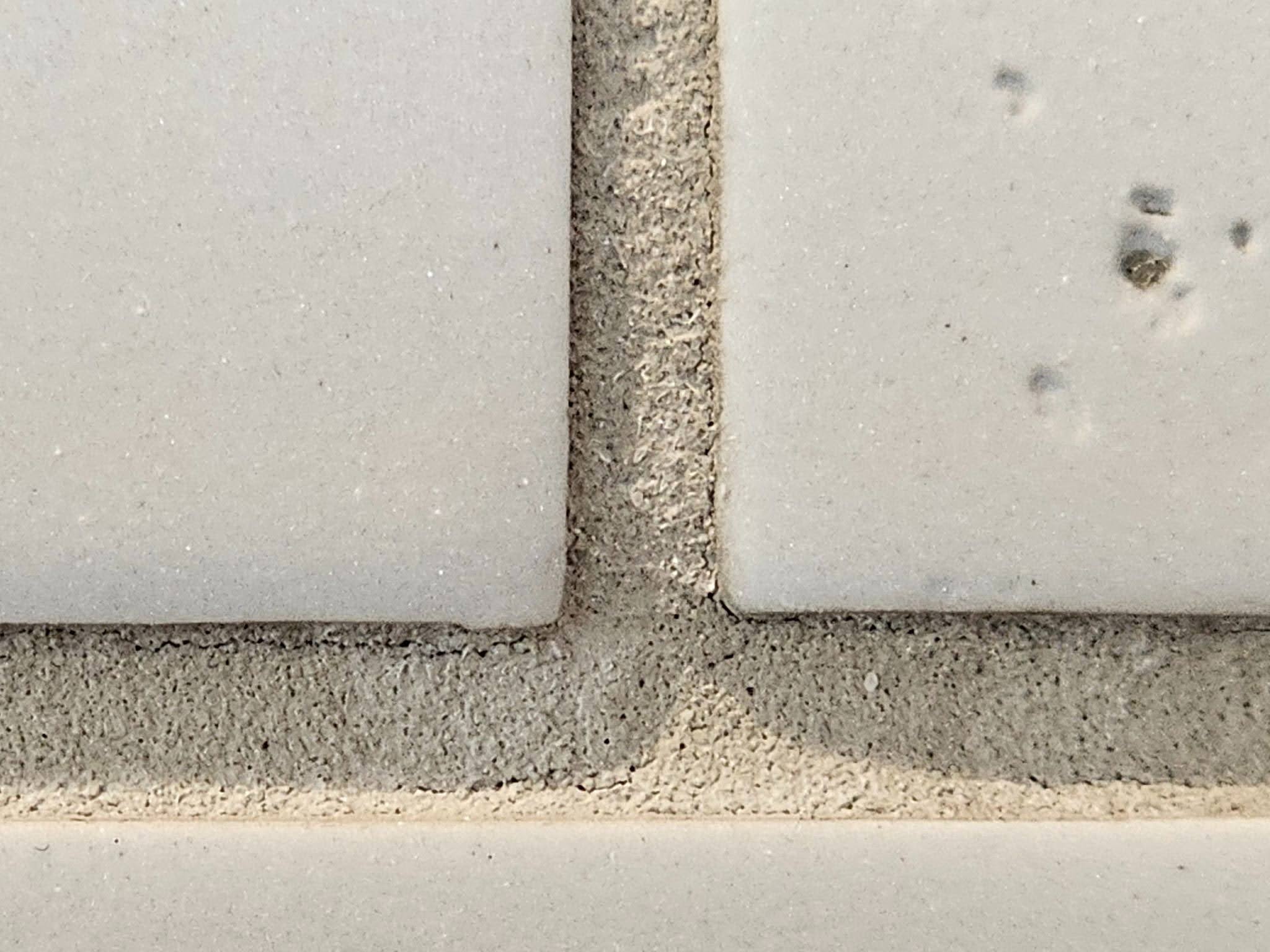
Here, in this case, the grout lines of this tile look very much like the mortar joints of traditional or typical brickwork. Here, the joint is a little bit smaller. The vertical perpend joint shown in the picture above is roughly 5/16 of an inch in width. The horizontal joints shown in the pictures below are roughly 3/8 of an inch thick. It’s not uncommon for pressed brick to have very thin motor joints. In fact, the mortar joints at those bricks are, in some cases, even thinner than 1/4 of an inch. The repointing work is arduous for very thin joints because it requires precision in the raking or removal of the old or deteriorated mortar.
Since our company, Dupont Tuckpointing and Masonry, specializes in masonry restoration, historic brick repointing, and tuckpointing services in the Washington D.C. area, we make it a point to study these types of issues. These buildings are uniquely historic, and their preservation requires skilled masons who are technically trained in the best practices and knowledge of proper restoration techniques.
We understand the significance of maintaining the architectural integrity of these historic structures, and our team of experienced professionals is dedicated to delivering exceptional craftsmanship. Whether you require masonry restoration, tuckpointing, or brick repointing services, we are here to help.
At Dupont Tuckpointing and Masonry, we take pride in our work and strive to ensure that every project is executed with the utmost care and attention to detail. We are committed to preserving the rich heritage of Washington D.C.’s built environment for generations to come.
If you have any questions or needs regarding masonry restoration, historic brick repointing, or tuckpointing services in DC Area, please do not hesitate to reach out to us. We would be delighted to assist you and provide you with the expertise and quality workmanship that your historic property deserves.
You can reach us by telephone at (202) 796-7644 and you can reach us by email from the contact form on our website.