Brick and Mortar Disintegration: Warning Signs of Masonry Failure
We have looked at many different examples of deteriorated brickwork in the past. Historic brickwork needs to be maintained. Essentially if a historic brick facade is well maintained it can last for decades longer and even centuries altogether. Most of the historic buildings here in the downtown or most historic parts of Washington DC are well over 100 years old. In most cases the historic brickwork, built over 100 years ago, has needed very little upkeep and maintenance, to date. However, at this point now if it hasn’t already been repointed it should probably be restored.
Historic brick masonry repointing process is very laborious but it can extend the life and it cannot practically be avoided. Routine upkeep and maintenance still needs to be understood and conducted on scheduled intervals. The typical routine maintenance processes are relatively low cost though and comparatively less complicated.
As mentioned above, we’ve looked at several scenarios that are similar. This one is worse though. The damage here is more extensive. Typical deteriorations of mortar joints may have voids or omissions where mortar has delaminated. Here it’s similar but more extensive. There’s also several areas of significant spalling. In this coming week, we’re going to talk a bit more about brick spalling issues. Those issues of spalling are interrelated to the issues of deteriorated joints and repointing so we’ll start with talking about that first.
The interconnectivity between brick spalling and historic joint repointing is related both to moisture and overall deterioration at the exposed surface areas of the masonry.. When the mortar repointing isn’t done proactively, the entire wall of the building can become compromised and damaged.
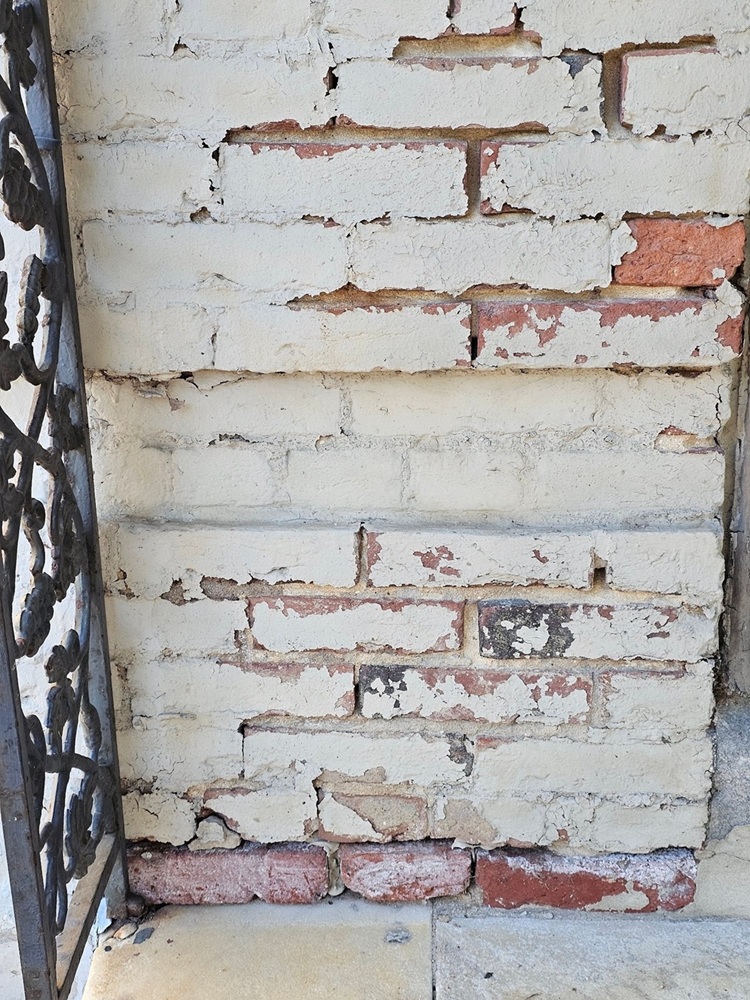
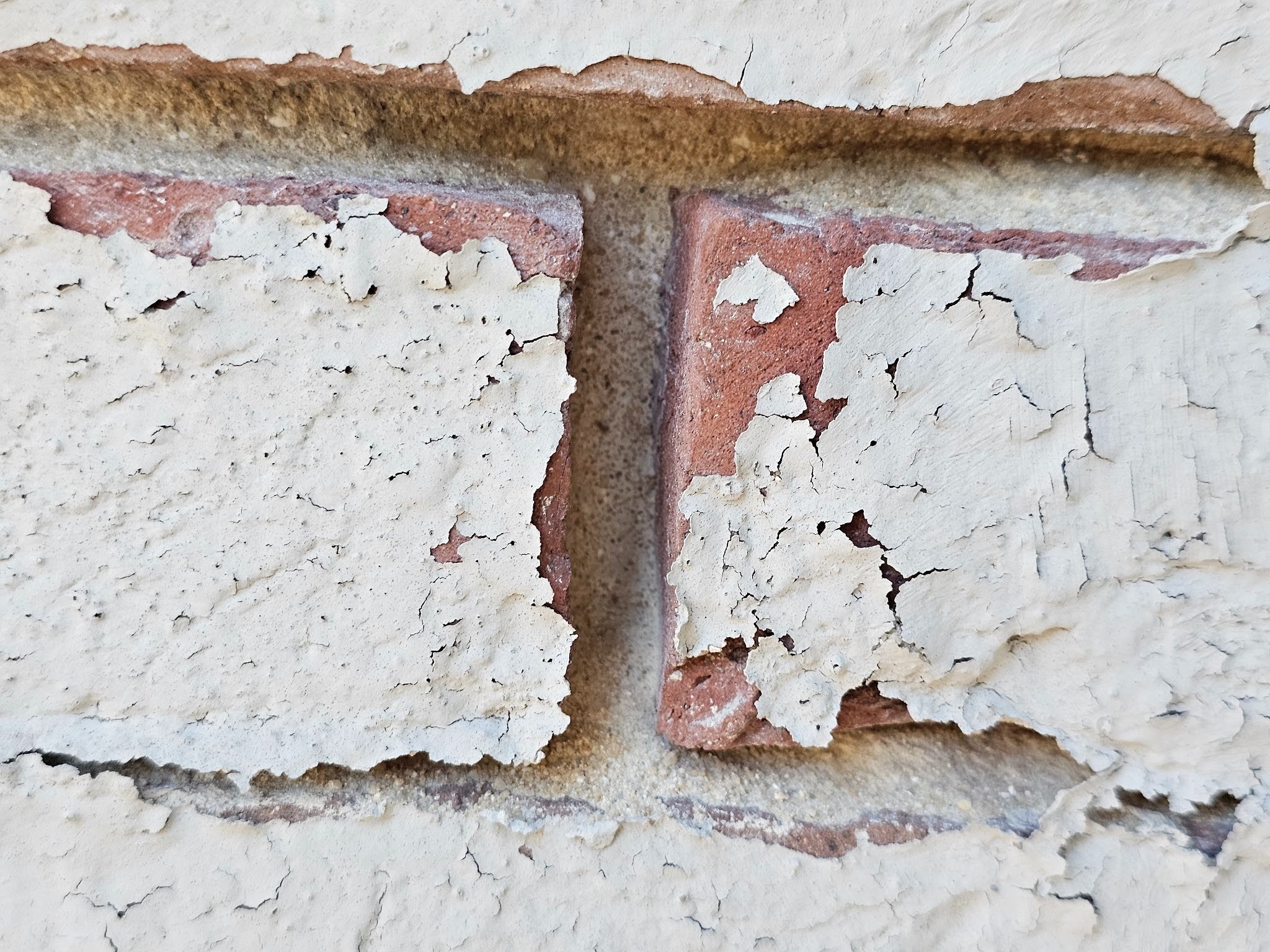
In the picture below you can see a relatively typical type of deterioration. The mortar has become weak at the exterior face of the wall. In this particular case, the mortar hasn’t been raked. Raking is the process of removing old and/or deteriorated mortar from the surface. Raking is the manual or automated method of grinding out the bad mortar. The mortar essentially becomes soft and powdery once it has become deteriorated. At the exterior surface, when it’s severely neglected, the mortar can be so deteriorated that it can be removed without significant force or tooling. Here, it’s deteriorated so deeply without intentional raking or removal that it’s indicative of more significant problems.
Just a quick side note, just to give a bit of insight into understanding some of the details of what we see here, you can tell, this is the original mortar. The remaining mortar, set in about 3/4 of an inch from the exterior face of the wall, is a historic mortar and we know that just by looking at it. From visual cues alone, it’s apparent that this mortar is not a repointed or modern type of mortar. There are specks of white inside the otherwise tan looking mortar. Those white specks and the light color of the mortar are signs that this is original historic mortar from the time of the original construction of the building.
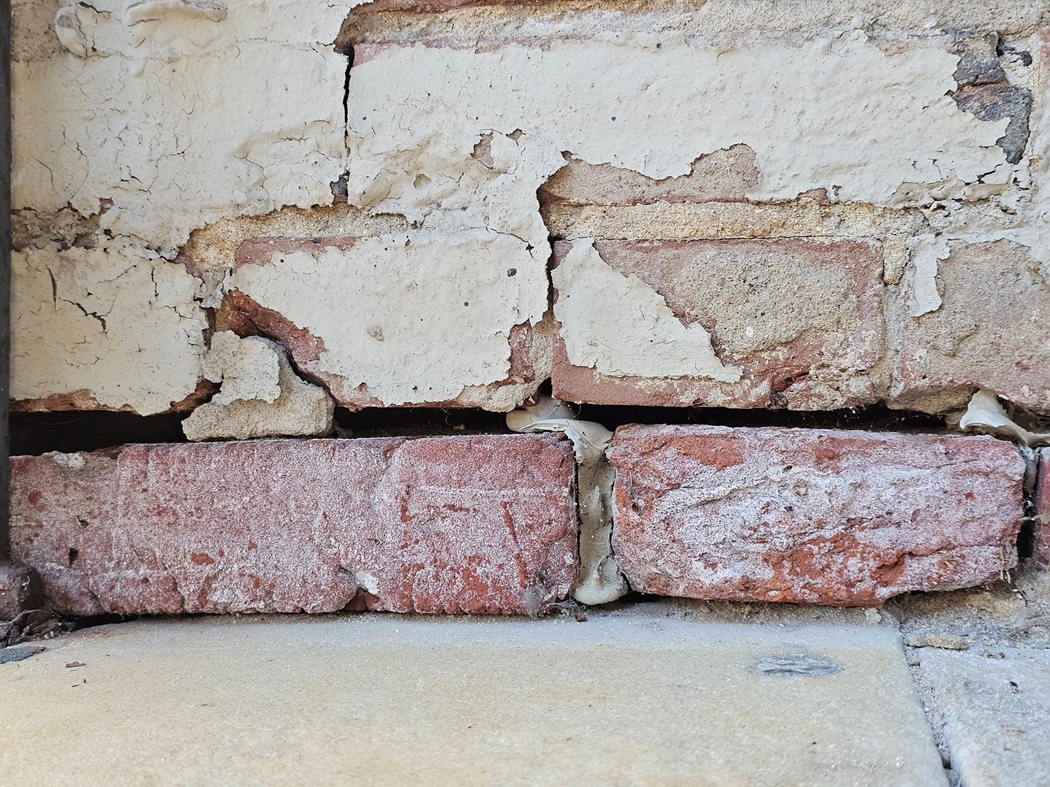
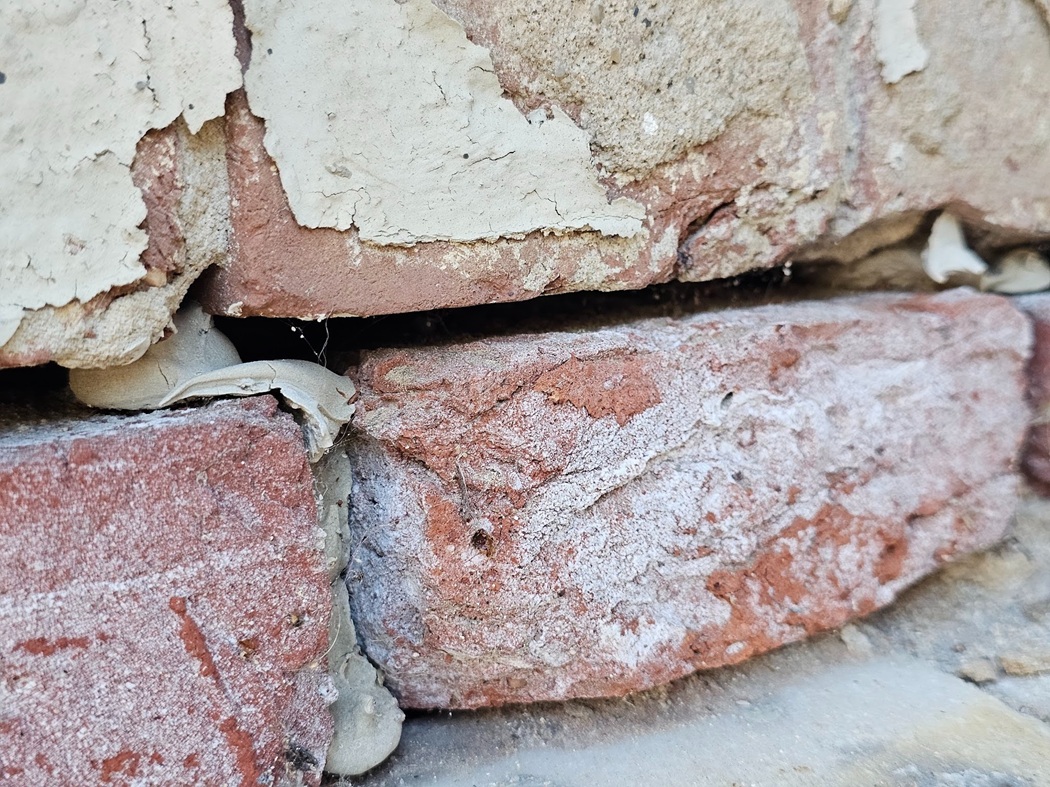
When you look at the lower area of the wall, the deterioration is even worse. This lower area of the mortar has deteriorated so badly that big chunks of that mortar have fallen away from the brick. When a wall is allowed to deteriorate so significantly, without upkeep, that giant chunks of mortar are missing across large areas, the wall can actually destabilize and even end up collapsing.
In this coming week, we’re going to talk about the result of unabated significant deterioration like this. Before the building ends up collapsing, there are often intermediary signs that occur. One of those signs is significant bricks spalling. Often, masonry deterioration, like this but coupled with ongoing long-term unabated water leakage. Here, the signs don’t actually indicate that leakage is responsible or related to this damage though.
Since our company, Dupont Tuckpointing and Masonry, specializes in masonry restoration, historic brick repointing, and tuckpointing services in the Washington D.C. area, we make it a point to study these types of issues. These buildings are uniquely historic, and their preservation requires skilled masons who are technically trained in the best practices and knowledge of proper restoration techniques.
We understand the significance of maintaining the architectural integrity of these historic structures, and our team of experienced professionals is dedicated to delivering exceptional craftsmanship. Whether you require masonry restoration, tuckpointing, or brick repointing services, we are here to help.
At Dupont Tuckpointing and Masonry, we take pride in our work and strive to ensure that every project is executed with the utmost care and attention to detail. We are committed to preserving the rich heritage of Washington D.C.’s built environment for generations to come.
If you have any questions or needs regarding masonry restoration, historic brick repointing, or tuckpointing services, please do not hesitate to reach out to us. We would be delighted to assist you and provide you with the expertise and quality workmanship that your historic property deserves.
You can reach us by telephone at (202) 796-7644 and you can reach us by email from the contact form on our website.