Avoiding Overspray Damage on Painted Brick Facades
This past week, we looked at some of the difficulties and problems caused by not executing a serious preparation plan before painting historic masonry. It isn’t necessarily difficult to paint brickwork. There are some specific nuances. Nonetheless, it can be done without serious training. Even some supposed professionals do this wrong. Last week, the area that we looked at showed lots of problems with skipping important steps in preparation. More than anything, it’s apparent to us now that the people who did this work didn’t mask or protect the adjacent areas.
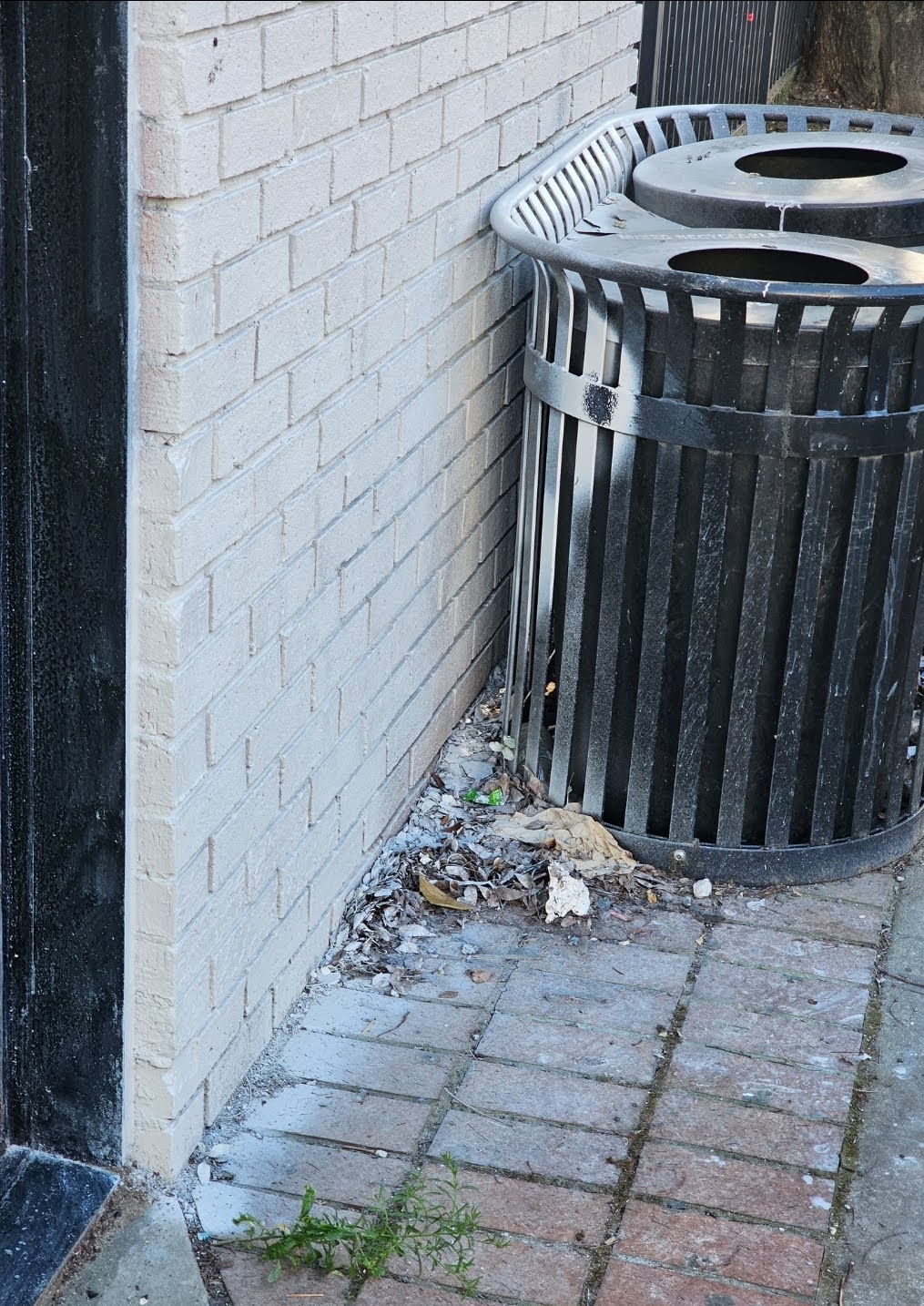
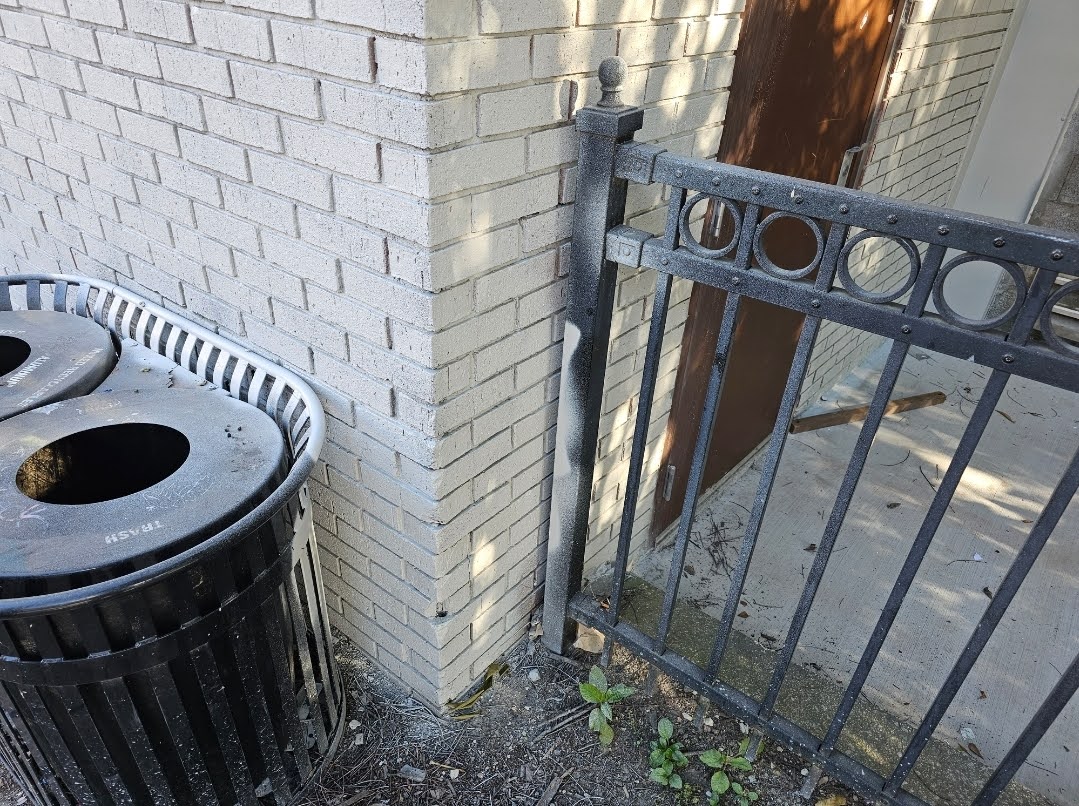
In the picture above it’s really clear that they didn’t protect the floor or adjacent trash can from paint. But it’s probably a reasonable assumption to guess that they weren’t intending to paint these items. These items probably got painted by accident. Like we mentioned last week removing the paint from these items is much more difficult than it would have been to just protect them to begin with.
These items could have been wrapped in plastic sheeting. The floor though isn’t a regular floor, it’s an exterior brick patio. Most types of tapes don’t stick well to exterior patios. Instead of using plastic sheeting on the ground area, lightweight thin floor boards could be used instead. Masonite, for example, comes in 8 in thickness and is relatively lightweight. It can be moved easily from place to place as you’re painting. That’s a particularly easy solution on the exterior of a building.
The openings in this building are made from commercial style frames. We would recommend applying a masking tape and an integral sheeting with the tape, on a roller rig setup to dispense both at the same time.
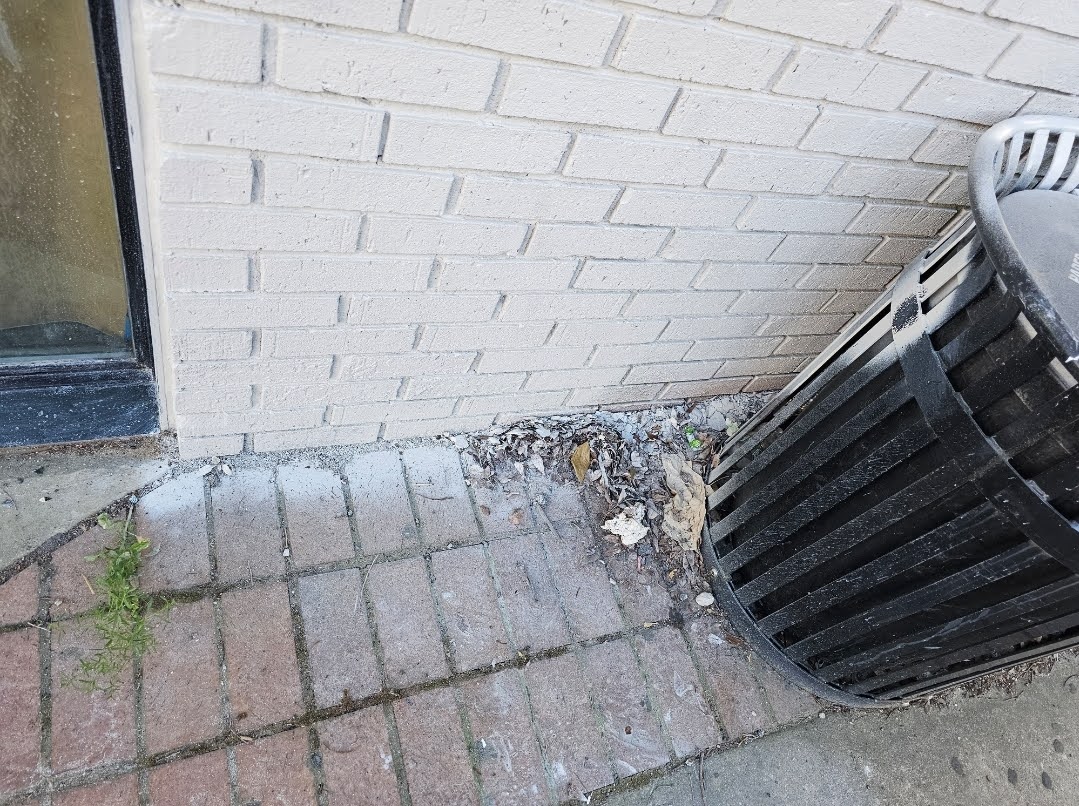
We’re skipping ahead one step down. Another step that should be mentioned is that it’s important to prepare the surface of the masonry as well. There are several different type of chemicals that can be used to wash the wall before painting. One of our preferred chemicals is a trisodium phosphate alternative. It does a good job of cleaning surface so that it bonds better to paint. The only problem with this method is that you generally have to wait a day or so, depending on weather and exposure to sunlight, for the areas to dry sufficiently. Water-based paints like acrylics or latex paints are generally more forgiving but also generally less durable than alkaline paints.
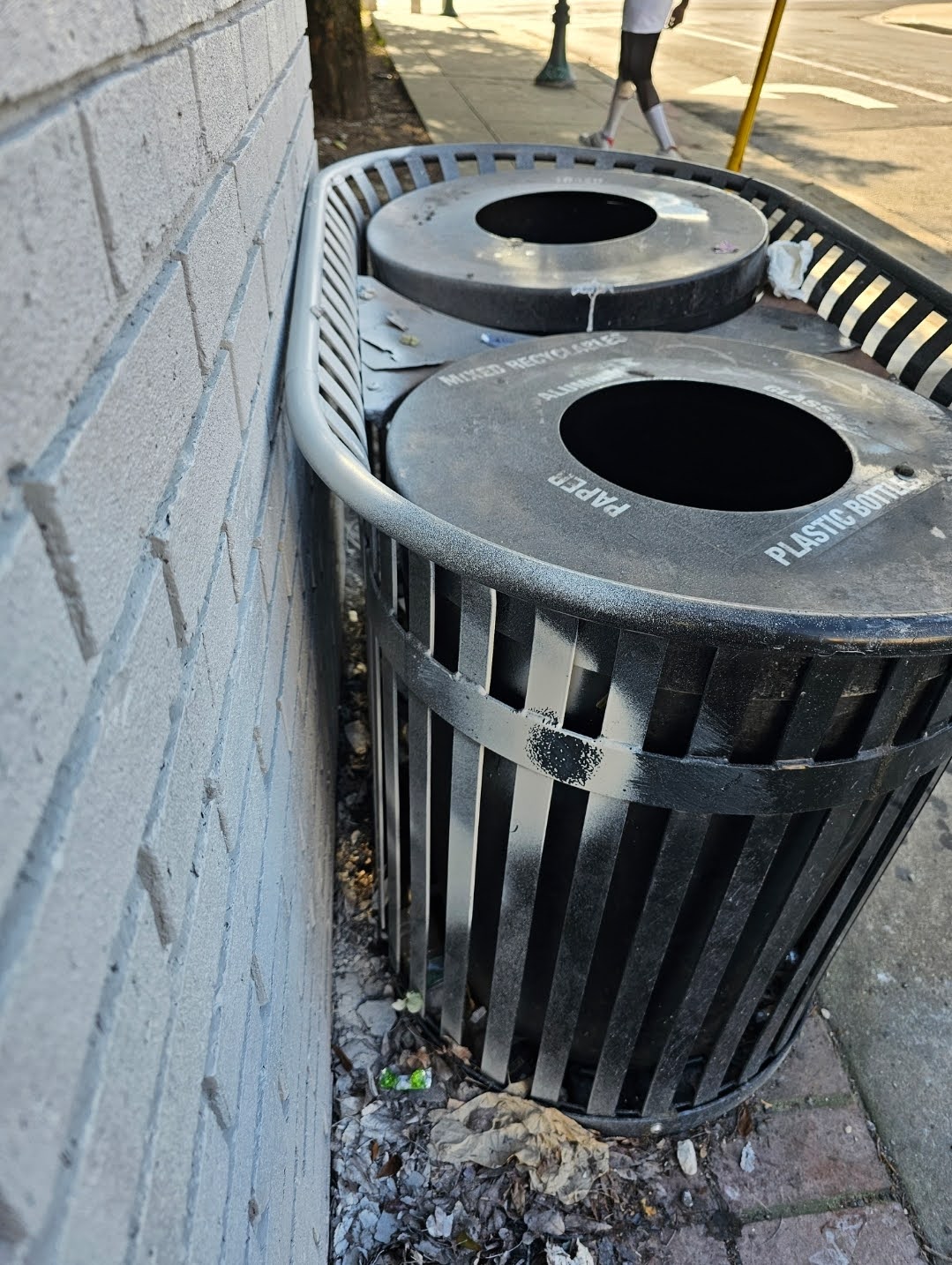
These particular trash cans happen to be provided by the city. They may be bolted in place and if so then it makes it more difficult to paint the adjacent wall. They’re close to the wall which makes it very difficult to get paint in between them and the wall. Nonetheless, protecting the surface of these trash cans is smarter. Masking and the types of materials used to cover things, to prevent them from getting painted, are generally not extremely expensive. The labor to mask and prep an area though sometimes can be more intensive than the application of the paint itself.
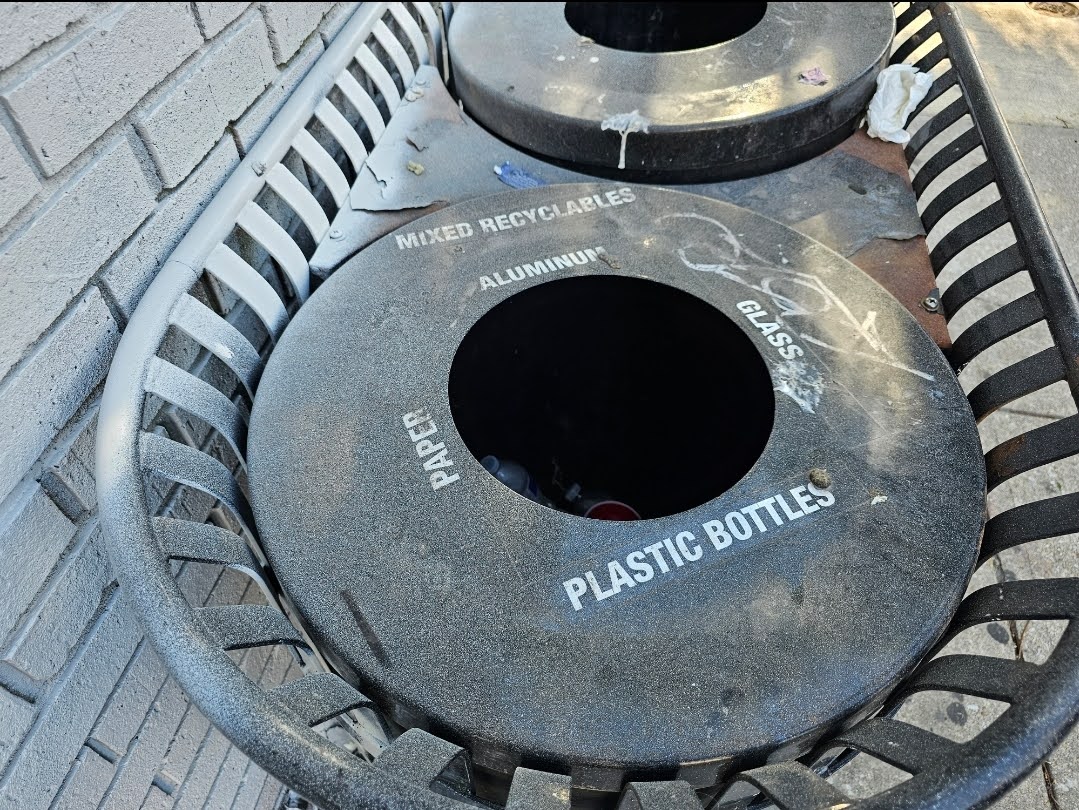
Here though, as we mentioned above, it actually saves time to prep a paint area well. Removing the excess paint, often referred to as overspray, is tedious and slow. Construction work that is tedious and slow is often also generally very expensive, from the labor perspective.
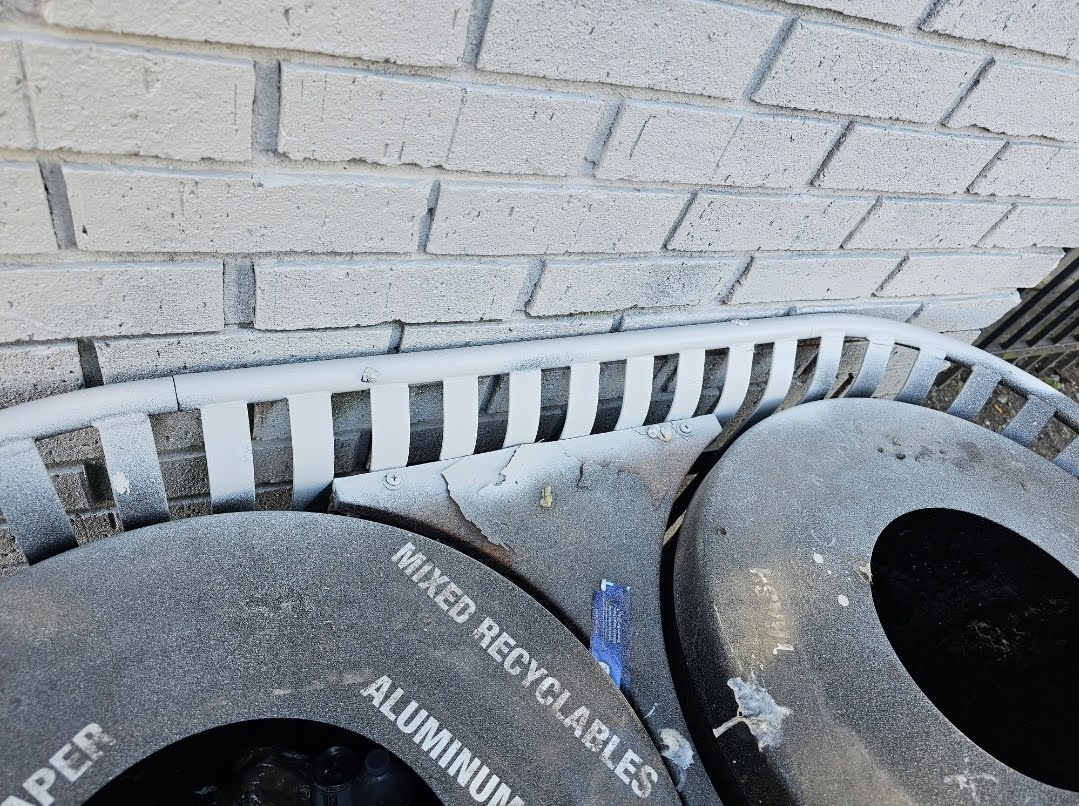
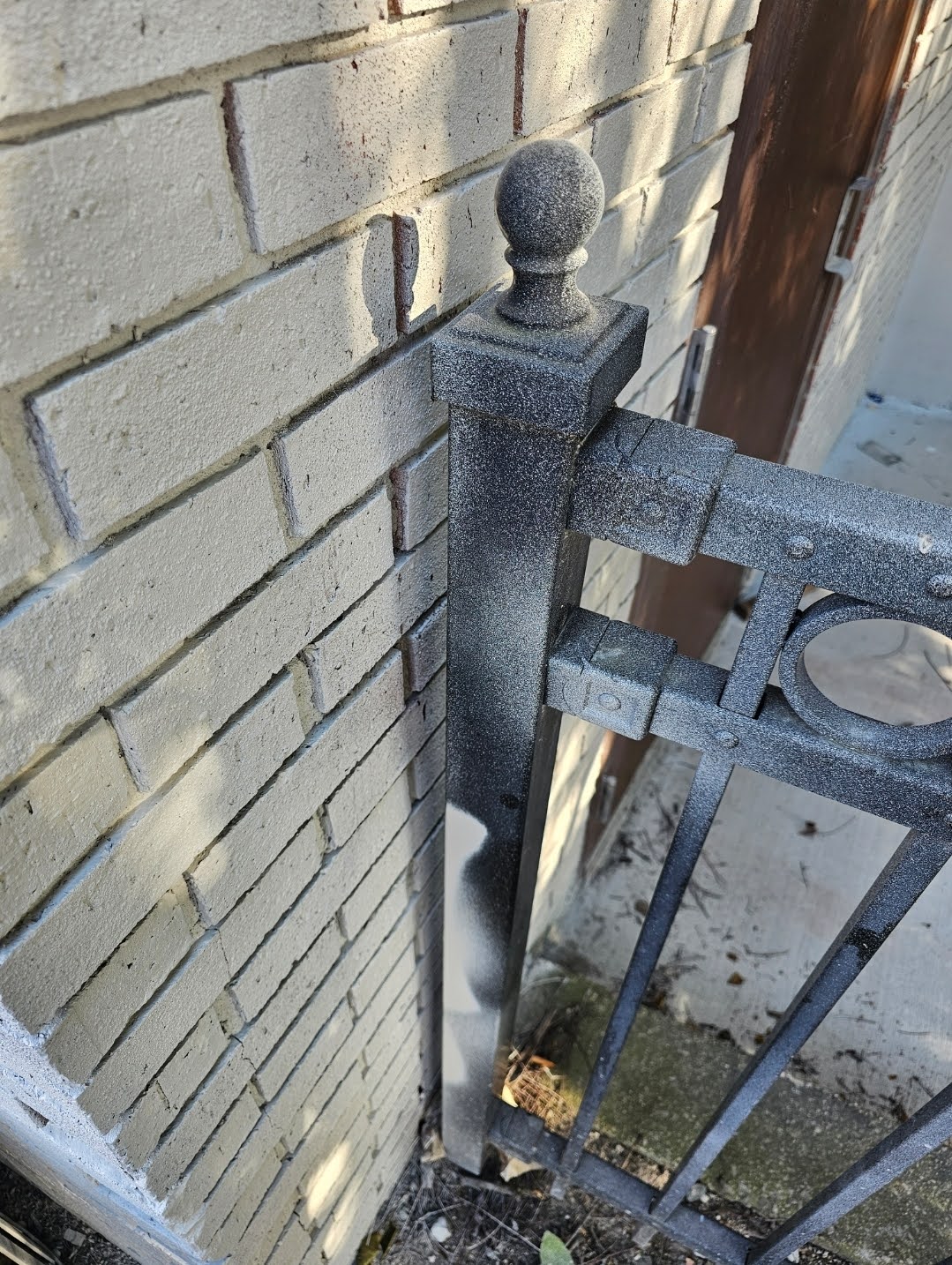
The same context applies to the guard rails at the edge of the entryway. These items may have been able to avoid repainting. Now though, they’ll either need vigorous cleaning or repainting to cover the white paint that has been applied on top of the dark surface.
A closer view follows below. Like many things, both in construction, and other types of business and life itself, an ounce of prevention can sometimes be worth a pound of cure. This old saying basically just means sometimes it costs less to take prior precautions then to fix a problem that could have otherwise been avoided.
Our company, Dupont Tuckpointing and Masonry, specializes in masonry restoration, historic brick repointing, and tuckpointing services in the Washington D.C. area. These buildings are uniquely historic, and their preservation requires skilled masons who are technically trained in the best practices and knowledge of proper restoration techniques.
We understand the significance of maintaining the architectural integrity of these historic structures, and our team of experienced professionals is dedicated to delivering exceptional craftsmanship. Whether you require masonry restoration, tuckpointing, or brick repointing services, we are here to help.
At Dupont Tuckpointing and Masonry, we take pride in our work and strive to ensure that every project is executed with the utmost care and attention to detail. We are committed to preserving the rich heritage of Washington D.C.’s built environment for generations to come.
If you have any questions or needs regarding masonry restoration, historic brick repointing, or tuckpointing services, please do not hesitate to reach out to us. We would be delighted to assist you and provide you with the expertise and quality workmanship that your historic property deserves.
You can reach us by telephone at (202) 796-7644 and you can reach us by email from the contact form on our website at https://duponttuckpointingmasonrydc.com/contact-us/.