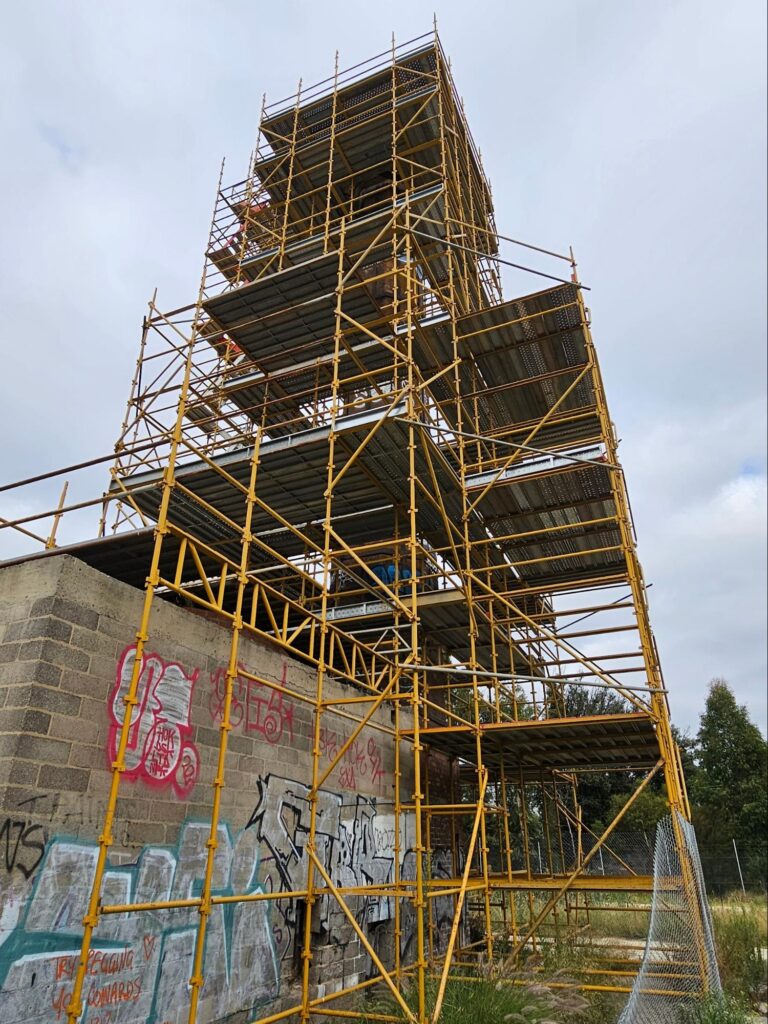
Recently, we had an unique opportunity to see a historic brick masonry smoke chimney built over 100 years ago.
Back in the late 1800s and early 1900s, many manufacturing facilities relied on steam power to operate the mechanical equipment. You’ll often see in old preserved textile mills, for example, lengthy rotating shafts traversing the factory floor. These shafts had pulley wheels periodically along them with wide belts, usually made of leather or fabric, that powered the weaving looms, spinning frames and other machinery on the floor. The main distribution shafts got their spin from steam engines. Steam was produced by boilers heated with coal or wood fires. The tall stacks created draft through the fireboxes to keep the boilers running hot.
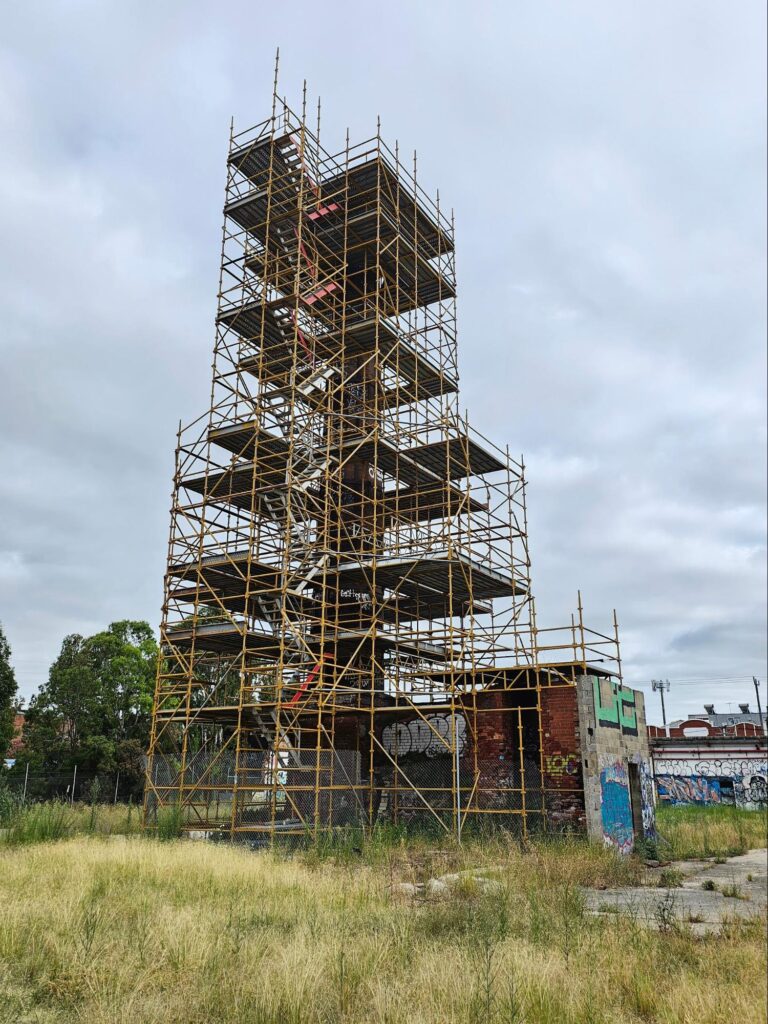
With multi-story plants, steam power could be efficiently distributed throughout via the shafts and belts. This centralized power source meant each building only needed one or two steam engines to run processes on every floor. Hence the prominence of big chimney stacks right by the engine houses, which provided exhaust and draft.

At the time, land was at a premium while building materials were comparatively inexpensive. So manufacturers optimized by constructing multi-level factories on compact footprints. This allowed adequate production volume while minimizing costly land area. Powering multiple floors from a central steam plant was ideal. Masonry construction, especially brick, afforded durable, fire-safe urban factories that could reach several stories. Brick bearing walls enabled structure without costly steel framing. Stone, concrete and iron complemented brick for heavy-duty settings.

Today’s factories employ decentralized electric power and utilize steel or concrete frames for maximum flexibility. Open concepts allow production layouts to be reconfigured as needed. Single floor buildings improve material flows and accommodate large equipment. Prefabricated steel structures are cost-effective. Avoiding major infrastructure reduces upfront costs. Instead of each plant needing integral power, industrial parks utilize centralized utilities. While steam ruled early manufacturing, modern operations now prioritize adaptability and efficiency over initial build expense.

This shift away from brick and masonry factories may seem like lost heritage. But the pragmatism that drove steam’s dominance remains equally valid today. At their core, factories are designed to produce goods efficiently. As long as manufacturing innovation continues advancing output and quality, the structures themselves are secondary.
Still, we lose something intangible when the old brick mills disappear. Beyond mere nostalgia, these vestiges of industrialization represent the ingenuity taming steam’s power.
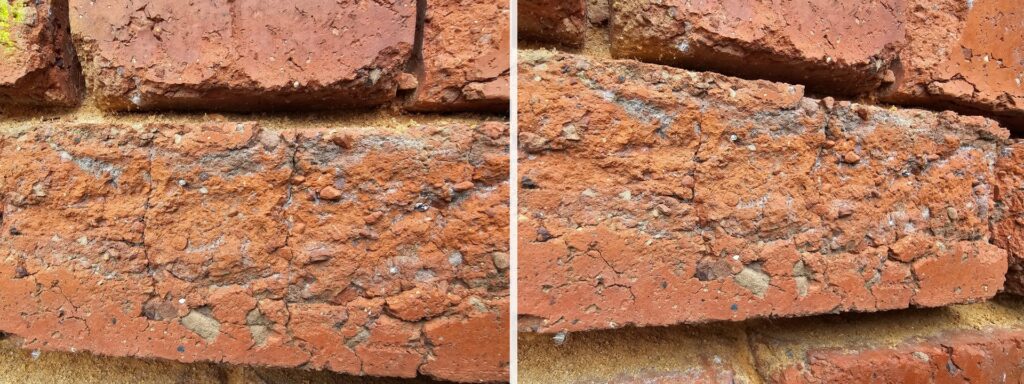
 Over time, as this historic masonry tower began to develop lateral instability and become prone to outward deflection as the mortar joints deteriorated, steel restraint collars were installed around the shaft of the tower. The mortar, when kept in good condition through routine repointing and tuckpointing, provides shear transfer between the brick units, allowing them to act as a cohesive structural system. As it degrades, the unreinforced masonry walls lose stiffness and experience tension forces that can cause the bricks to separate and deflect outwards. This is exacerbated by any uneven settlement or shifting of the foundation that puts eccentric loads on the wall.

To counteract these tension forces and provide stability, a circular steel collar restraint can be installed around the tower perimeter. The collar should be fabricated from structural steel plate, sized to fit tightly around the circumference just below the upper floors or roofline. It is important that collar be engineered with sufficient thickness, depth and strength to restrain lateral deflection, without over-squeezing the walls. The tension of the collar squeeze must be calculated based on the wall height, thickness, mortar strength and expected wind/eccentric loads.
The collar is installed around the full perimeter and secured firmly into the outer wythe of bricks using vertical steel straps. The straps stabilize the compressive force around the brickwork. This light compression puts the perimeter bricks and walls into a state of triaxial compression, improving their positioning and lateral stability. As the walls try to deflect outward, the collar restraint activates and squeezes inward to counteract the tension forces. It provides passive confinement pressure in the radial direction, similar to hoop tension in a barrel vault.
This collar restraint can buy valuable time to implement more robust stabilization measures. It prevents further cracking and deterioration (but the restraints do NOT prevent continuing deterioration of the mortar joints), while allowing the tower to intact in position. Monitoring is needed to ensure the collars are not over-loaded. Future repairs of mortar joints and restoration of the brickwork can then be undertaken to achieve long-term stability. The collar is reversible and preserves the tower’s historic construction materials and appearance.
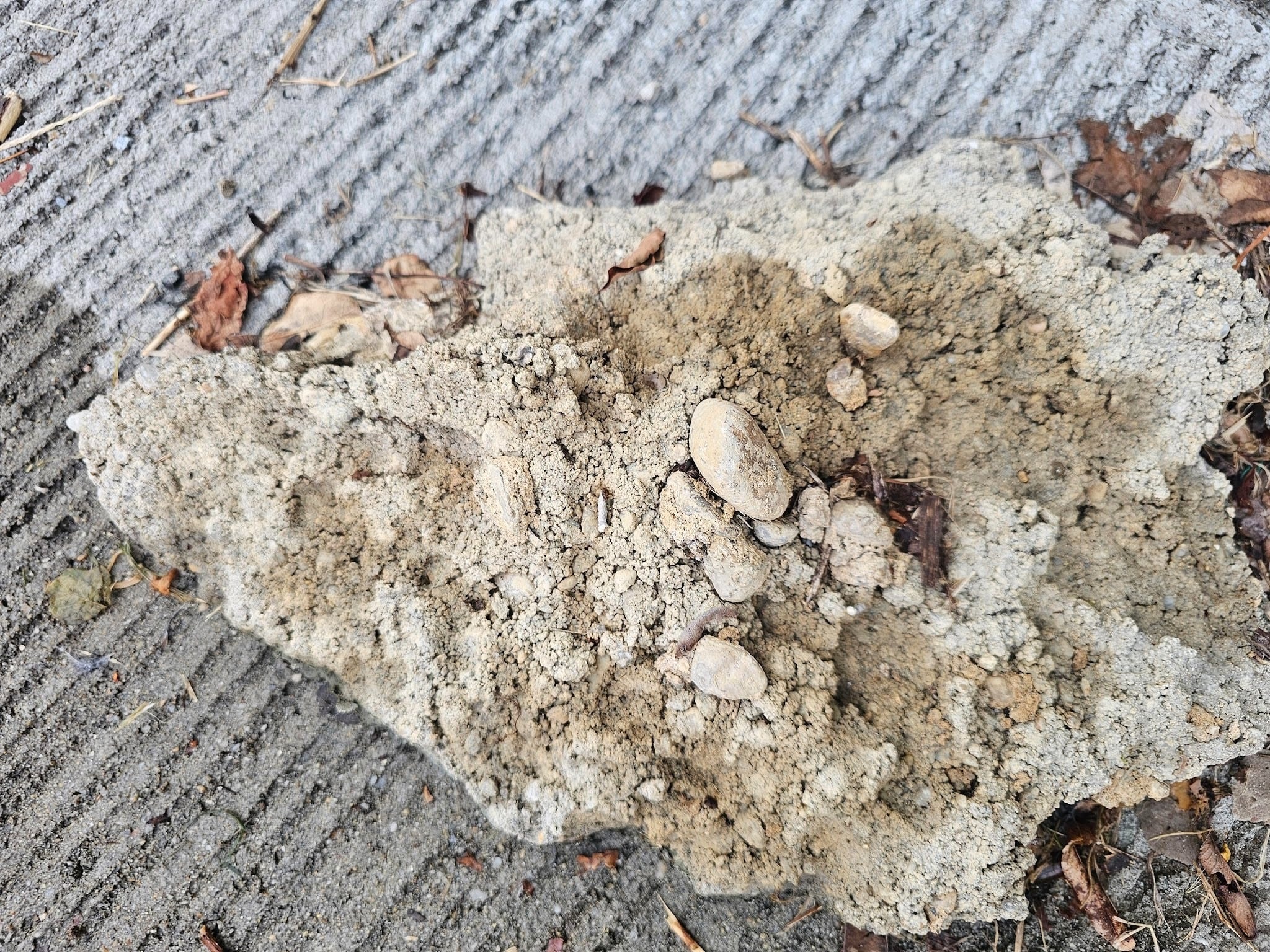
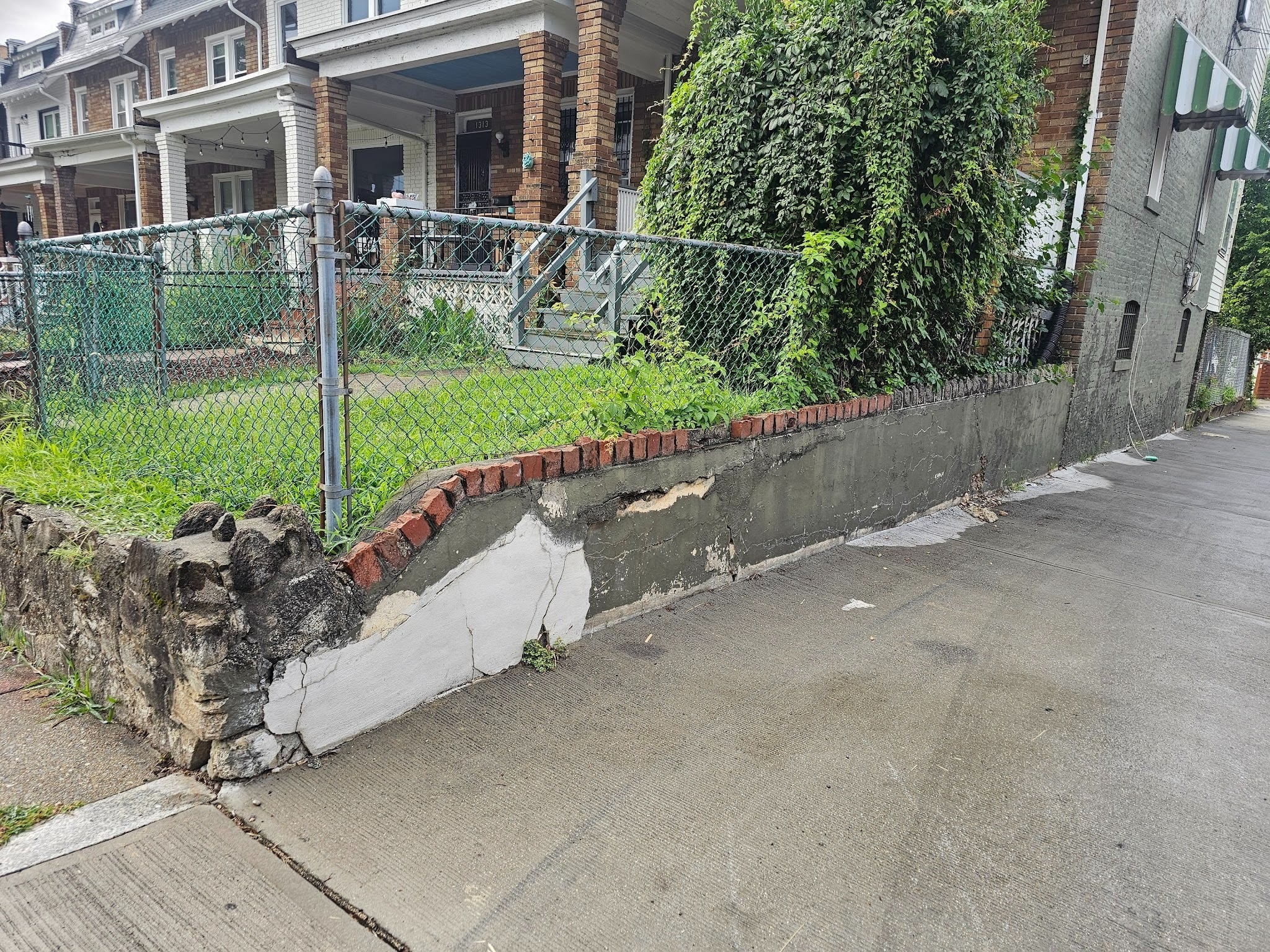
Regular tuckpointing and repointing of the mortar joints is an essential maintenance practice to preserve the integrity of historic masonry structures. Over time, mortar deteriorates due to weathering, moisture infiltration, and normal movement of the masonry. As mortar erodes, gaps form, allowing water to penetrate deeper into the wall. This accelerates deterioration and can cause cracks, spalling bricks, shifting, and deflection. We often talk about the nonlinear nature of masonry deterioration, and mortar deterioration is a quintessential example of exponentially compounding deterioration. It Is necessary to routinely evaluate conditions and repoint or tuckpointing deteriorated mortar before it fails, these mechanisms can be prevented. Tuckpointing and repointing involves removal and replacement of the mortar to full joint depth. Executed properly and on a regular cycle, this preserves water tightness, strength, and aesthetic uniformity of the masonry for years to come. It is a cost-effective maintenance strategy that prevents the need for major repairs and deterioration that would otherwise occur.
In summary, the engineering principles behind a collar restraint involve counteracting the tension forces of lateral deflection by introducing permanent triaxial compression to the perimeter walls. This improves stability without requiring major reconstruction.
In upcoming blog articles here on our site, at www.duponttuckpointingmasonrydc.com, we will examine the shear transfer in more detail and examine the procedures required in repointing, tuckpointing and historic masonry restoration.
Follow us as we look at the science behind aging masonry and discover solutions to slow deterioration and maintain the structural integrity of our cherished historic buildings here in Washington, DC.