Boston Ivy on Brick Facades: Benefits, Risks, and Maintenance Tips
Last week, we looked at a few buildings that are basically overtaken with ivy. Behind that ivy, there are historic brick facades. Historic facades, unlike many of the modern types of masonry facades, are a bit more susceptible to damage associated with plants and biocolonization. In some cases, the root systems of those plants will creep into the relatively or comparatively soft masonry mortar. As the root systems develop and grow, they can cause increasing damage to the mortar. In most cases, a mortar that’s covered with plant growth will retain a higher degree of moisture.
We started discussing the particular example of ivy growing on the building shown in the picture below, this past week. This is different from many of the other examples. In some cases ivy starts out as something ornate and decorative. Essentially it needs to be controlled and maintained. In most of those cases though it eventually ends up growing wild. It only takes a season or two of neglect before it gets out of hand.
For it to be well maintained like this, it needs to be programmatically and consistently maintained. Here they have manicured the area of ivy to a central square on the facade of the building. Here it gives that green lush look but also follows an order that combines well with the architecture. Here, essentially, they are using the ivy as an accent or feature.
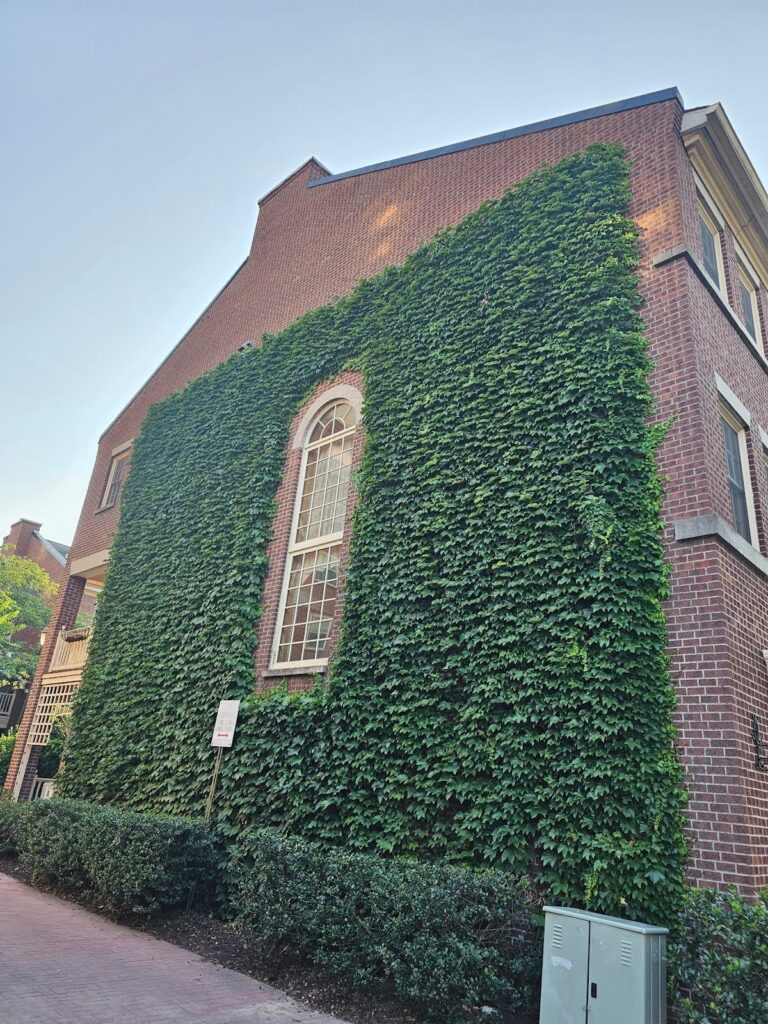
If you look closely, you can see that they’ve left space between the line of where the plants grow and the architecture elements. For example, at the columns of the building, they set the ivy back 12 inches. Around the window opening, they cut the ivy back six to eight inches. The lines of trimming and managing the plants are relatively crisp. Even after several weeks of growth, the line has not blurred excessively. This type of management helps. First, it accentuates and allows the architectural details to remain visually present. Secondly, it helps avoid encroachment of the plants. With a few weeks of good sunlight and rainfall, plants can grow quickly.
In this case, even with a bit of a growth spurt, those plants won’t start getting into elements where they should be avoided. For example, when vine start growing into window openings, it causes problems. Vines, like roots, are strong and it can literally push things like wood trim and windows apart. We talked about the typical type of damage between cornices and architectural elements like friezes and rake boards, caused by plant growth.
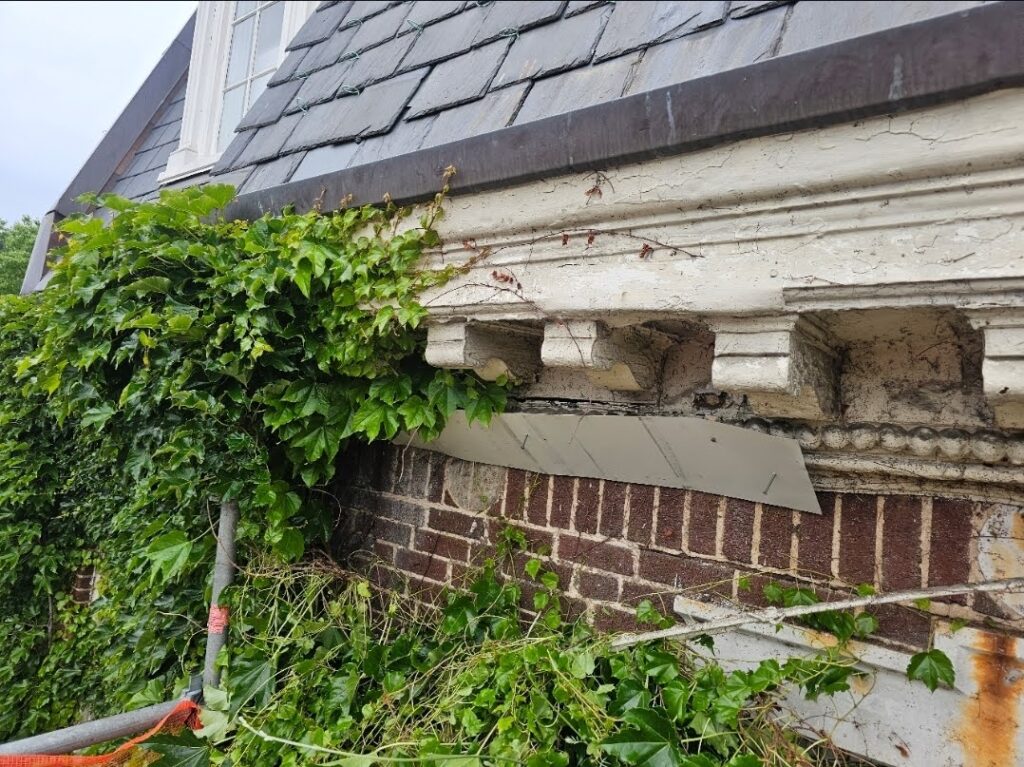
Below, you can see a different issue with the same type of ivy growing on a brick facade. Like the other facade we looked at last week and here above, these are historic brick masonry, from over one hundred years ago. The brick and mortar of that time was a bit different. It has a lower compressive strength resistance factor. They were softer but not in a way that would deteriorate if they’re cared for properly.
In other words, as long as they are well maintained, the fact that they are softer than modern masonry will not be a problem. However, this difference in compressive strength resistance must be taken into account when doing restoration and repair. It can lead to the destruction of an entire building if incompatible materials are used.
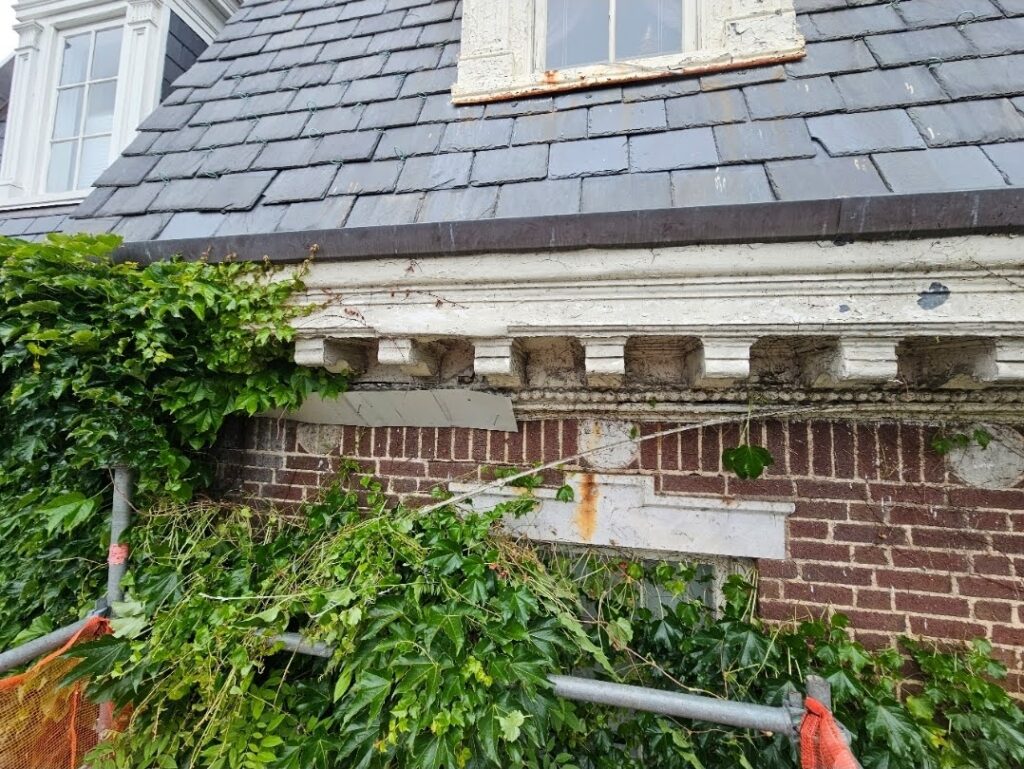
If you look closely at the picture below you can see that somebody has gone and applied a type of sheet metal across the base of the front facade cornice. This cornice sits below a built-in gutter, like a water table. Like improper repointing, it might look a bit better at first, but in the long term, it will not work. It will cause more damage than it will actually help.
Our company, Dupont Tuckpointing and Masonry, specializes in masonry restoration, historic brick repointing, and tuckpointing services in the Washington D.C. area. These buildings are uniquely historic, and their preservation requires skilled masons who are technically trained in the best practices and knowledge of proper restoration techniques.
We understand the significance of maintaining the architectural integrity of these historic structures, and our team of experienced professionals is dedicated to delivering exceptional craftsmanship. Whether you require masonry restoration, tuckpointing, or brick repointing services, we are here to help.
At Dupont Tuckpointing and Masonry, we take pride in our work and strive to ensure that every project is executed with the utmost care and attention to detail. We are committed to preserving the rich heritage of Washington D.C.’s built environment for generations to come.
If you have any questions or needs regarding masonry restoration, historic brick repointing, or tuckpointing services, please do not hesitate to reach out to us. We would be delighted to assist you and provide you with the expertise and quality workmanship that your historic property deserves.
You can reach us by telephone at (202) 796-7644 and you can reach us by email from the contact form on our website.