Should You Grow Boston Ivy on Brick? What to Know
We talked about Ivy and plants growing into buildings a lot, here on our blog and website. Generally situations of plants growing into masonry are just bad. It generally causes accelerated deterioration and damage to the building. To be perfectly honest though, many of us, myself included, really like the way ivy looks across a historic building facade. There is something a little bit nostalgic about the way the historic masonry courtyard feels and this ivy can sometimes give off just a little bit of a hint of that vibe. In many cases, beautiful architecture can be emotionally liminal or evocative.
Considering it’s not good for the brick itself, we need to look at it and understand why anyone would ever let it grow in a building if it’s not helpful. Ivy does do a few different things, not just simply destroy the building. And to be completely fair, we should point out that it doesn’t destroy a building overnight. Instead, it just leads to a little bit more damage acceleration over a long period of time. How benign versus catastrophic that is, is debatable. Legitimate points can be made for both sides of that debate.
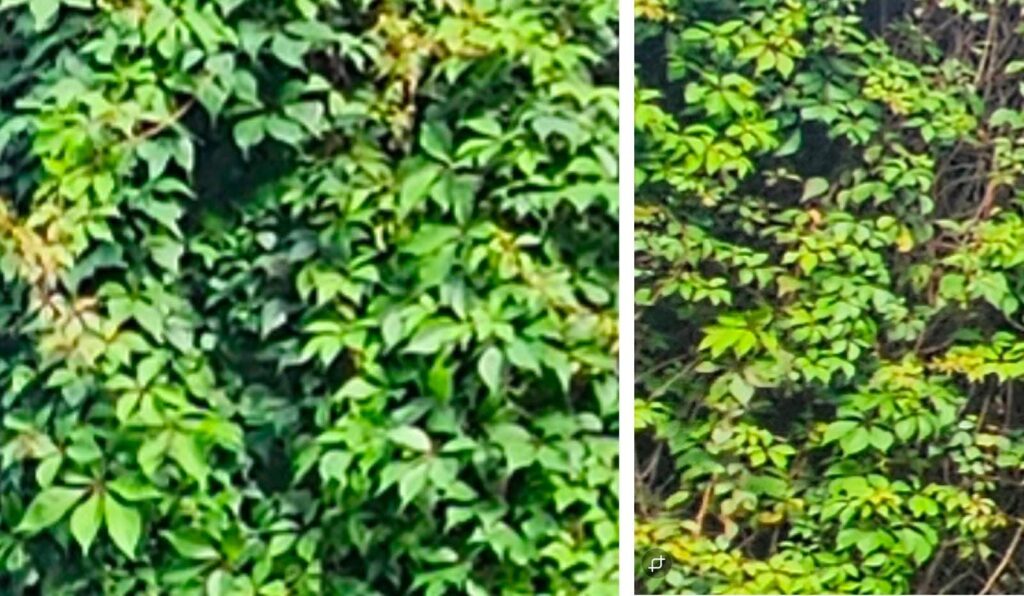
The particular Ivy shown in the picture below has overtaken these walls completely. You can’t really see any part of the surface of these walls themselves.
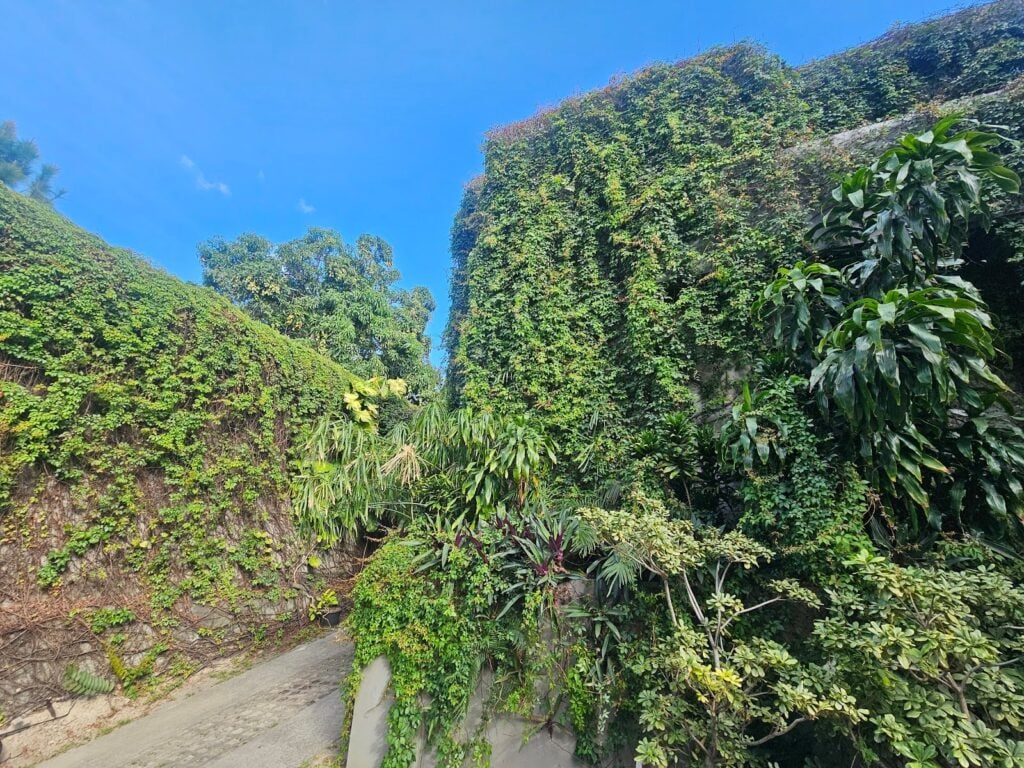
This particular plant, if you look closely, you can see, happens to be Virginia creeper. The rest of the pictures will look at a different type of plant called Boston ivy. They’re not entirely different looking, particularly from a distance. They’re definitely different species of plants though. They grow relatively similarly, and are kind of similar to some other common vines that we see around here in Washington DC such as English ivy. Both of these particular types of plants have tendral feet which will grow into the masonry and can lead to damage and deterioration of the masonry brickwork, over time
Particularly, with historic and original deteriorated mortar, If it hasn’t been repointed it can lead to big problems.
When you look closer at the ivy growing across another historic brick masonry wall, you can see in the picture below, this happens to be Boston ivy. The two different types of plants are similar.
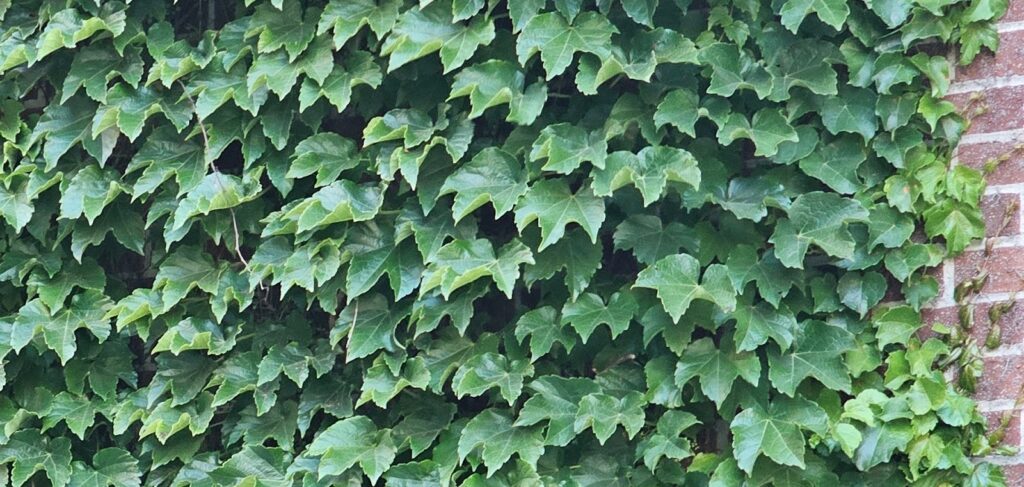
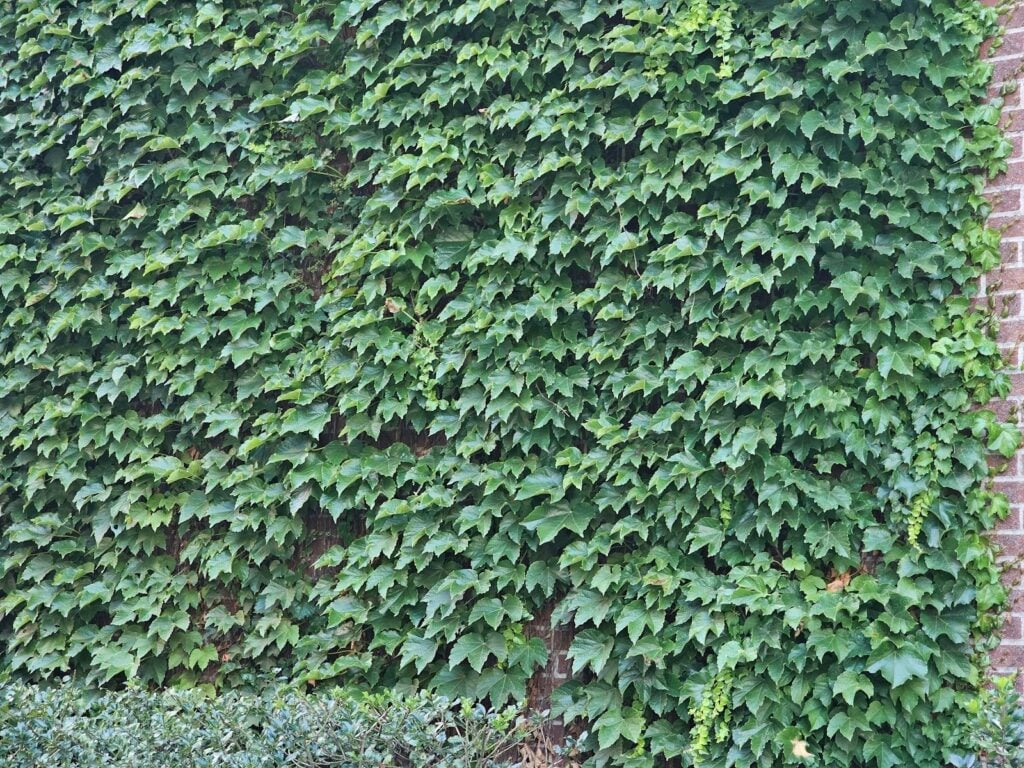
The Ivy grows densely on this particular wall. Instead of letting it just grow wild though, the people who are responsible for managing this building have let it grow, yet they have kept it trimmed around the edges. In this coming week’s blog article, we’ll take a look at the way that they have groomed or trimmed this particular ivy so that it does not encroach into the window areas or at the wooden trim work at the top of the building, just below the roof.
Those are two of the main areas of highest concern. Ivy, like this, can cause pretty significant damage to a roof because it grows and expands with such force that it can split wood trims apart.
Wood trims such as the window casings, window jambs, window headers, and even the window sashes are relatively delicate and susceptible. The roots of the ivy plants encroach or grow into these areas in very small fibers of roots, just a bit thicker than a human hair. Once they get in between the small cracks where the wood trim is mounted to the brickwork, then those roots or tendrils become larger and thicker and even the vines itself will enter into parts of the buildings through and or behind these trims.
As the vines grow thicker, it will move the trims away and cause relatively large gaping. As gapping occurs it will also let the weather elements enter into the building which will accelerate deterioration significantly.
Our company, Dupont Tuckpointing and Masonry, specializes in masonry restoration, historic brick repointing, and tuckpointing services in the Washington D.C. area. These buildings are uniquely historic, and their preservation requires skilled masons who are technically trained in the best practices and knowledge of proper restoration techniques.
We understand the significance of maintaining the architectural integrity of these historic structures, and our team of experienced professionals is dedicated to delivering exceptional craftsmanship. Whether you require masonry restoration, tuckpointing, or brick repointing services, we are here to help.
At Dupont Tuckpointing and Masonry, we take pride in our work and strive to ensure that every project is executed with the utmost care and attention to detail. We are committed to preserving the rich heritage of Washington D.C.’s built environment for generations to come.
If you have any questions or needs regarding masonry restoration, historic brick repointing, or tuckpointing services, please do not hesitate to reach out to us. We would be delighted to assist you and provide you with the expertise and quality workmanship that your historic property deserves.
You can reach us by telephone at (202) 796-7644 and you can reach us by email from the contact form on our website at https://duponttuckpointingmasonrydc.com/contact-us/