Statuary Niches in Heritage Walls: Design and Preservation
Today we’re going to talk about one of the interesting historical architectural details found here in Washington DC. Statutory niches can be found in other types of masonry structures as well. It’s just that there’s a high concentration of them here in Washington DC, and you don’t see them nearly as much in the vast majority of the remainder of the United States. They’re found here and in historic parts of Europe and other parts of the world.
You may find a handful of them around the USA, but there are lots in Washington DC. Many of them no longer have statues and it’s not even clear that they all initially had statues. They’re generally built though to house a decorative statue and serve a few purposes in that role:
- Avoid rainfall. Statuary niches help to keep a statue partially out of the rain. With today’s disregard for the environment, there are lots of multimillion dollars corporations that are just destroying our environment. Acidity in our rain eats away at masonry. The fine details in statues are one of the most susceptible areas of masonry that’s eaten away by acidic rain.
- Maximize space constraints. The niches are just like a recess, if you think about it in the terms of a shower niche, a shower niche is set inside of a wall cavity so it doesn’t really project much into the space of a shower. Statuary niches are at least partially recessed into a wall space so they don’t project out into the area beyond the walls of the building. That’s space is then available for use for other things. Often the facades and or sides of buildings are built as corridors or walkways or hallways. That space is important and useful, often required, for egress and access.
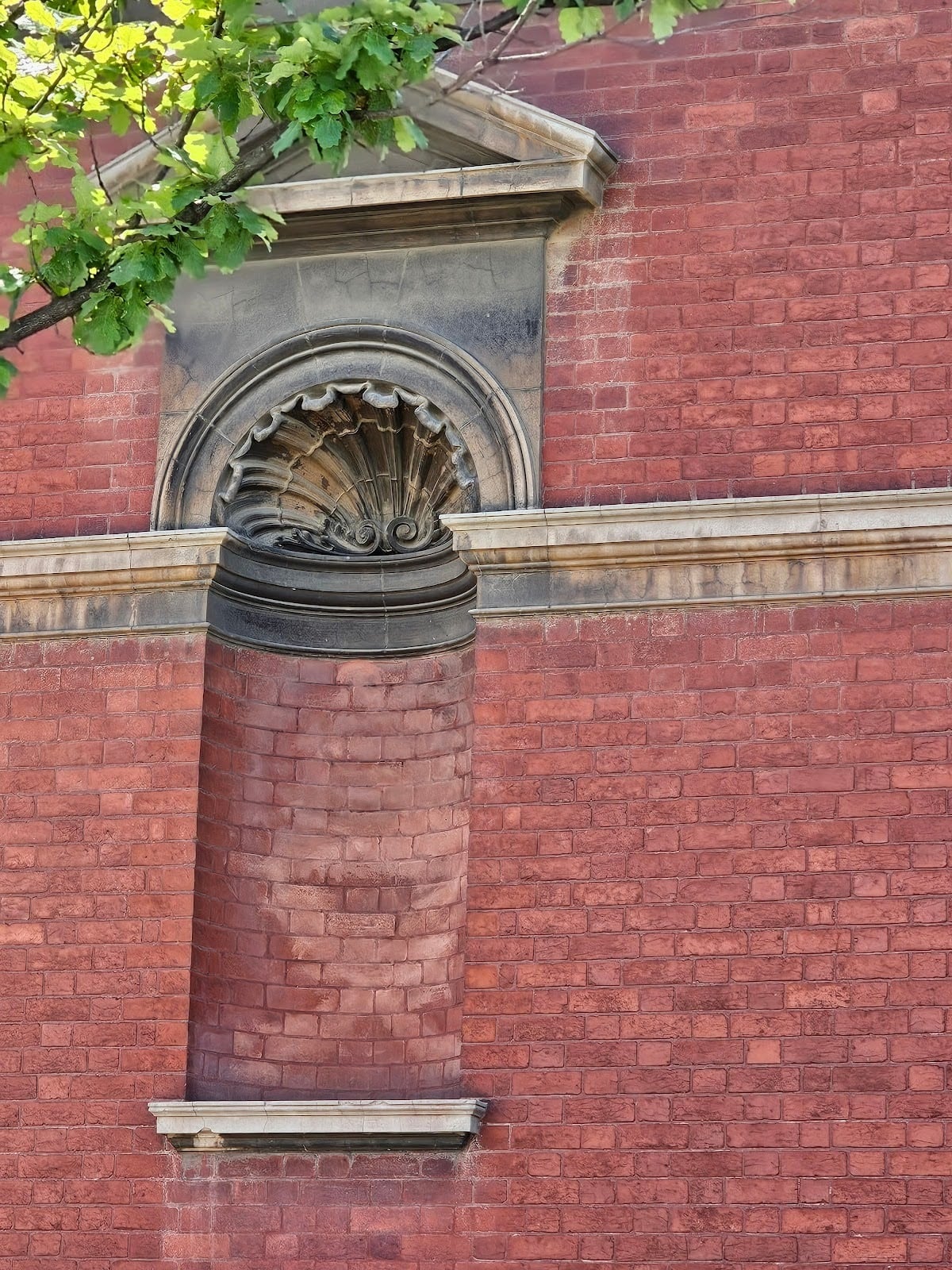
You can see a perfect example of a typical statuary wall niche in the picture below. It looks a lot like an area of a wall built to hold a window in a wall without an original window.
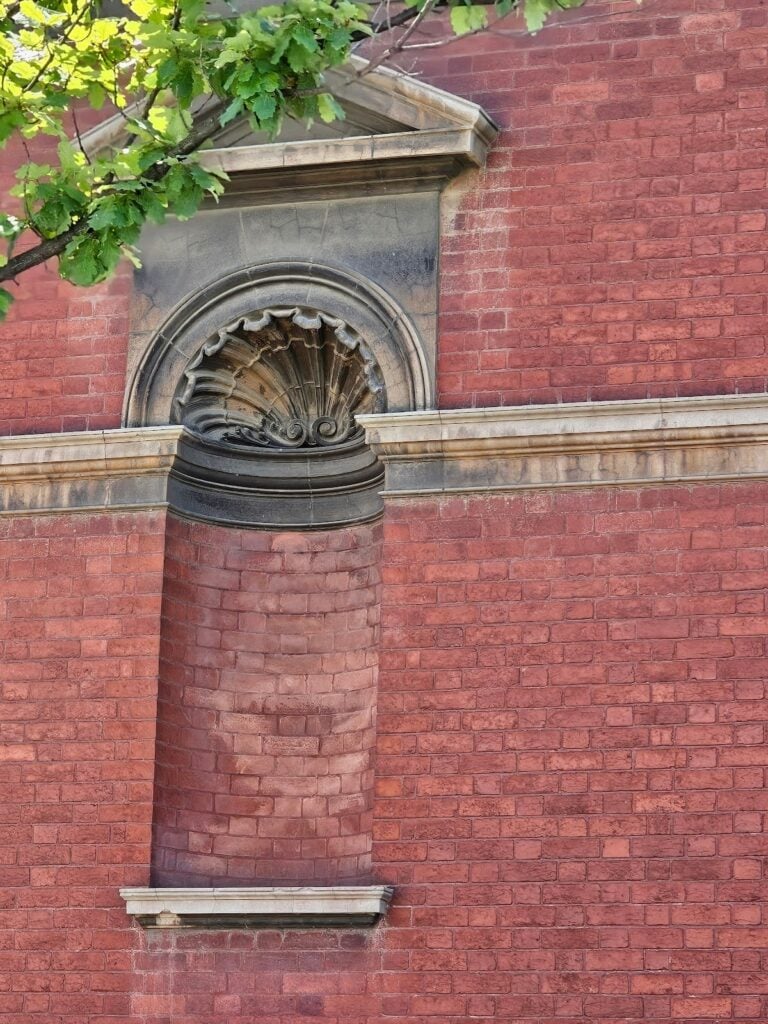
If you think about the details you might find in the masonry part of the building, for a window to be accommodated, you can find almost all of those elements right here. There’s a distinct pediment at the top of the opening header. The opening header itself is built to be integrally part of this particular type of recess.
In the area above what would be the header is called a pediment. That’s the triangle element above the header. Then, just below the pediment is what we might find in a more typical type of Federalist architecture with a horizontal header. This horizontal header, if it weren’t for the masonry below, might be intended or needed to work like a lintel, to support the opening below, in the case of a window.
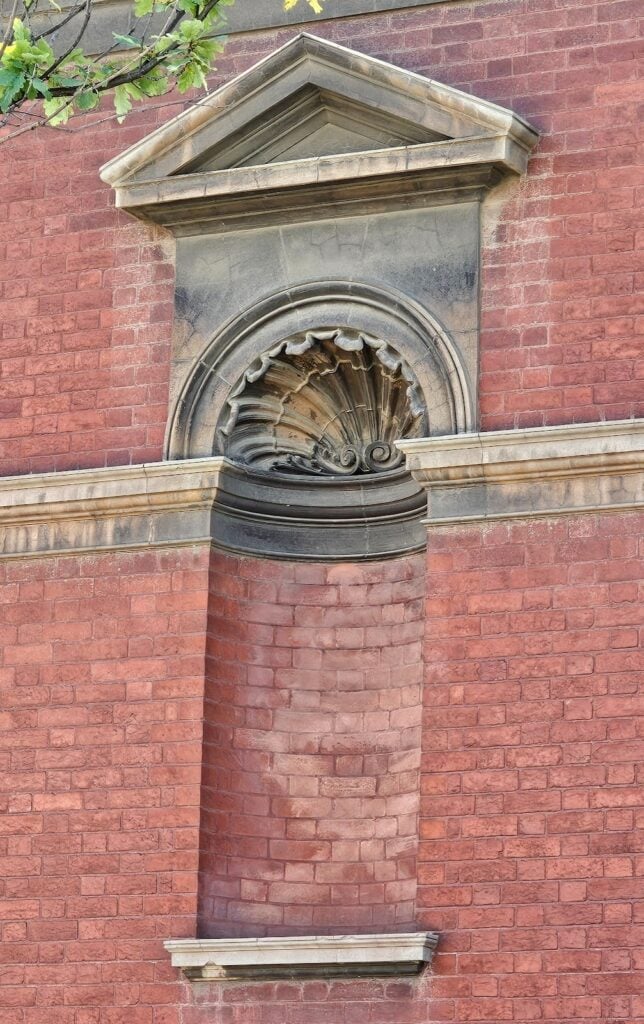
There is also a distinct sill at the base of the opening. The sill creates a projection that allows typical precipitation to passively drain with a slight overhang or separation from the wall immediately below the sill. It feels right with a can’t or bevel, the slope will cast water away from the opening and then will also allow the water to run down to a relief point where the water should be directed away from the wall plane below.
In this coming week, we’ll take a look at some other examples of statuary niches. Some of the ones we will look at actually have statues set inside of these niches and others are also empty like the ones shown here above. Even though many of them may be built with many different varieties of architectural details, they work in similar ways, from a functional architectural perspective.
Since our company, Dupont Tuckpointing and Masonry, specializes in masonry restoration, historic brick repointing, and tuckpointing services in the Washington D.C. area, we make it a point to study these types of issues. These buildings are uniquely historic, and their preservation requires skilled masons who are technically trained in the best practices and knowledge of proper restoration techniques.
We understand the significance of maintaining the architectural integrity of these historic structures, and our team of experienced professionals is dedicated to delivering exceptional craftsmanship. Whether you require masonry restoration, tuckpointing, or brick repointing services, we are here to help.
At Dupont Tuckpointing and Masonry, we take pride in our work and strive to ensure that every project is executed with the utmost care and attention to detail. We are committed to preserving the rich heritage of Washington D.C.’s built environment for generations to come.
If you have any questions or needs regarding masonry restoration, historic brick repointing, or tuckpointing services, please do not hesitate to reach out to us. We would be delighted to assist you and provide you with the expertise and quality workmanship that your historic property deserves.
You can reach us by telephone at (202) 796-7644 and you can reach us by email from the contact form on our website.