In-Depth Guide to Random Ashlar Veneer Stone Masonry
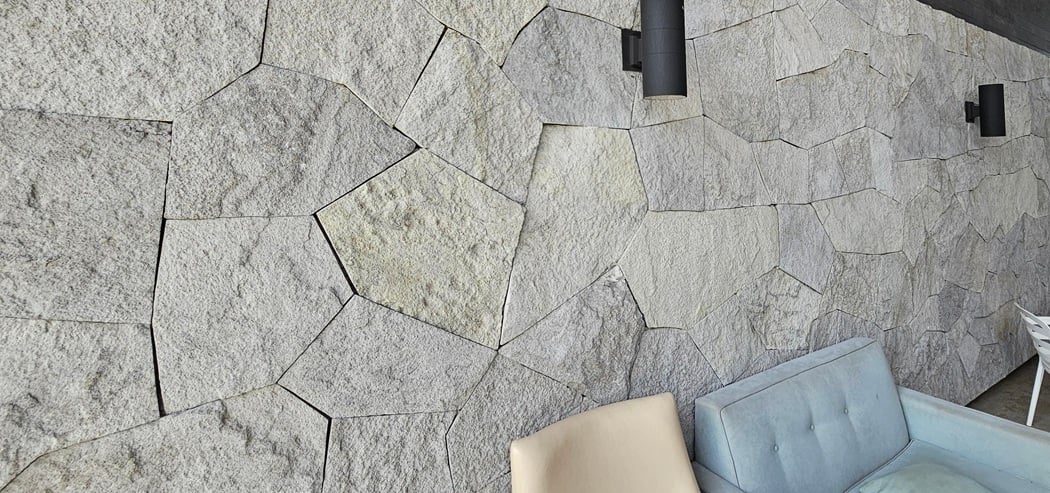
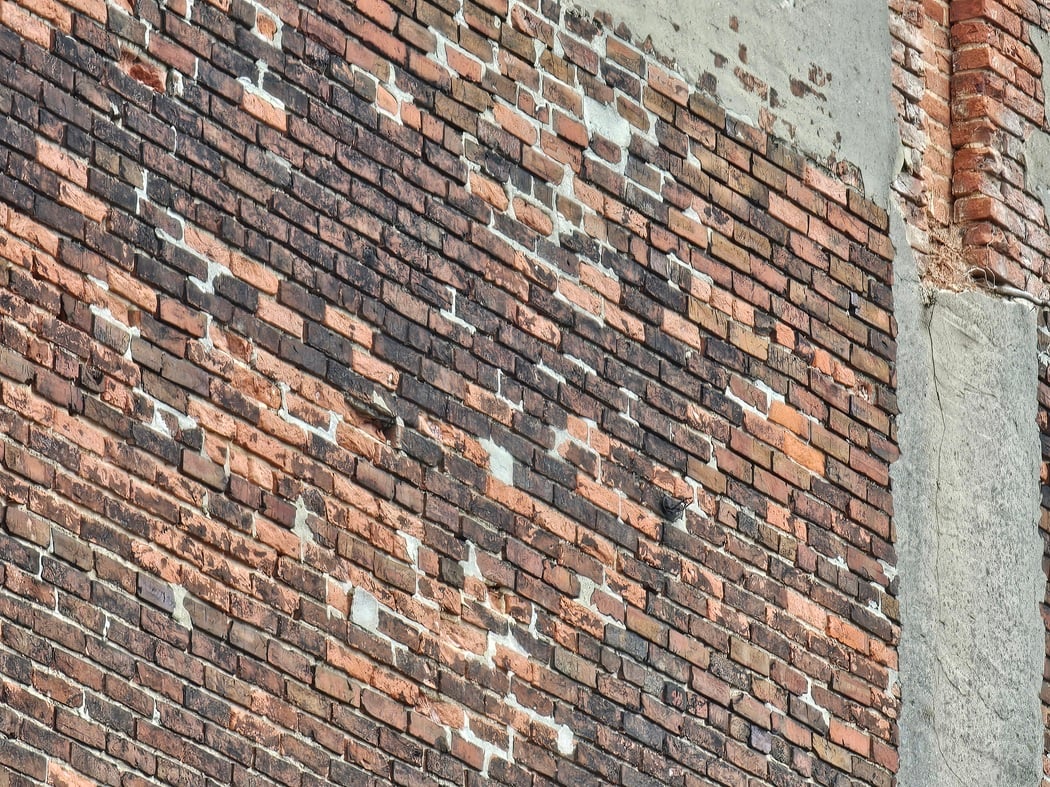
This past week, we started looking at the masonry construction shown in the pictures below. Today we’re going to take a closer look at some of these elements. We talked about several of the characteristics of this type of installation and we compared and contrasted between this type of construction and traditional historic masonry used over 100 years ago here in Washington DC. Even though this particular installation looks like natural stone and has that timeless aesthetic associated with stone masonry, this installation is actually much more modern. It doesn’t use a typical mortar to set the individual stones. Instead, the individual stones are adhered at the back and have a mortarless joint.
Essentially there’s no mortar shown at the exterior or outer facing of the masonry facade. Although this type of masonry doesn’t require repointing and tuck pointing like historic masonry, it still has significant requirements of upkeep and maintenance. At some point in its lifespan, it will also need to be reset and or later rebuilt. In fact, it can be argued that it will not last as long as traditional historic brick masonry.
In one of the last photos that we showed this past week, we looked closely into the gap between the stones. This type of masonry is intended to have stones that are very well fit together so that there is almost no spacing between them. That interlocking nature helps maintain the structural stability of a dry stack wall. Here though it’s not actual dry stack masonry.
It’s intended to have the exact same aesthetic but it’s built differently. Looking into one of those joints, though, as shown in the picture below, you can see the raw cut edge of the stone. There is a shadow between the joints, but enough of the cut edge is visible to see the tooling marks.
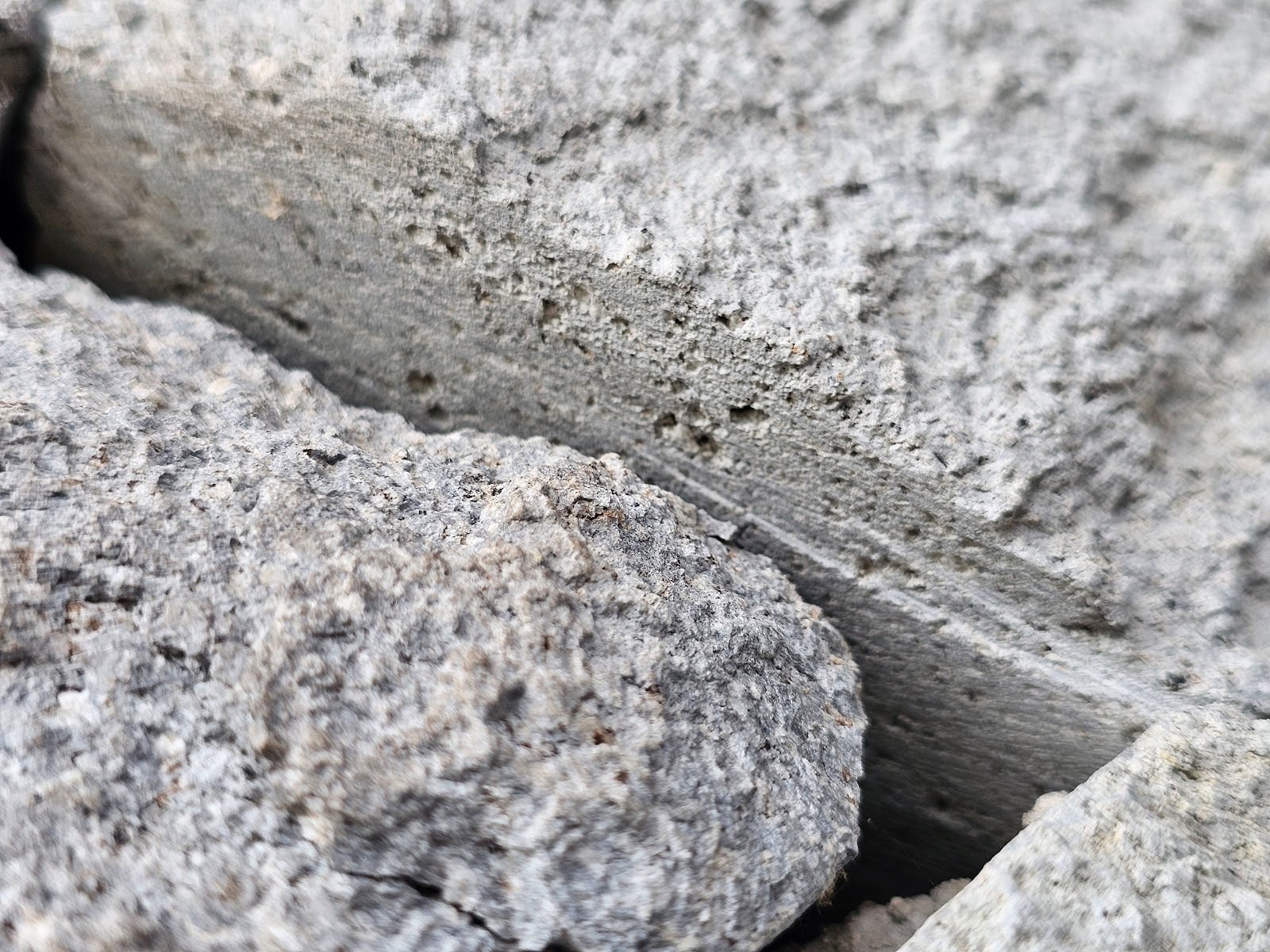
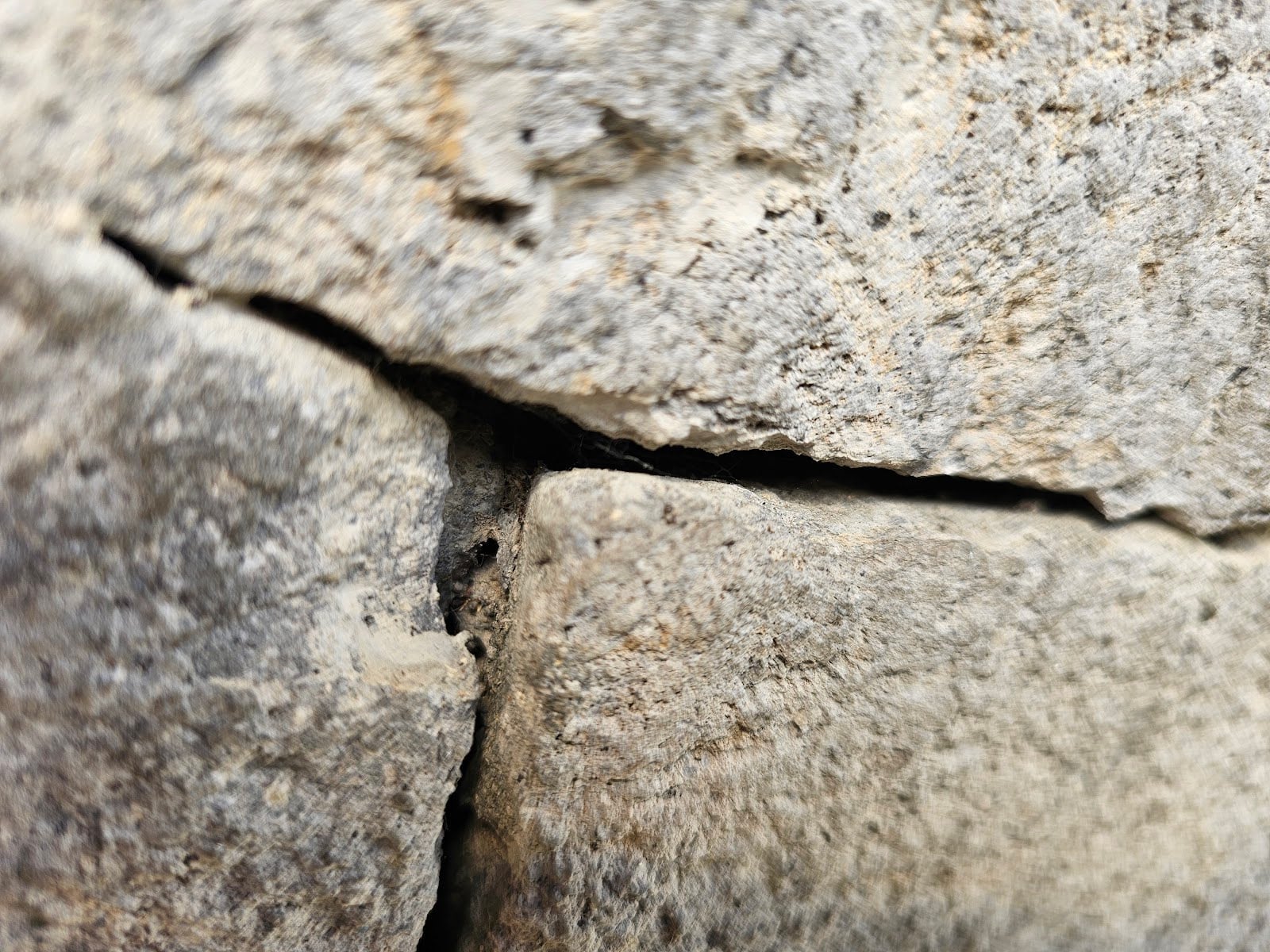
Fitting stones tightly together requires a high level of craftsmanship, particularly where masonry units are built from solid hand-carved stones. There’s both a bit of art and a bit of science to this type of work. Several engineering principles come into play. There’s also a degree of give and take. For example, in the joints shown in the picture below, there is a degree of randommess and or variety in the shape of the stone edges.
Although it’s intended to be random, almost natural looking, a mason must still make a decision on how much dressing each stone should receive. For example, if the raw edge is made to follow the original contour but still be smooth within that contour, it can still have a random natural looking shape. It doesn’t always have to be dressed to the point that it becomes rectilinear. In other words, a stone can be dressed or chiseled or cut in a way that follows the natural contours yet still has varying degrees of smoothness in the edges of each facing.
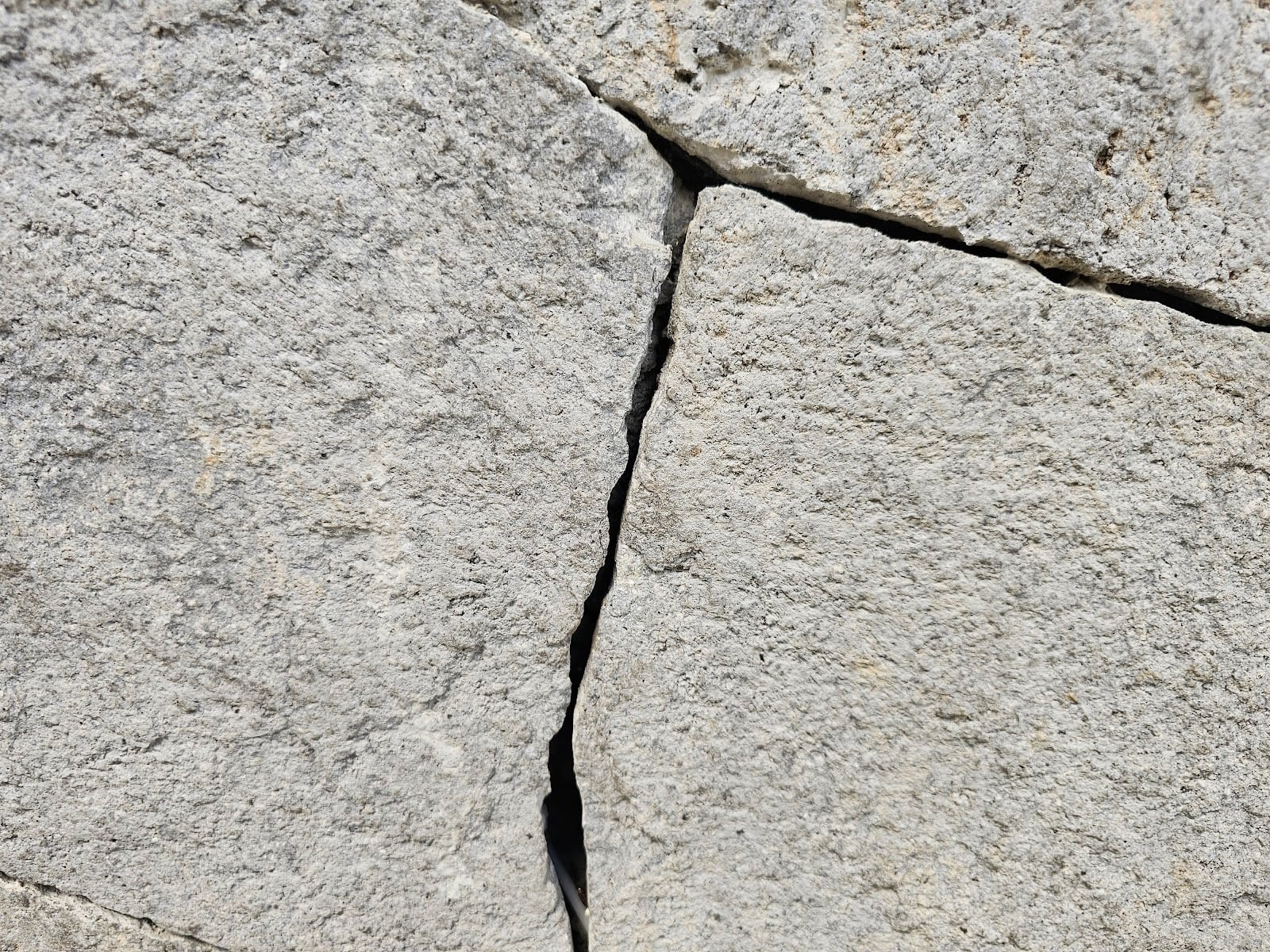
When fitting stones together, after one stone is set, subsequent or next stone must be selected to fit the first stone as best as possible. To a degree, once the stone is selected, it can also be prepped and modified to even better fit the preceding stone. If the preceding stone is made to have a more consistent edge though, it makes the fitment or the closeness of the joint even tighter.
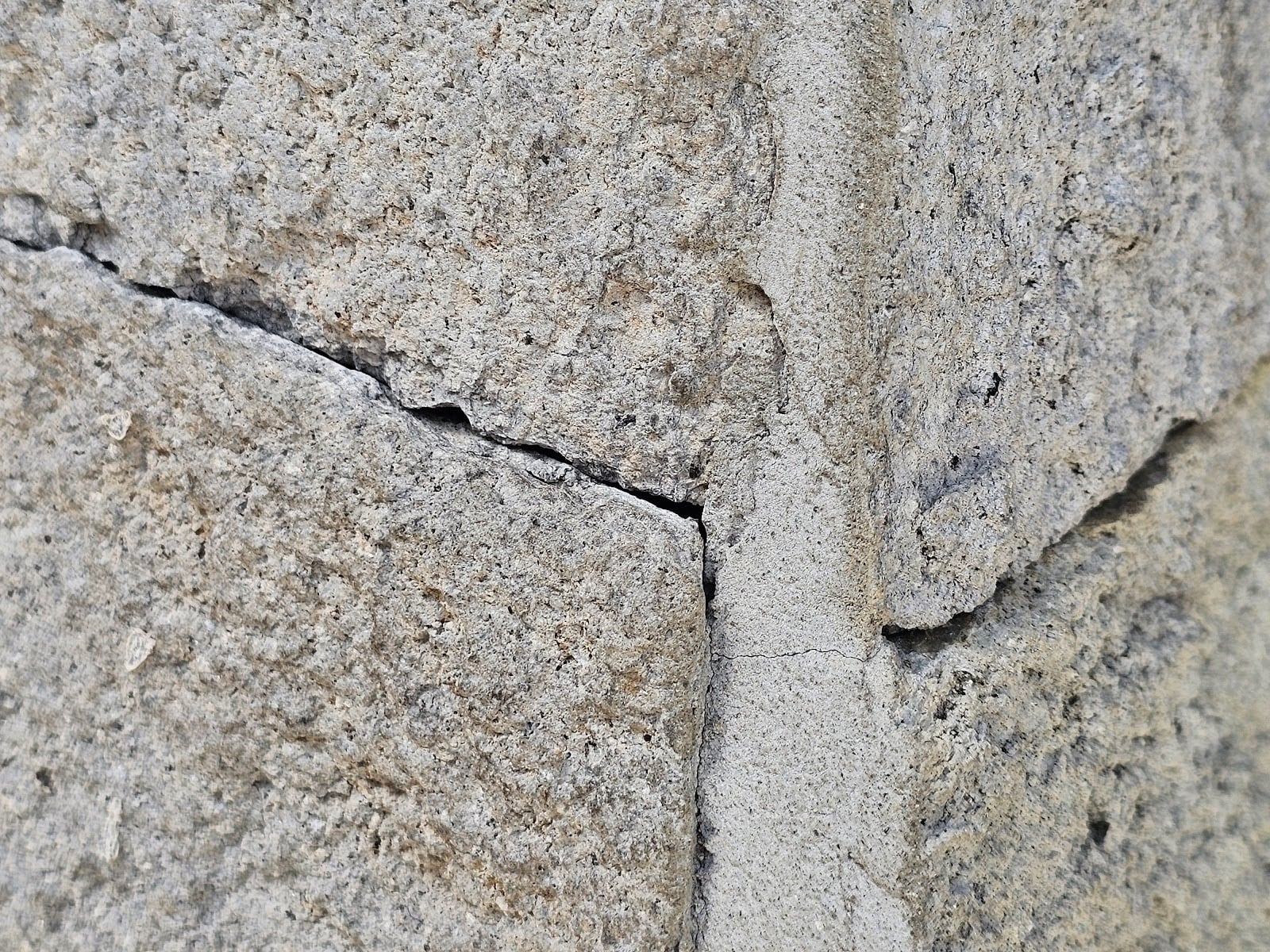
In last week’s blog article, we also talked about the trueness and consistency of this outside corner. In most cases, when building with solid natural stone, the facings would have to be cut on both sides for the wall to help true and plumb. Here, they cheated. They didn’t do anything wrong, and you could almost say that each designer has a degree of poetic license that allows them to design it the way they want, from an aesthetic perspective. The building code, for example, doesn’t say much about the aesthetics of an installation. Instead, it focuses more on the longevity of installations from a structural perspective.
Here, they cheated just because instead of using individual solid stones, they filled the Gap at the outside corner of the thin stones with a similar colored mortar. They didn’t use a mortar anywhere else in the wall and it visually stands out just enough that a trained eye can detect it.
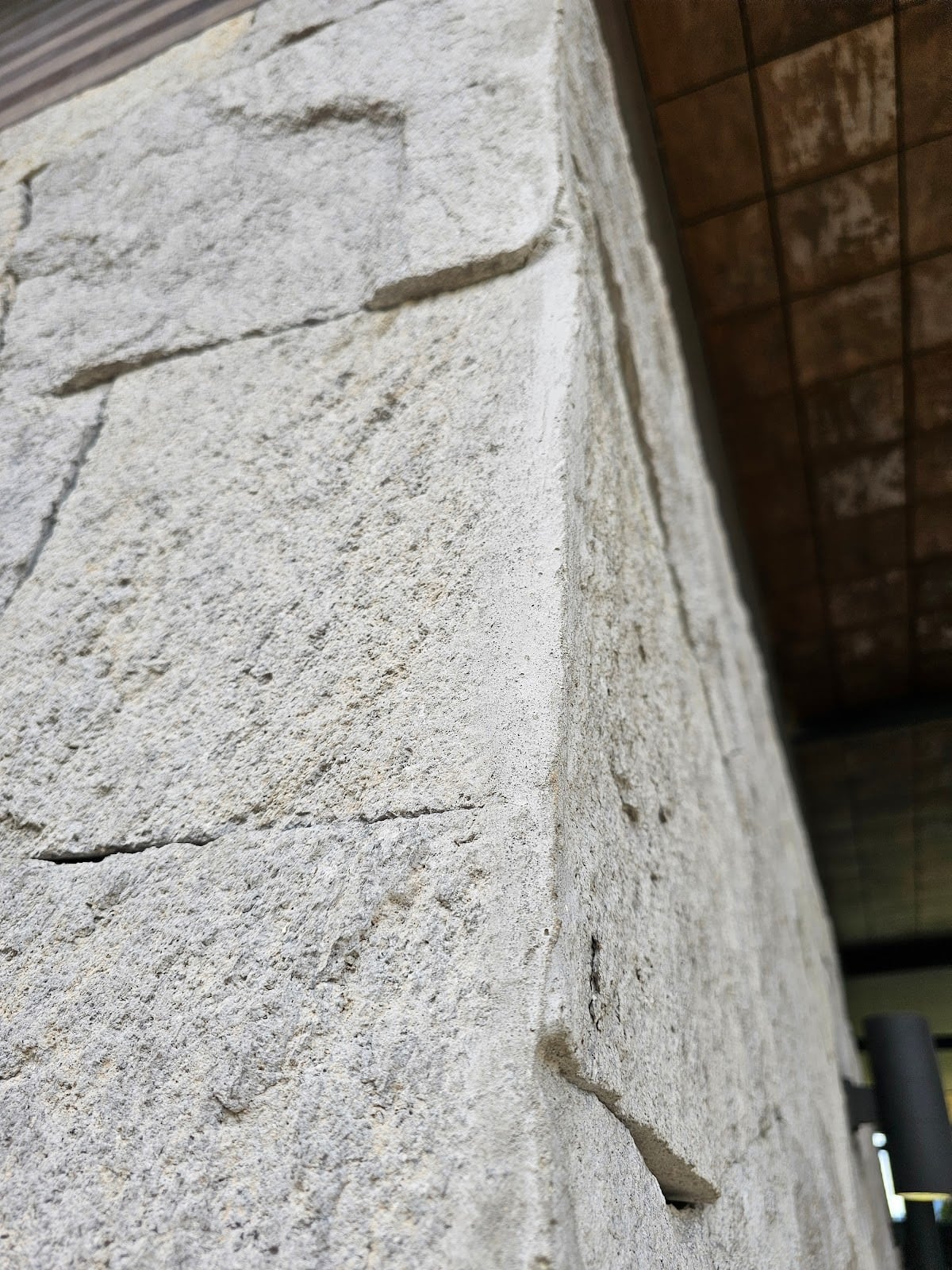
We aren’t saying that it’s terrible, but it does detract from the overall artifice of this type of installation.
Our company, Dupont Tuckpointing and Masonry, specializes in masonry restoration, historic brick repointing, and tuckpointing services in the Washington D.C. area. These buildings are uniquely historic, and their preservation requires skilled masons who are technically trained in the best practices and knowledge of proper restoration techniques.
We understand the significance of maintaining the architectural integrity of these historic structures, and our team of experienced professionals is dedicated to delivering exceptional craftsmanship. Whether you require masonry restoration, tuckpointing, or brick repointing services, we are here to help.
At Dupont Tuckpointing and Masonry, we take pride in our work and strive to ensure that every project is executed with the utmost care and attention to detail. We are committed to preserving the rich heritage of Washington D.C.’s built environment for generations to come.
If you have any questions or needs regarding masonry restoration, historic brick repointing, or tuckpointing services, please do not hesitate to reach out to us. We would be delighted to assist you and provide you with the expertise and quality workmanship that your historic property deserves.
You can reach us by telephone at (202) 796-7644 and you can reach us by email from the contact form on our website.