Hidden Causes of Brick Deterioration in a Distinct Band
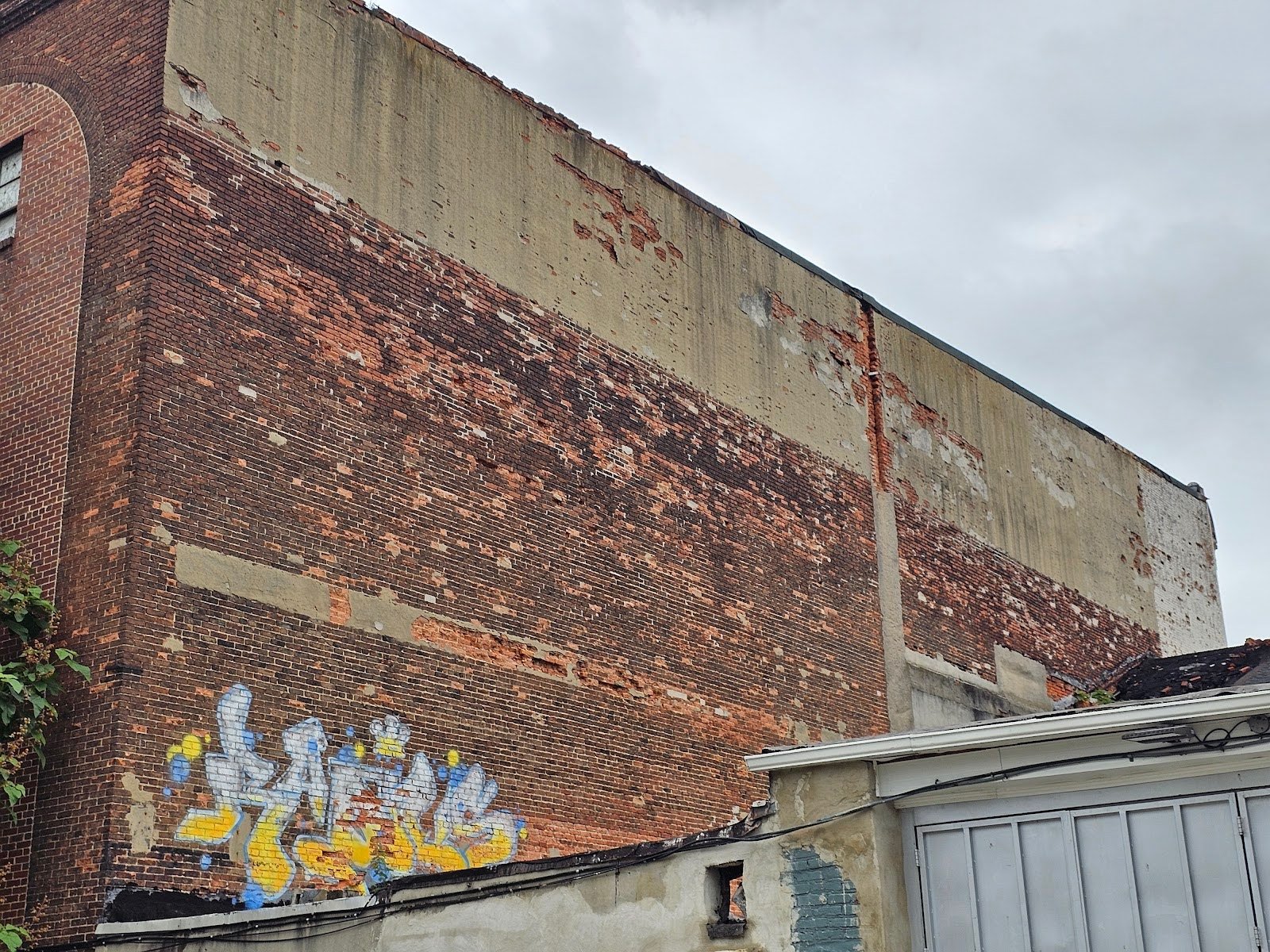
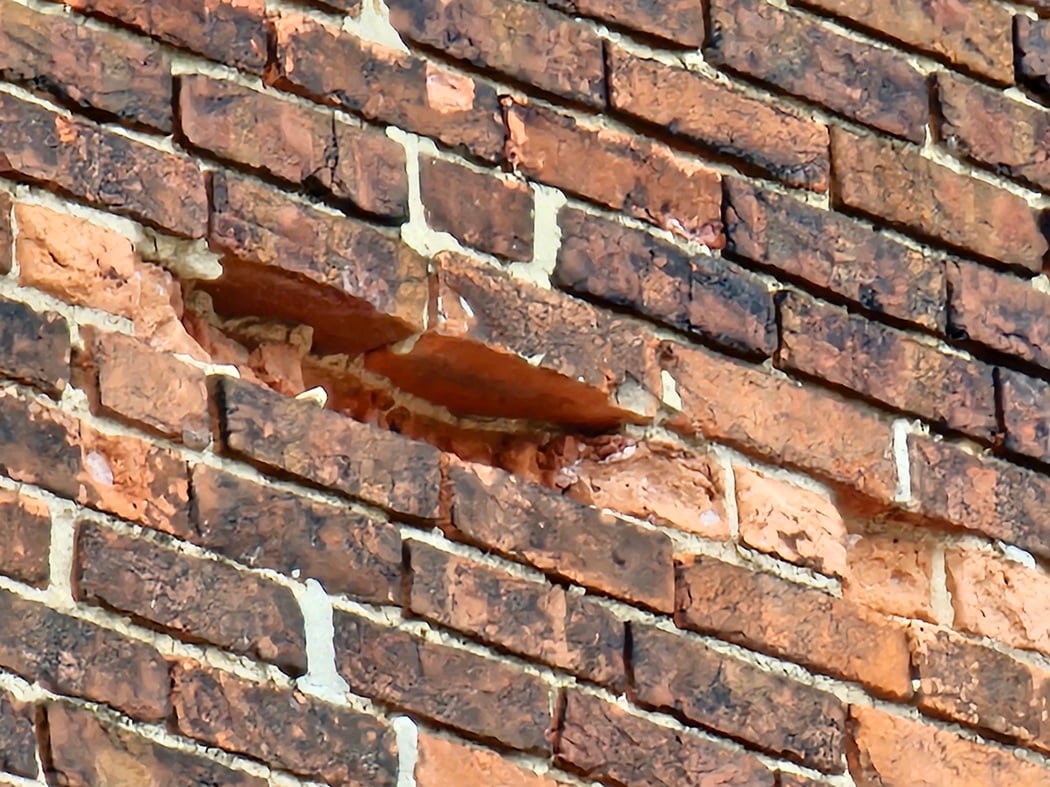
This past week, we looked at a wall that with a serious problem of significant masonry deterioration. We’re going to look again at some other pictures from different angles at those same areas of the wall, where there are bands of concentrated horizontal deterioration of the individual bricks. Essentially these bands of individual bricks run together where there is such extensive deterioration and spalling that it can’t be just random.
If you look over the remainder of the wall, you can see that the damage isn’t just isolated to these areas though. It would be an even more obvious area of concentration but there are isolated bricks throughout the majority of the facade where there is deterioration. Overall, this particular brick work is very old. It’s also that in general, we think that it should have likely been repointed decades ago. We estimate that this building was built around the time period between 1896 and 1906.
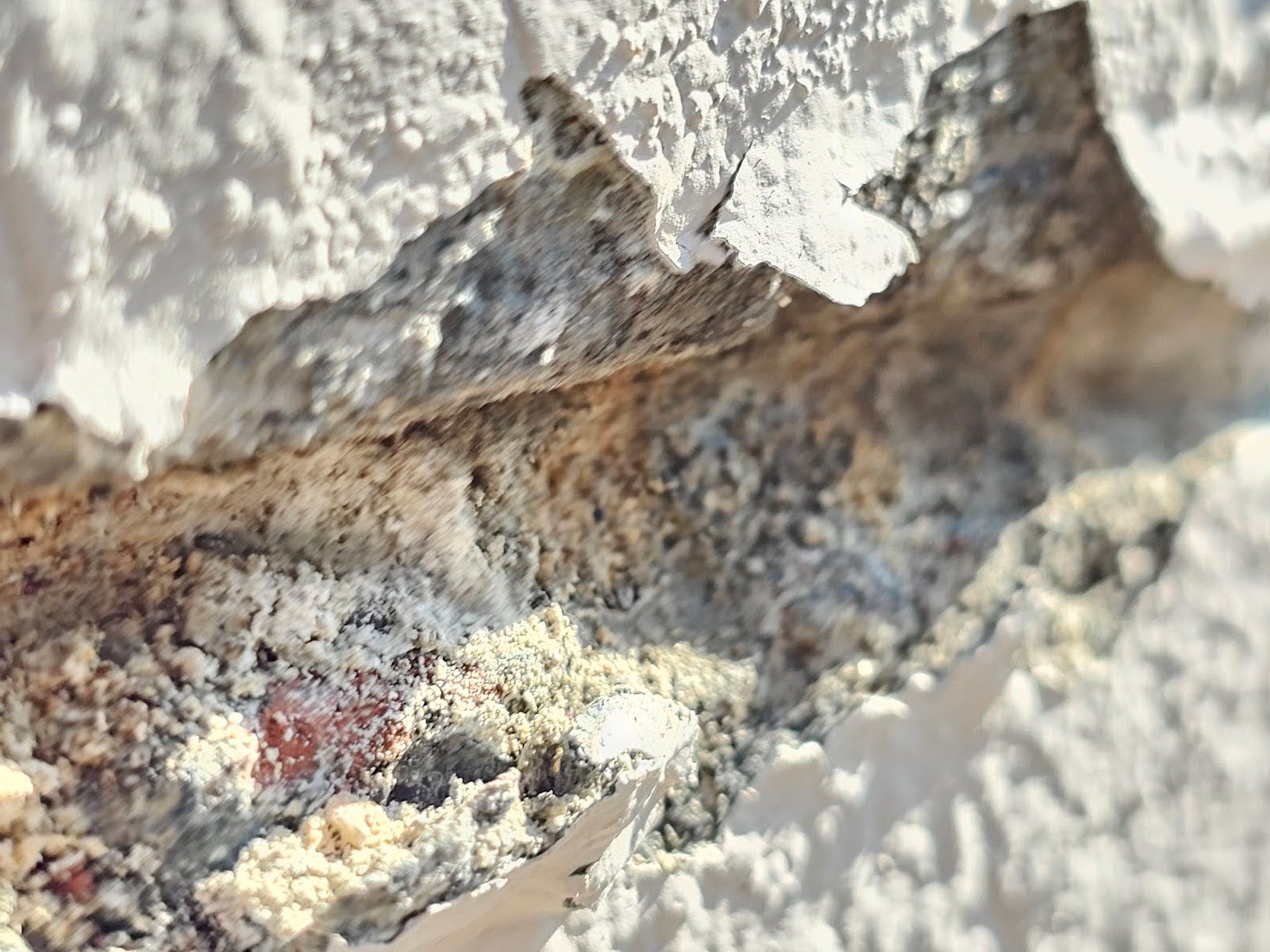
The entire side facade of the building that we’re looking at is built with a common brick. Even 130 years ago, there were a handful of different brick options, not just one. Back then the common brick that we’re looking at today and they also had a superior alternative known as a pressed brick. The pressed brick was a bit harder and had a bit higher compressive strength. It also had a much higher degree of consistency because the substrate constituent materials were filtered and selected at a much higher degree of homogeneity.
In other words the subcomponent materials were more consistent. They had a more similar particulate size. They also had a lower degree of impurities such as stone and or rocks inside of the compilation of the substrate constituent materials. The common bricks included lots of impurities and a variety of different materials. Brick is generally made up of clay, but for the common brick, inside of that clay, there were a great variety of different materials. Some of those materials included quartz, silts, sands, and actual stones.
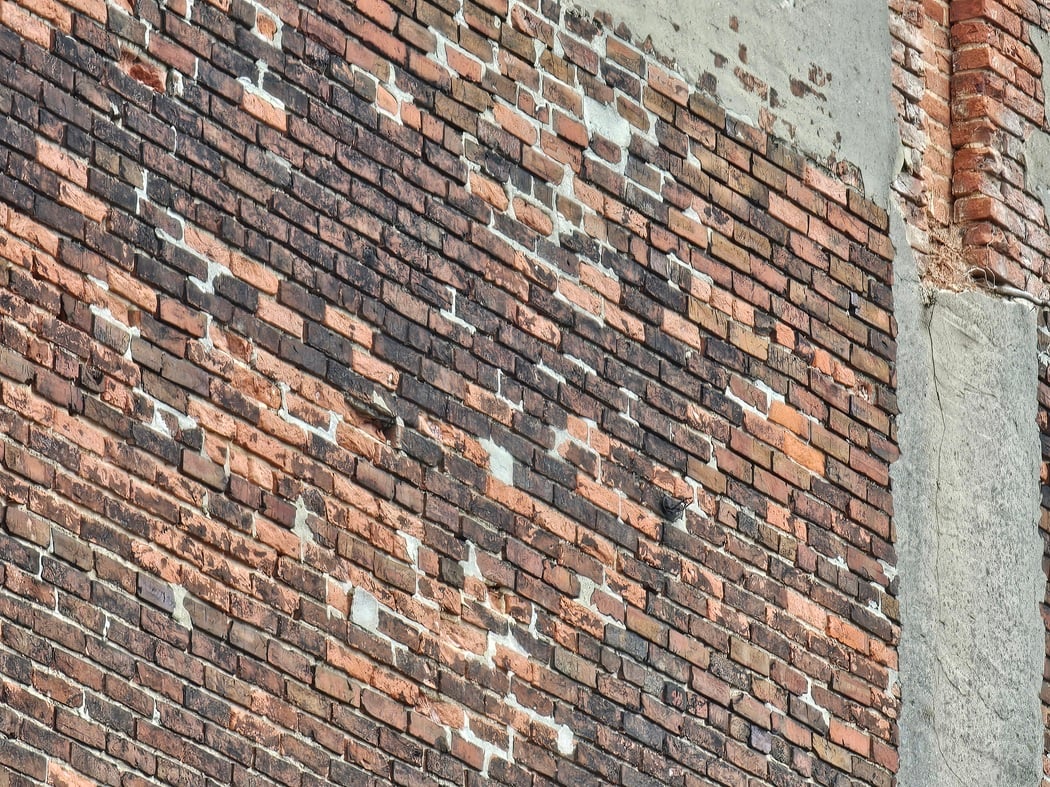
We believe that one of the main reasons for this concentrated area of deterioration was because of the lack of mechanized quality control system for consistencies used in the production of the brick itself. We believe that the brick had been fired, essentially cooked, a lower temperature than appropriate to reach the intended degree of semi vitreousness.
In simpler terms, we will explain a little bit about the historic brick making process. Generally, after clay had been collected and sorted, it was put into a brick mold where it was given a rough shape. From there it was dried and then stacked into cubes. Those clay brick stacked cubes were then cooked in a kiln. Organic materials such as wood and dung were used to cook / fire those bricks. The fires of the kilns of that time would reach a comparatively very low temperature. When you look at the temperatures of today’s kiln firing of bricks, they are much higher. That leads to a brick with much higher vitreousness.
The higher the vitreousness, the more the brick is able to resist the deleterious effects of exposure to moisture. Because the kilns of the time didn’t have hydraulic or mechanized power fans, they weren’t able to heat very consistently. In some cases areas or particular stacks of brick would get less cooked than other bricks, even within the same batch kiln.
Not only were there variances because of air flow, there were many considerable variances because of the firing fuels and moisture and ambient weather conditions and a multitude of additional factors. Because these historic methodologies of firing lack the type of mechanized manufacturing elements we might find today in a modern factory, the brick wouldn’t always be fired consistently.
The area of most significant damage here includes a clump of roughly five bands of brick. It’s very likely that after the bricks had been shipped to the site, the masons picked those bricks out individually from the same sections of the supply. Since that particular brick area hadn’t been fired to a high temperature, it lacked that semi vitreous type of characteristic which protected from exposure to moisture. After 100 Years of exposure to both precipitation and freeze-thaw cycles throughout our bitter Washington DC winters, these bricks have deteriorated much faster than the majority of the other bricks on the wall of the building.
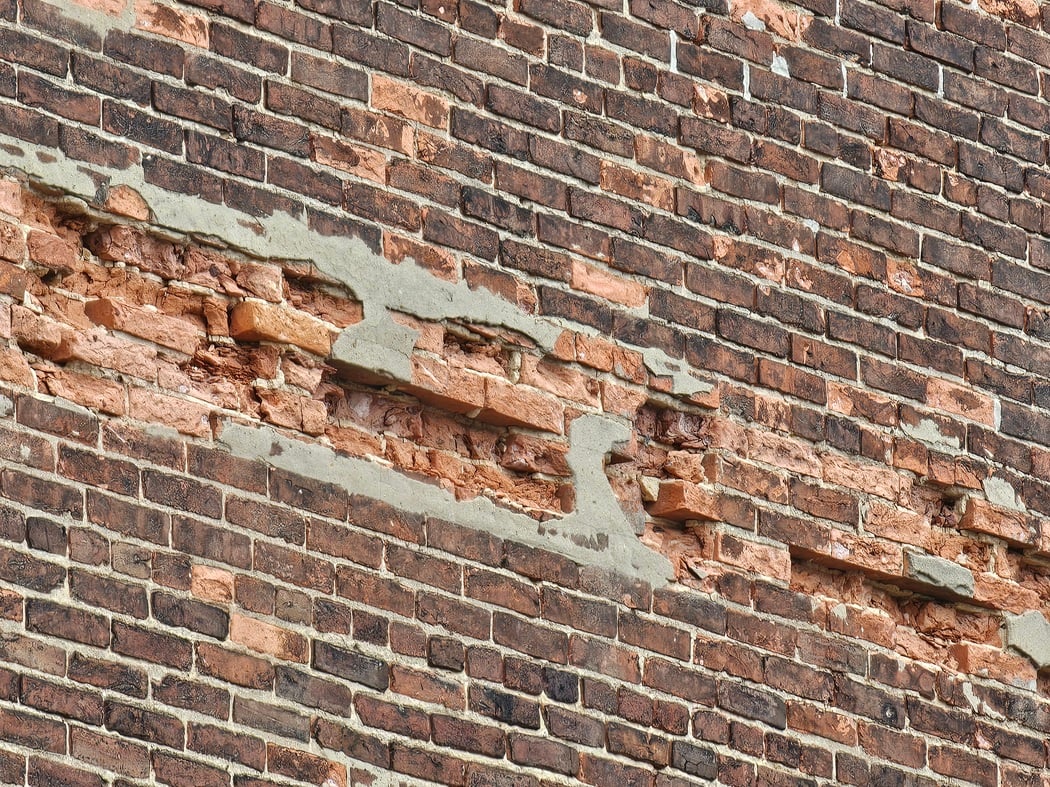
There are other reasons as well. But the reasons we discussed here are the most significant and most probable. We generally would say that with proactive repointing, the vast majority of deterioration and damage can be prevented and stopped. And while we wholeheartedly agree with that, there are some conditions such as excessive low temperature firing that make restoration particularly challenging.
Our company, Dupont Tuckpointing and Masonry, specializes in masonry restoration, historic brick repointing, and tuckpointing services in the Washington D.C. area. These buildings are uniquely historic, and their preservation requires skilled masons who are technically trained in the best practices and knowledge of proper restoration techniques.
We understand the significance of maintaining the architectural integrity of these historic structures, and our team of experienced professionals is dedicated to delivering exceptional craftsmanship. Whether you require masonry restoration, tuckpointing, or brick repointing services, we are here to help.
At Dupont Tuckpointing and Masonry, we take pride in our work and strive to ensure that every project is executed with the utmost care and attention to detail. We are committed to preserving the rich heritage of Washington D.C.’s built environment for generations to come.
If you have any questions or needs regarding masonry restoration, historic brick repointing, or tuckpointing services, please do not hesitate to reach out to us. We would be delighted to assist you and provide you with the expertise and quality workmanship that your historic property deserves.
You can reach us by telephone at (202) 796-7644 and you can reach us by email from the contact form on our website at