Creating a Faux Timeworn Masonry Facade: Part I
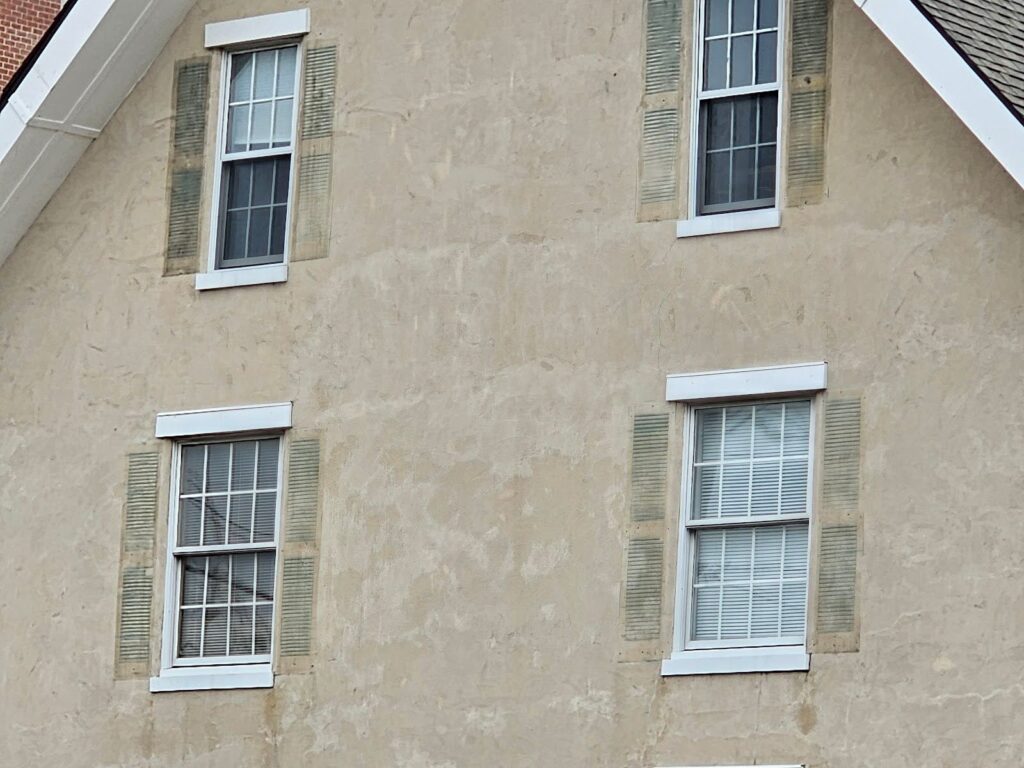
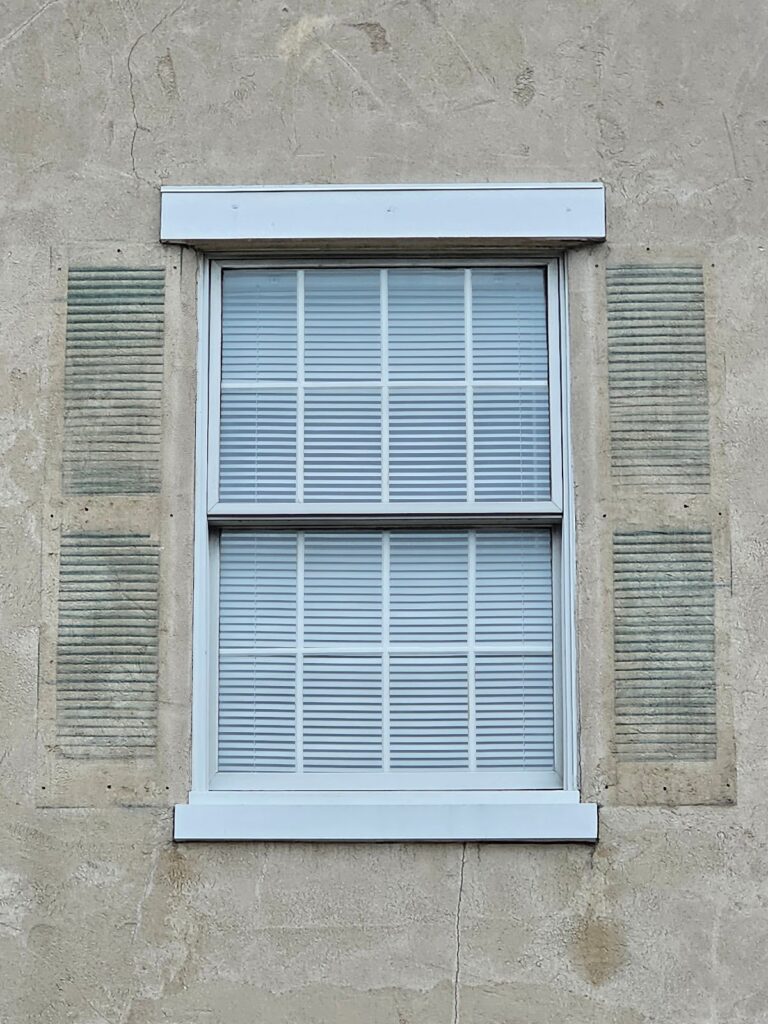
We happened to just take a look at this building a while back and we thought it was really interesting so we took some pictures and we figured we talked about it here on our blog and website. There are a few interesting things that we can learn just by discussing how this building was put together and looking at some of the details. The thing that caught our attention is that from a distance it looks like there are shutters on the fable wall facade. It’s actually a combination of paint overspray and differential aging of the wall surface at the area around or at where the shutters were in the past.
It’s kind of like an optical illusion. You could also say it’s an example of faux paint made to look like shutters. Effectively it is. It’s actually true. It wasn’t intended. That’s the difference. In the end it looks like faux shutters have been painted onto the surface of the wall, but that wasn’t the intention of the people applying the paint.
To start, when looking at the building in the picture below, you can see it looks like a brown building. The colors are inconsistent though. It hasn’t actually been painted. The vast majority of the surface of this wall is just the raw color of the original stucco application.
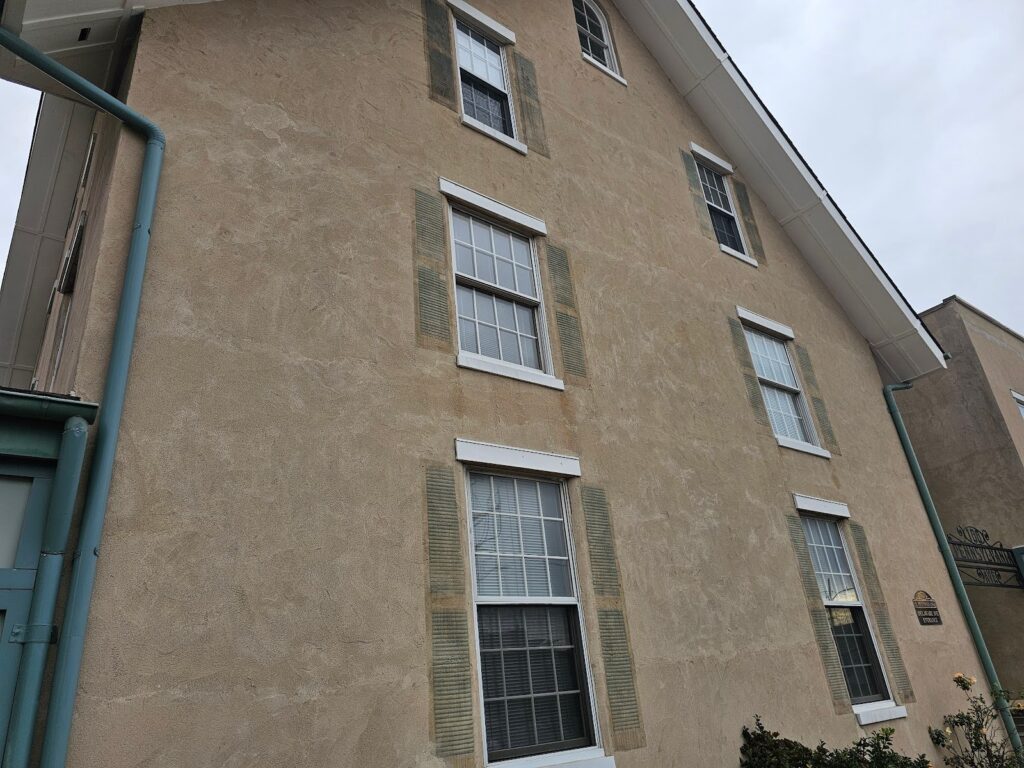
From a distance or a quick glance, it definitely looks like their shutters on each side of each of the windows. There used to be shutters there. At some point in time, in the past, these shutters were taken down. They could have been in disrepair and they may have just been thrown away and never replaced.
At a glance that also may look like the building has paint, but when you look close the wall hasn’t been painted at all. This tan color is the color of the mixture of the light color stucco and the brownish color aggregate. Overall, as the aggregate shows more through the stucco surface over time, it has ended up looking more tan. The title refers to this building as a masonry building. On the surface it sounds like masonry generally refers to bricks. It also refers to stone masonry and that also seems obvious. Stucco itself though isn’t always referred to as just masonry.
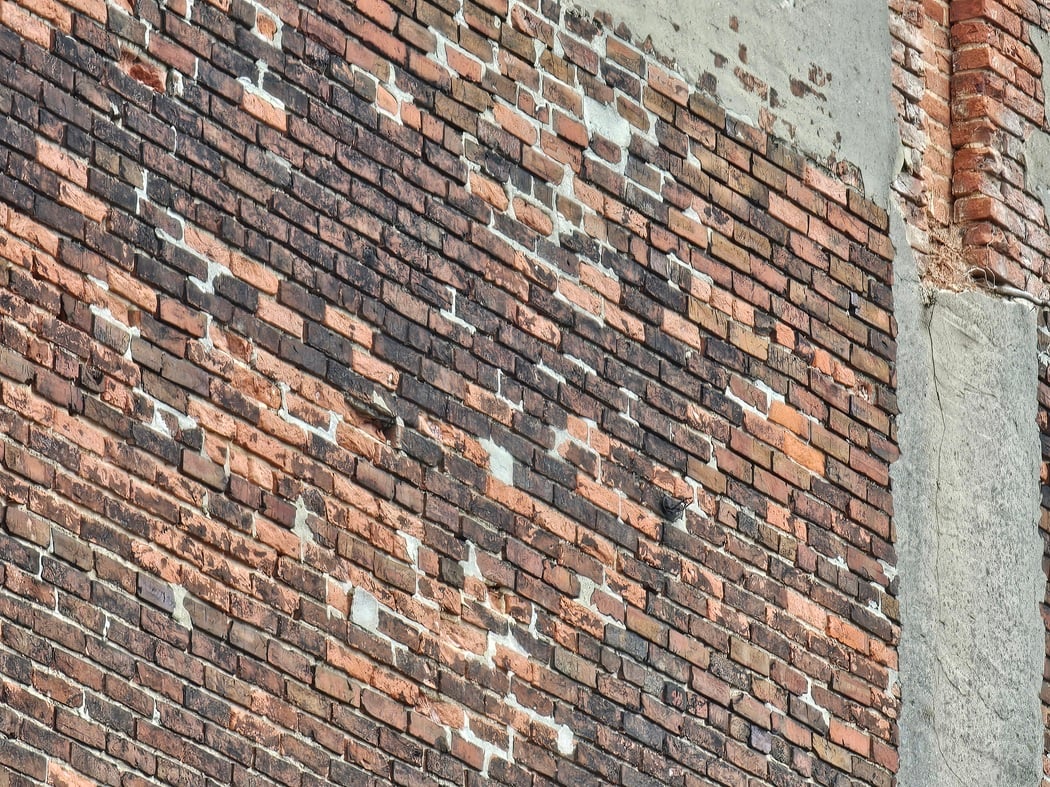
Stucco definitely can be a masonry finish that can be applied on the surface of a substrate block, brick, or stone masonry. In some cases, here in DC, people have installed additional finishes on top of historic brick walls as a method of avoiding repointing. In some cases we’ve seen stucco applied right over brick when it really should have been repointed first and the stucco could have even been avoided or omitted altogether if the repointing had been done properly. In other cases we’ve seen people install different types of siding right on top of brick surfaces when the brick surfaces become worn.
Instead of doing a proper repair of the mortar such as repointing or tuck pointing, they just wrapped it up and covered it over. It sounds backwards but it does save a bit of money, although it looks terrible, in our opinion. We mentioned that’s our opinion because we happen to be a company full of people who really appreciate historic masonry. It doesn’t mean that everybody has to have the same opinion. We just think that vinyl siding is many steps below the aesthetic quality of exposed masonry.
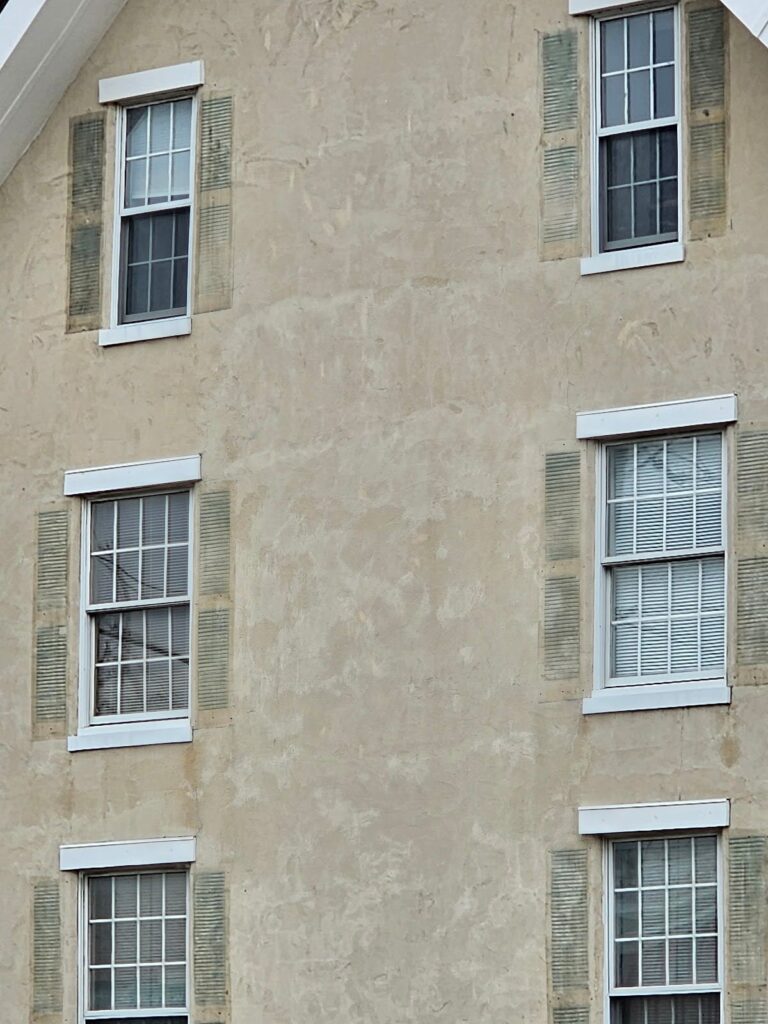
The picture below shows a closer view of the painted outline of the shutters on the wall. The rim at the outside of the frame of the shutter appears to be a brown color, a slight shade darker than the exposed stucco. It’s actually just a portion of the same stucco that was previously covered by the frame of the shutter for many years. Because it was covered, it had less exposure to the elements and less exposure to sunlight and therefore today maintains a slightly darker color than the remainder of the wall.
In this coming week’s blog, we’ll look at more pictures of this same masonry facade, from a closer viewpoint.
Since our company, Dupont Tuckpointing and Masonry, specializes in masonry restoration, historic brick repointing, and tuckpointing services in the Washington D.C. area, we make it a point to study these types of issues. These buildings are uniquely historic, and their preservation requires skilled masons who are technically trained in the best practices and knowledge of proper restoration techniques.
We understand the significance of maintaining the architectural integrity of these historic structures, and our team of experienced professionals is dedicated to delivering exceptional craftsmanship. Whether you require masonry restoration, tuckpointing, or brick repointing services, we are here to help.
At Dupont Tuckpointing and Masonry, we take pride in our work and strive to ensure that every project is executed with the utmost care and attention to detail. We are committed to preserving the rich heritage of Washington D.C.’s built environment for generations to come.
If you have any questions or needs regarding masonry restoration, historic brick repointing, or tuckpointing services, please do not hesitate to reach out to us. We would be delighted to assist you and provide you with the expertise and quality workmanship that your historic property deserves.
You can reach us by telephone at (202) 796-7644 and you can reach us by email from the contact form on our website at https://duponttuckpointingmasonrydc.com/contact-us/.