Exterior Brick Wall Decorations Ideas to Enhance Curb Appeal – Part I
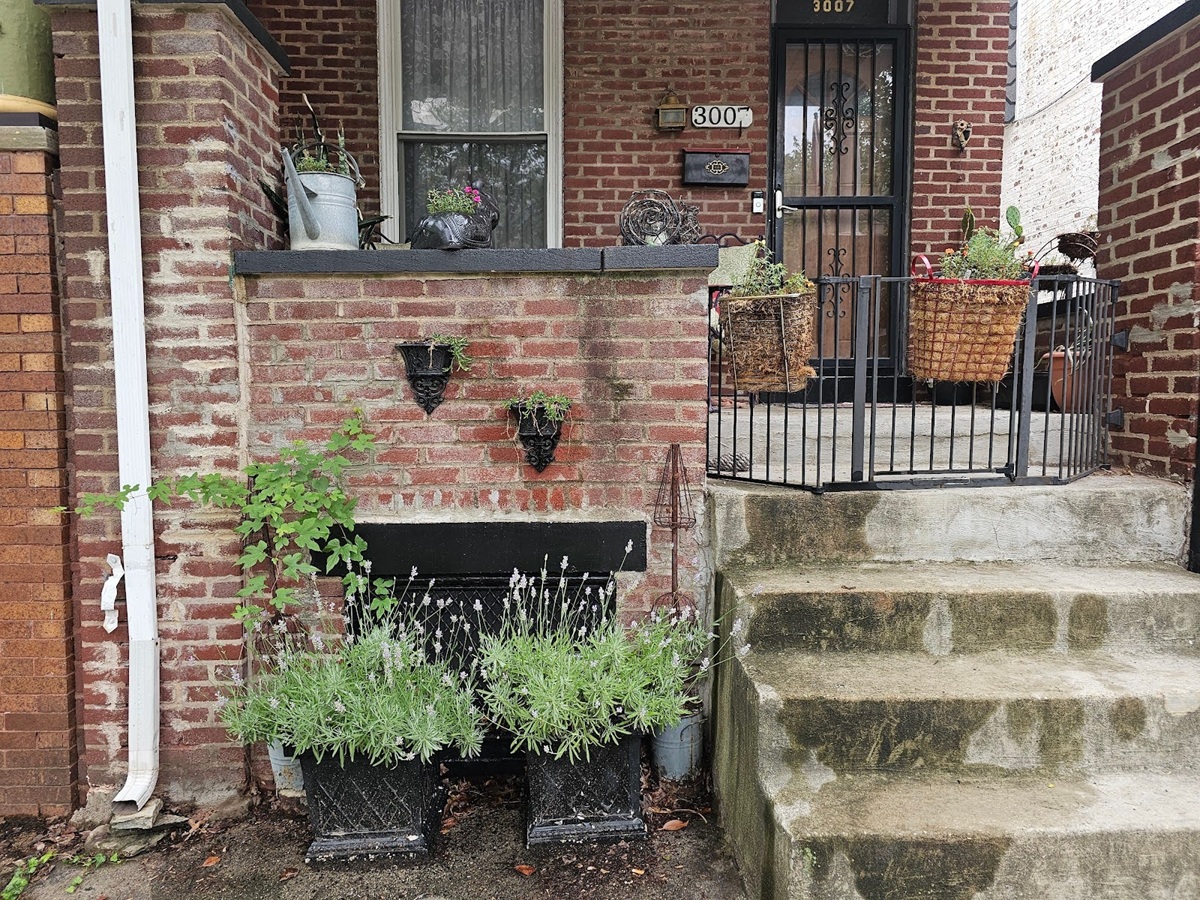
It’s a bit rare to see decorations on brick walls. In fact, most of the decorative types of elements are built as permanent. Generally, they’re part of the architecture of the building, not added embellishments. Here though, we are showing an example of where some elements have been added to a historic masonry facade. We think they look okay, they don’t really detract from the view of the historic architecture.
These elements basically revolve or center around presenting vegetation and plant growth. They are decorative plantings, with ferns or foliage. In some cases, flower bloom in some of these plantings, at specific parts of the growing season. You can think of it as if they have added some green elements from nature to what is otherwise a concrete jungle. If you look around the front of this building and the framework of the site, there is no green space. Everything has been built with concrete and brick.
Much of the city is like this. There are entire blocks that go directly from an asphalt street, to a concrete sidewalk, directly to a brick wall. You can basically walk from the house to the street and pass by nothing green. Here, this property is built in the same way, but these small decorative elements make it look a lot better.
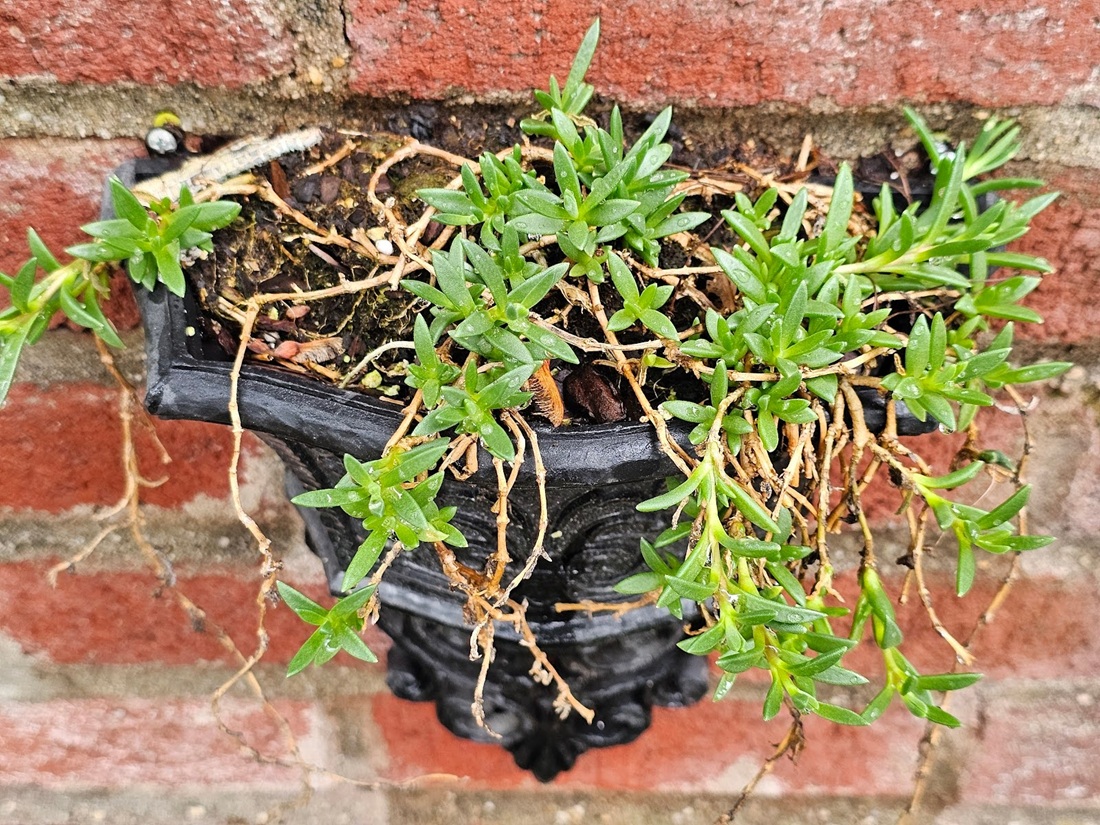
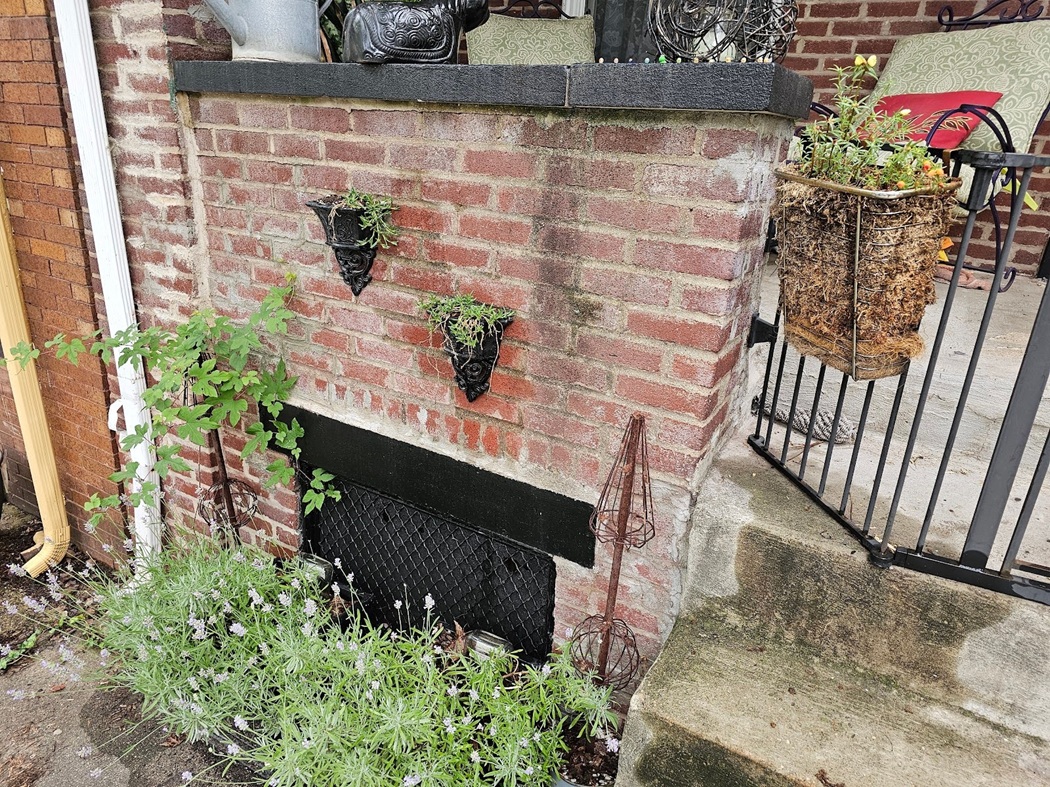
The particular wall mounted planters shown in the picture below are made from cast iron. Cast iron materials like this fit right into the historic aesthetic. Unlike wrought iron or modern steel, cast iron has the ability to have a much deeper decorative texture and detail. We see this in cast iron elements throughout the historic parts of the city. The very ornate elements that are generally built with cast iron are hard to work with from a welding perspective because only certain processes or types of welding can be used with cast iron Steel or regular iron, by comparison, can easily be welded with both stick and mig type processes with standard setups.
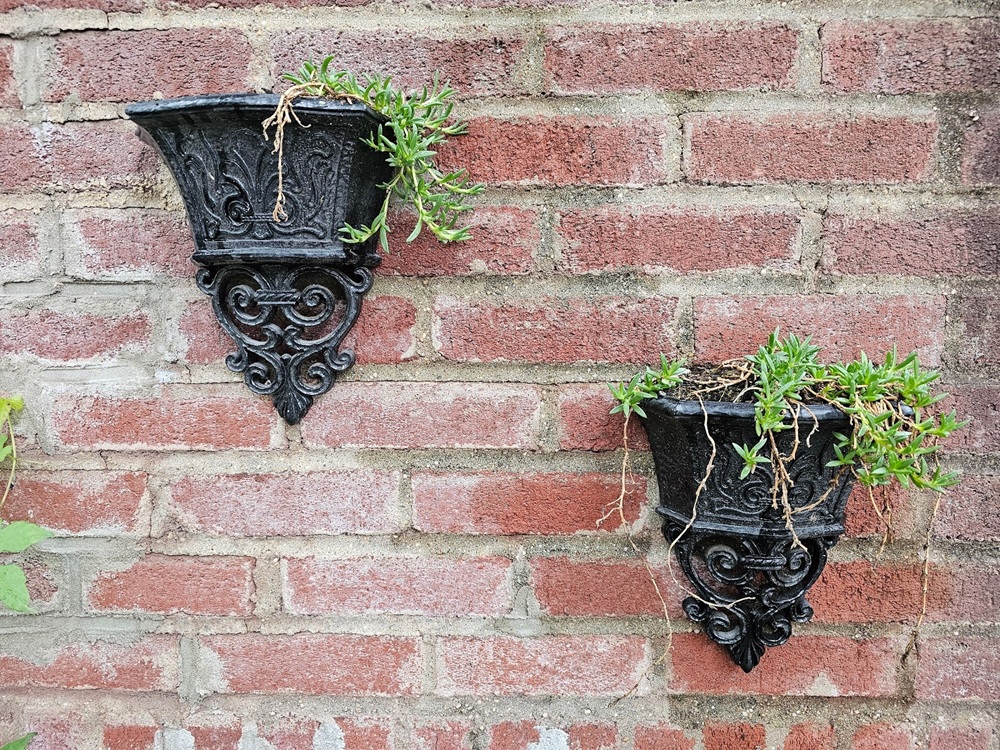
The way these planters stand away from the flat brickwork also breaks up the aesthetic two-dimensional nature of the facade. Here, the three-dimensional context adds a visual interest to the space and this part of the wall.
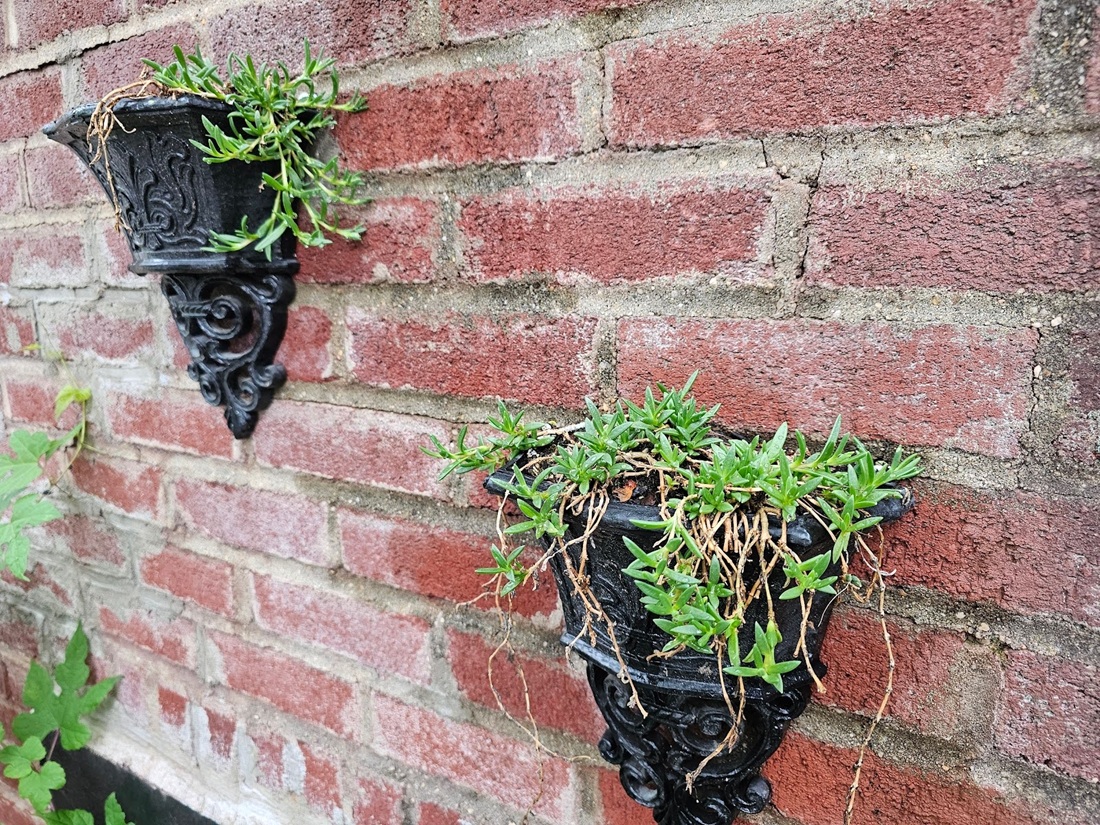
The particular plant shown here is called a stringy stonecrop. It looks a little bit like a fern but it’s actually different. The particular plant happens to be native to Asia and China but has been cultivated throughout most of the world as an ornamental variety.
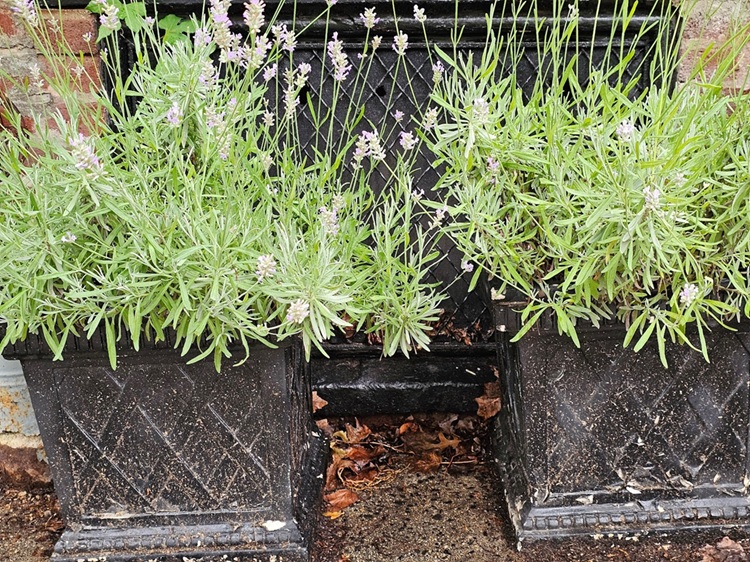
The planters aren’t just average looking terracotta or plastic types of planters. They’re better. The simple but black color with lattice-like pattern reflects the historic nature of the adjacent architecture. Here in these particular planters, they are growing lavender. Lavender is a good plant for this type of application. Lavender is perennial. It also grows hardily, smells great and can be used as a medicinal or health related herb.
The black accent colors on the porch reflect the color of the decorative planters and the wall mounted planters. Even though these elements are painted and we can’t see the texture, it’s most likely these black architectural elements are made from concrete. In many cases, concrete lintels are used in masonry openings. This particular building is over 100 years old though. Back that far in history, concrete lintels were not used in most types of DC urban masonry architecture.
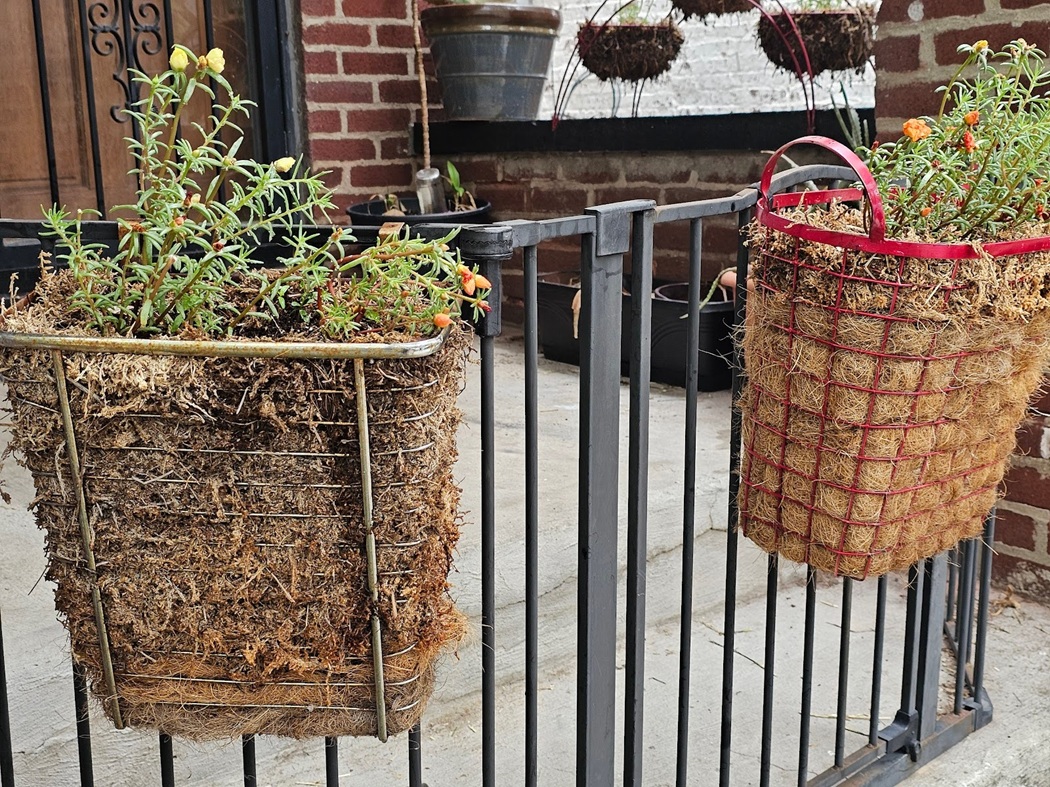
Hanging baskets have been added to the gate at the front porch. Gates like this are not common at front porches and were not part of the historic inventory of architectural details. It’s most likely that in this particular case, these gates were added to keep a dog or child on the porch like a baby gate. In this case, it was used as part of the homeowners lifestyle.
Without a front yard in limited outdoor space in dense urban areas like downtown Washington DC, people find ways to get a little bit of outdoor space into their life. Sometimes people grow elaborate vegetable gardens right on their balconies. Here, they use their front porch as a place where their pets and animals can enjoy a bit of outdoor space.
Our company, Dupont Tuckpointing and Masonry, specializes in masonry restoration, historic brick repointing, and tuckpointing services in the Washington D.C. area. These buildings are uniquely historic, and their preservation requires skilled masons who are technically trained in the best practices and knowledge of proper restoration techniques.
We understand the significance of maintaining the architectural integrity of these historic structures, and our team of experienced professionals is dedicated to delivering exceptional craftsmanship. Whether you require masonry restoration, tuckpointing, or brick repointing services, we are here to help.
At Dupont Tuckpointing and Masonry, we take pride in our work and strive to ensure that every project is executed with the utmost care and attention to detail. We are committed to preserving the rich heritage of Washington D.C.’s built environment for generations to come.
If you have any questions or needs regarding masonry restoration, historic brick repointing, or tuckpointing services, please do not hesitate to reach out to us. We would be delighted to assist you and provide you with the expertise and quality workmanship that your historic property deserves.
You can reach us by telephone at (202) 796-7644 and you can reach us by email from the contact form on our website at https://duponttuckpointingmasonrydc.com/contact-us/