Identifying and Addressing Extreme Brick Spalling
Our company works in historic masonry restoration. We’ve looked at many different cases of types of masonry deterioration. One of the most common types of deterioration takes form and what is referred to as spalling. Spalling is the flaking off or breakage of the exterior face of exposed surface of masonry. We’ve looked at many examples of this type of deterioration here on our website, another example can be seen at a blog we wrote and posted last year, here at this link.
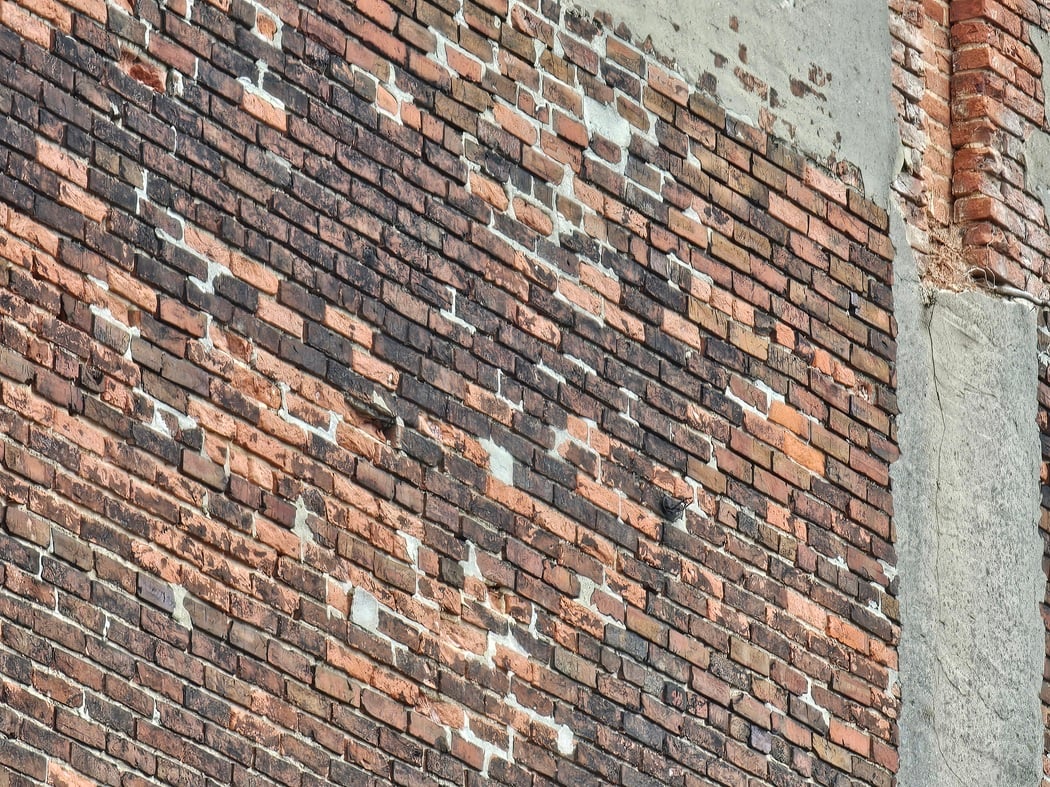
It’s common, particularly where masonry isn’t well cared for and was preserved. Repointing and many other types of relatively simple forms of maintenance and upkeep can prevent spalling. Sometimes building owners just don’t take the proper steps to preserve their buildings though. Today we’re looking at a particular large masonry facade where spalling is extreme and prolific. This stands as a quintessential example. In fact, we thought this example was one of the worst we’ve seen.
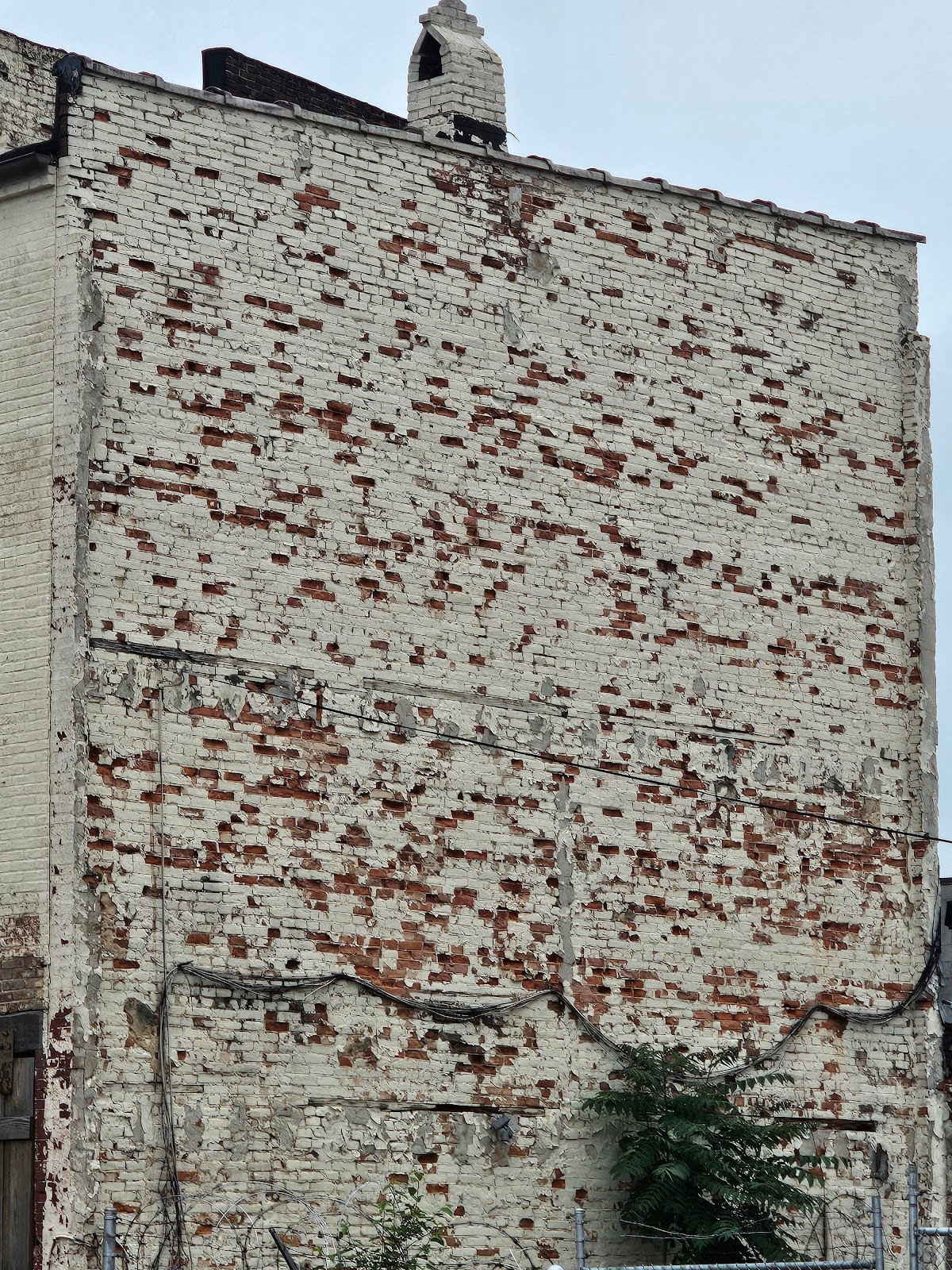
In the next picture it looks a bit closer at the same wall, showing the upper section. Even at many of the areas of the wall where the spalling hasn’t yet exposed the underlying red clay brick substrate, you can see an uneven texture that indicates a high likelihood of subsurface delamination.
In other words, even though the bricks with spalling are apparent throughout the majority of the facade, they don’t constitute the majority of the surface. The majority of the surface space, on a quantitative basis, still has a painted face. That doesn’t mean that those areas are okay though. Just because there’s paint still left on the surface, does it mean that they’re not damaged. In fact we would bet that the majority of the areas that still have a painted face are actually compromised.
It’s likely those areas also have an extent of damage, even though the damage may not have led to complete detachment at the surface. Bricks can be damaged without yet having spalled at the surface. Essentially, even though the surface may have a cleavage and breakage point, the loose portion of broken brick facing still might not actually fall off for years even after it’s damaged. A sounding process can be used to determine whether or not each individual brick has damage. The sounding process is not complicated.
It’s essentially a process where each area of each brick face is moderately gently tapped with the head of a hammer. Even though it’s not difficult to tap a brick with a hammer, the problem here is access. It’s difficult to reach all of these areas because the height of the building needs to be climbed or accessed with scaffolding or mechanized equipment.
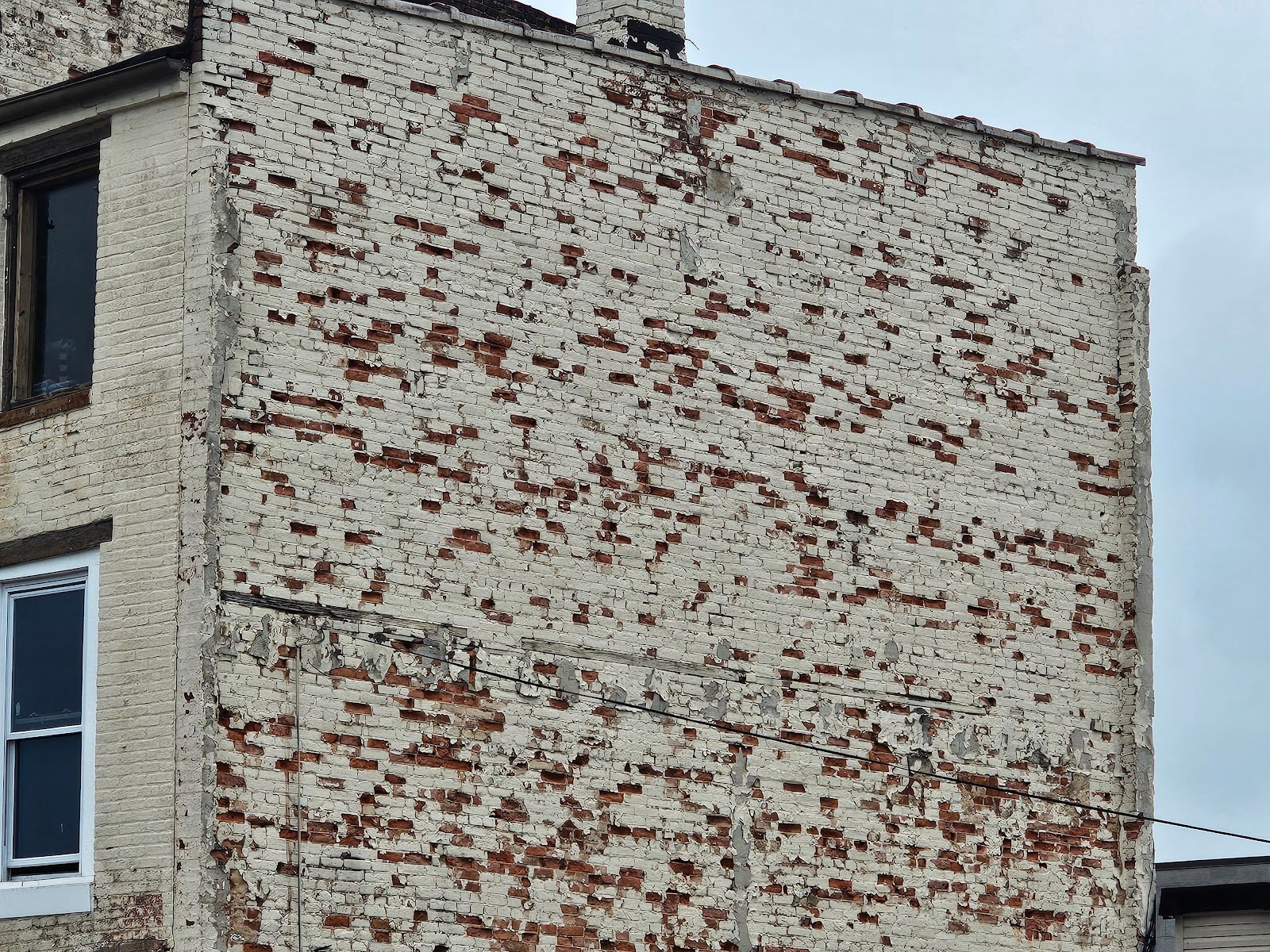
There’s a major debate in the historic masonry preservation and restoration industry. Many people believe that painting the surface of a brick building does not necessarily lead to accelerated deterioration. Other people say that applying paint to the surface of a brick building can cause damage, which manifests in the form of spalling, like shown here. Although it’s debated, covering a brick with a non-porous type of application can lead to impermeability. The same issue applies to repointing. In fact, although we are not certain about whether or not it’s so terrible to apply paint to the surface of a masonry facade, we do agree that using portland mortar for repointing can devastate a brick facade.
In this coming week’s blog, we’re going to continue looking at images of the same facade, but from a closer viewpoint. As part of that continuing discussion, we will also examine some of the physical reactions that take place when water builds up on the brick side of an impermeable barrier applied to the surface of a facade.
Since our company, Dupont Tuckpointing and Masonry, specializes in masonry restoration, historic brick repointing, and tuckpointing services in the Washington D.C. area, we make it a point to study these types of issues. These buildings are uniquely historic, and their preservation requires skilled masons who are technically trained in the best practices and knowledge of proper restoration techniques.
We understand the significance of maintaining the architectural integrity of these historic structures, and our team of experienced professionals is dedicated to delivering exceptional craftsmanship. Whether you require masonry restoration, tuckpointing, or brick repointing services, we are here to help.
At Dupont Tuckpointing and Masonry, we take pride in our work and strive to ensure that every project is executed with the utmost care and attention to detail. We are committed to preserving the rich heritage of Washington D.C.’s built environment for generations to come.
If you have any questions or needs regarding masonry restoration, historic brick repointing, or tuckpointing services, please do not hesitate to reach out to us. We would be delighted to assist you and provide you with the expertise and quality workmanship that your historic property deserves.
You can reach us by telephone at (202) 796-7644 and you can reach us by email from the contact form on our website at https://duponttuckpointingmasonrydc.com/contact-us/.