Preserving the Past: How Horse Binding Rings Add Character to DC Brick Buildings
Washington DC is an old city that has many buildings that were built during the days of horses and buggies. When the historic Parts of the city operated with horses, the infrastructure of the houses in the streets were, in part, configured differently. In some cases houses were built with stoops above the street level to allow the landing and entrance to be above the street. The difference in elevation separated the space. Front stoops were often fitted-out with boot scrapers just to clean off animal excrement and mud. At that time, over 100 years ago, before cars were invented, people got around mostly by walking and horses. Horses were often kept in stables. In some cases, the historic brick built garages behind or DC row homes, particularly in historic neighborhoods, were originally used for stables. Horses were kept in these stables along with mezzanine lofts used to store bales of hay. Many of these stables are still intact, to a degree, but today used to store vehicles. In some cases the original carriage style doors have been removed and replaced with roll up or roll back garage doors. The historic masonry, though, often remains unchanged, to a large extent, except for the required upkeep and repointing.
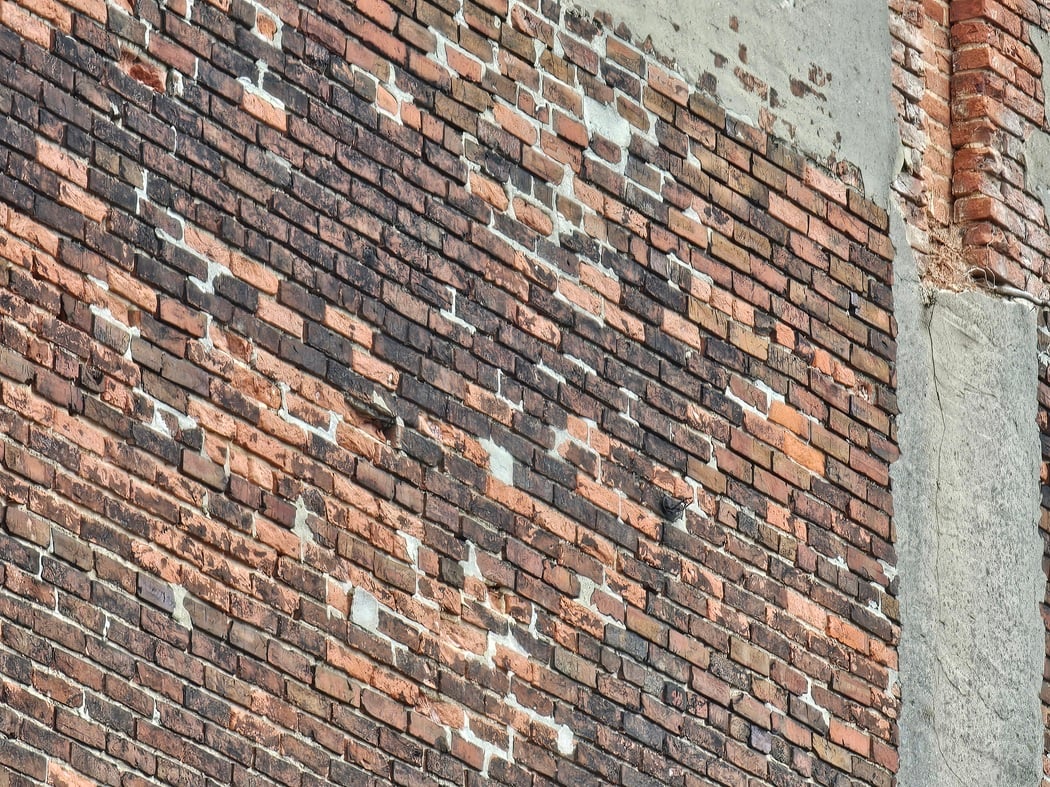
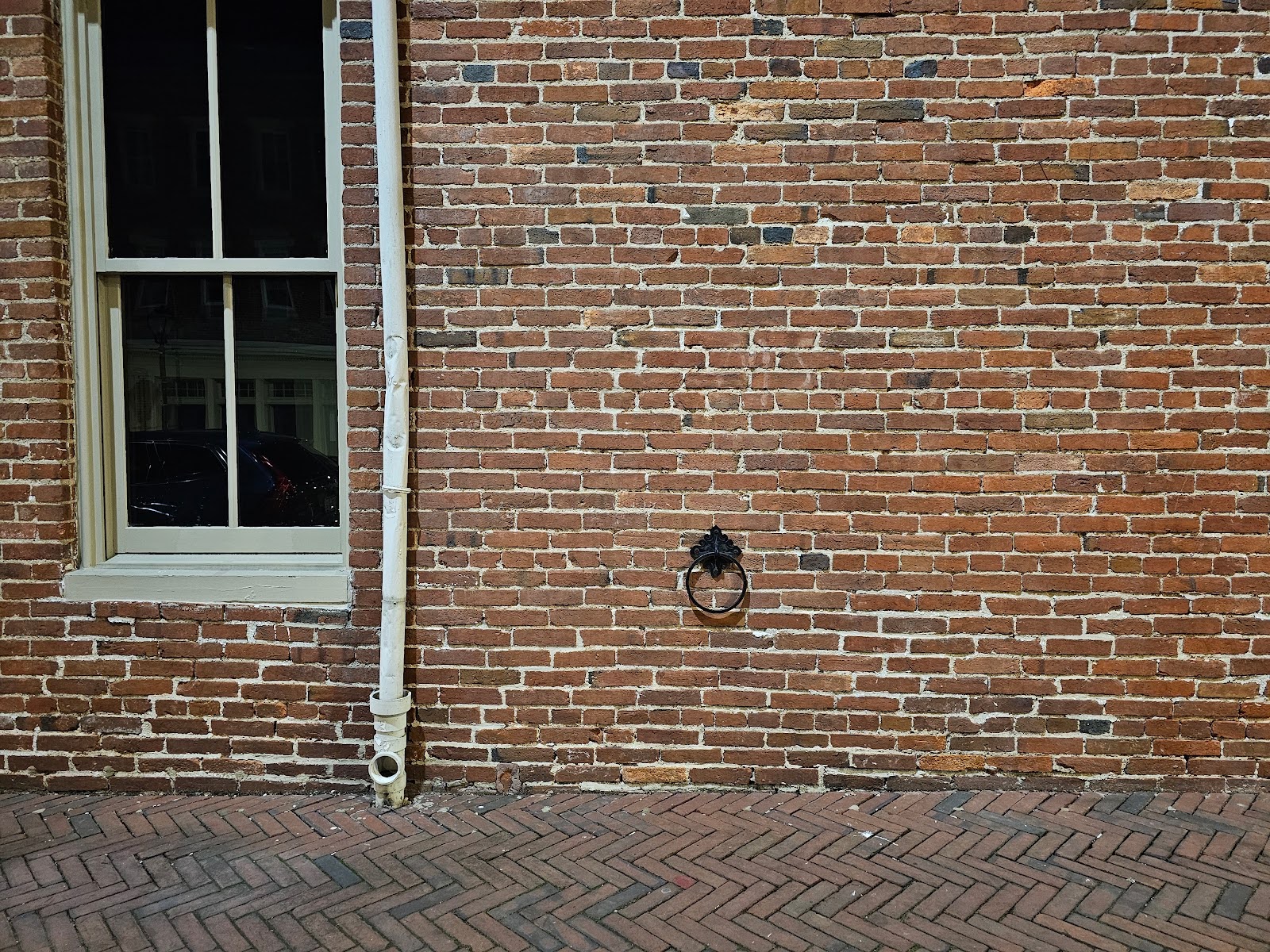
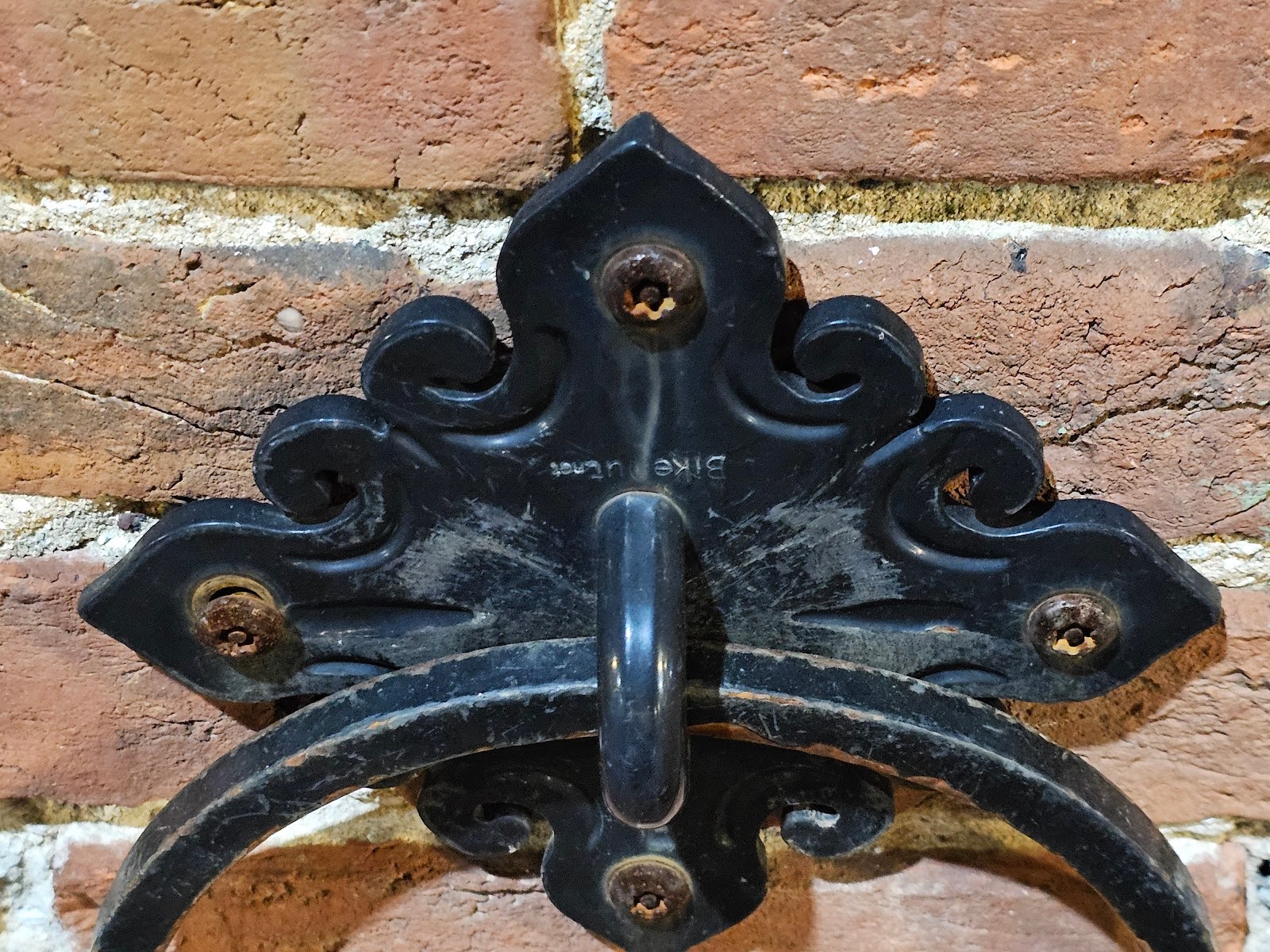
Where horses were not kept in ntables or throughout the day when they were making their rounds, the horses were bound so they didn’t just walk off. An example of an element that looks like a historic horse binding ring is shown below. This is a historic brick facade that runs along a city street. You can see the 8-in or so diameter large ring is held to the wall with a mounting base plate.
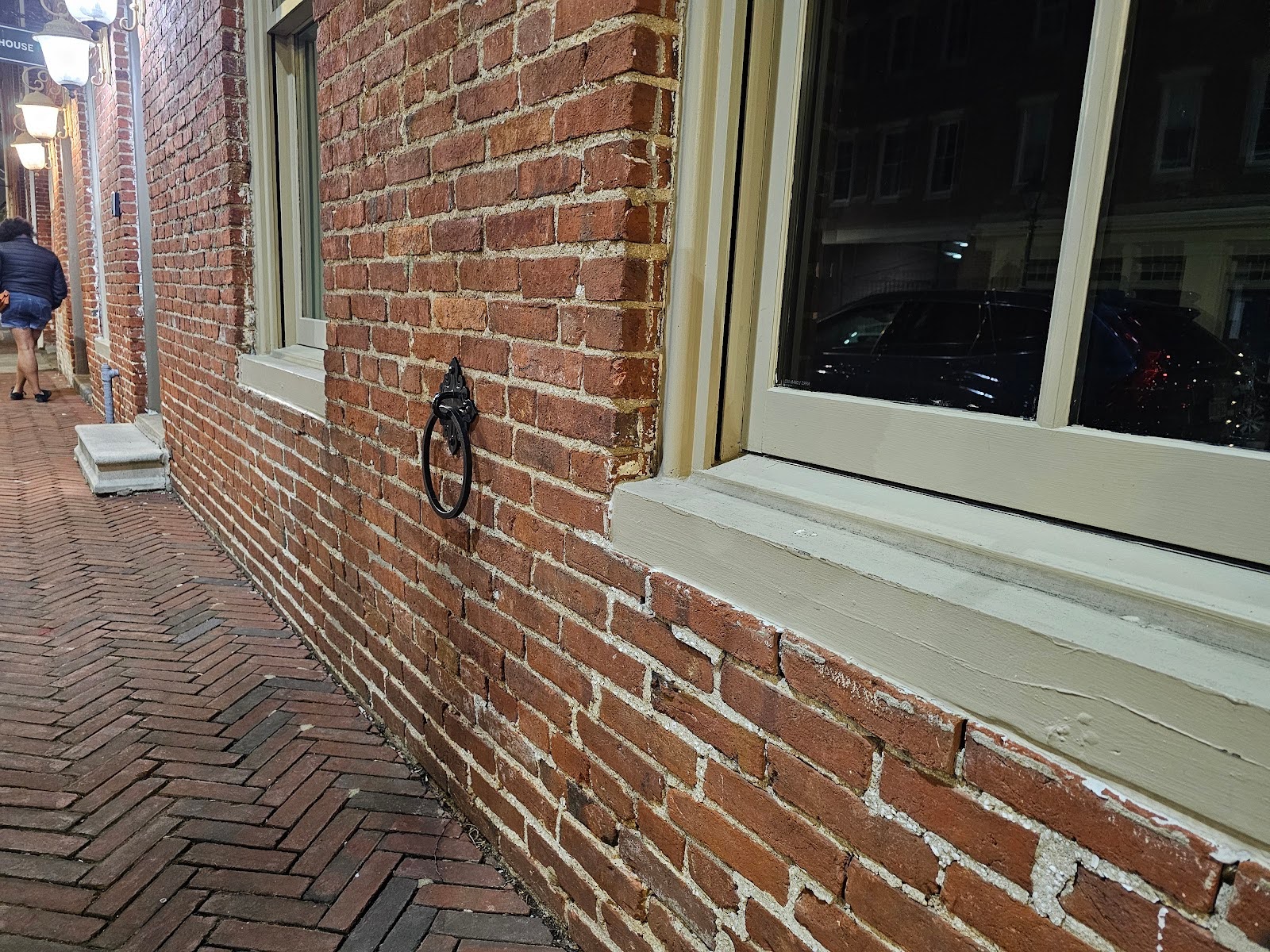
In historic times it may have been common to see elements like this. There are a few different ways in which the particular steel elements and their mounting and installation are different today. This one, as we mentioned above, has made the look or resemble one that is classic or historic. It isn’t though. There’s some details shown below that make it clear that this is an attempt to look similar but isn’t even actually a replica.
First of all, when looking at the mounting fasteners, they’re clearly modern or contemporary. They are a security type fastener. They have a particular type of head that will not work with regular screwdrivers. That alone, though, doesn’t mean that it isn’t historic. The other characteristics that give it away though are a bit more subtle.
To explain more about the fasteners first though, it’s important to understand that screws like this didn’t exist in historic times. In fact, nails were used in the vast majority of cases. But they were normally installed in a manual type of way. This type of installation though, into a double wythe or two brick thick historic facade wouldn’t allow for the use of a typical historic rivet.
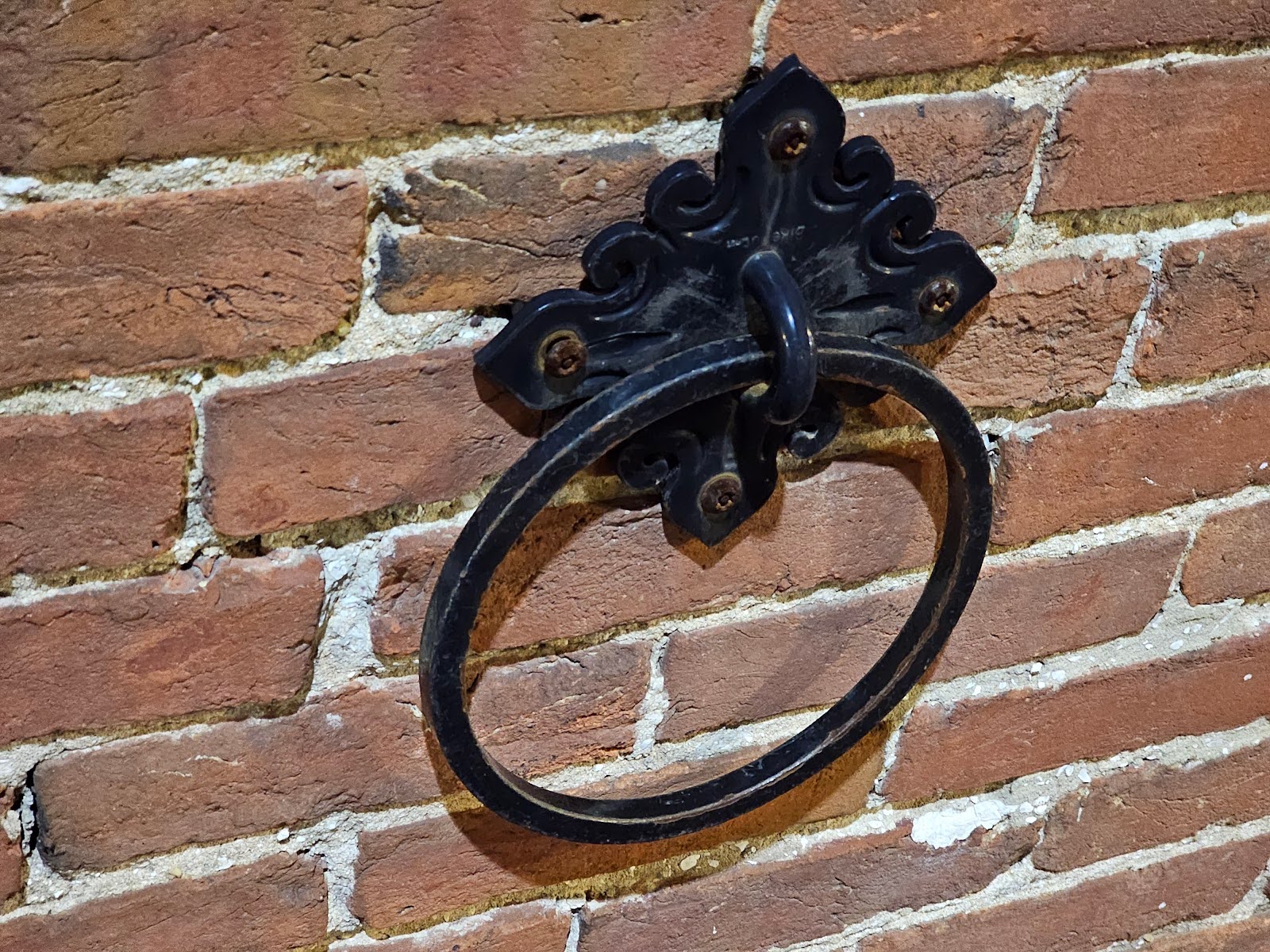
In most cases, and historic times, decorative elements in metal were generally made with cast iron. Cast iron could be formed with intricate details and the molten metal could be poured into a cast to create a positive of the cast. Essentially, the cast works like a negative, created in reverse and when the molten metal hardens, mated to the shape of the negative, it becomes a positive which is basically the reverse form. Instead though, in this case, the metal used is steel, not cast iron. The steel has decorative embellishments at the surface to make it look like a cast iron, with those elements actually punched and pressed. It’s a much different process which uses hydraulic machines. The hydraulic equipment forces the shape with a die, into the plate steel.
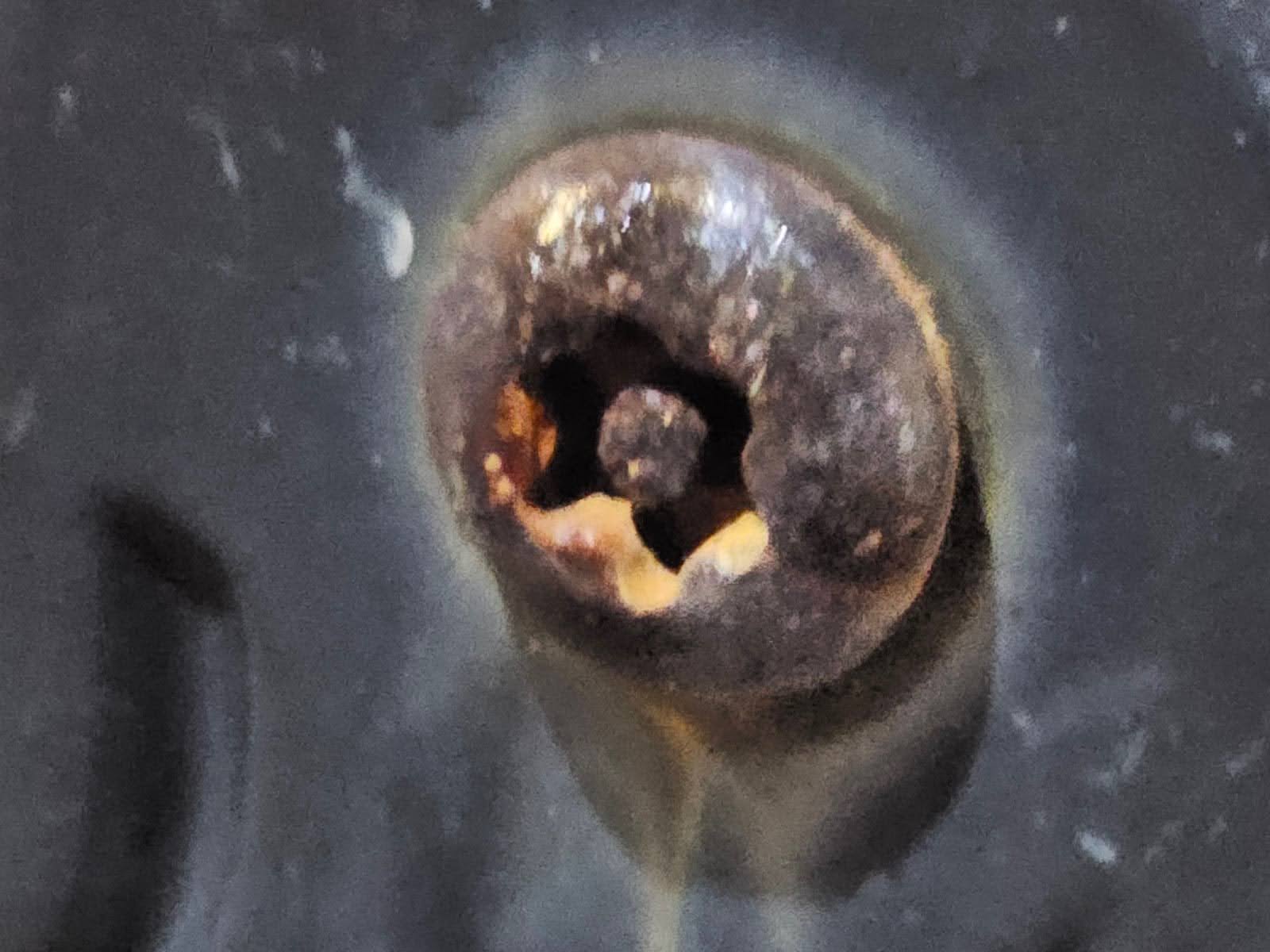
The next picture below shows a very close up view of the head of the screw. It is a Torx head screw which uses a special bit, a bit like a star but with 6-lobes. The torque shape, in itself, isn’t necessarily a security type element, but here, this particular type of screw head also has a center stud. It’s not as secure as a unique key, but the tools used to drive and remove these particular types of heads are just much less common. Normally they’re only used for security bits. You may find them on things like this intended to secure valuables. In this case, it’s not intended for horses, it’s actually intended to lock a bike. A bike chain or u-lock could slip around the ring and therein would be difficult to remove. If the screws didn’t have this more unique type of head than somebody could just come with a more typical screwdriver in the middle of the night and unscrew the entire base plate. From a remote location they could cut through the steel, to get it off the bike. Cutting through the steel generally creates a significant amount of noise. Having to make that type of cut on site makes it more difficult for it for a would-be thief.
At Dupont Tuckpointing and Masonry, we take pride in our work and strive to ensure that every project is executed with the utmost care and attention to detail. We are committed to preserving the rich heritage of Washington D.C.’s built environment for generations to come.
If you have any questions or needs regarding masonry restoration, historic brick repointing, or tuckpointing services, please do not hesitate to reach out to us. We would be delighted to assist you and provide you with the expertise and quality workmanship that your historic property deserves.
You can reach us by telephone at (202) 796-7644 and you can reach us by email from the contact form on our website at https://duponttuckpointingmasonrydc.com/contact-us/.