Painted Brick Faces and Unpainted Mortar Joints
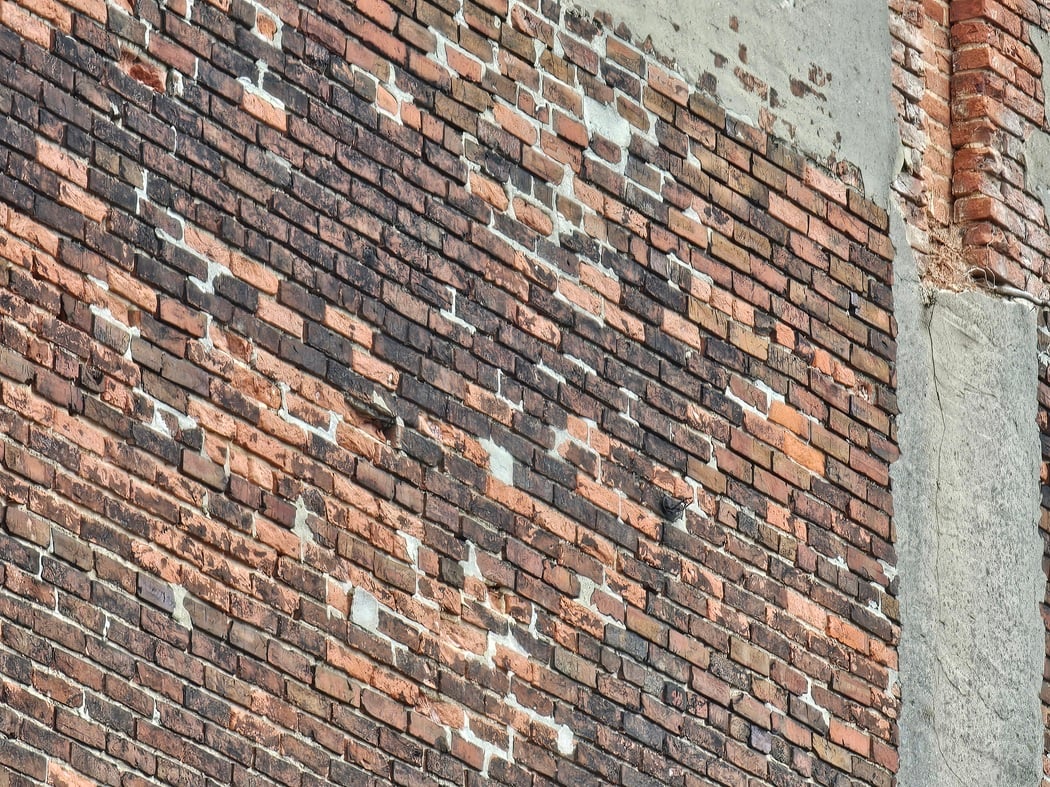
Not too long ago we looked at a building that was built with a Flemish Bond at the rear of the building and a running bond at the side facade. That particular side facade is shown below. Although it’s a simple brick bond, it has a very interesting and surprising detail. We don’t have a full explanation of why this was done, but the facade is painted. It doesn’t look like many other painted facades though.
You can clearly see the brick joints are a different color than the bricks. The bricks are painted blue but the mortar joints are not painted at all. We looked at another example of a building as well where the bricks were painted a blue color and the mortar joints were painted white. It’s an incredible amount of tedious work, to paint the bricks and leave the joints unpainted. The easy ways of painting a facade are to paint the entirety of it wholesale at one time. To paint each brick face individually is an incredibly higher amount of work because cutting in the edge of each brick with a paint brush is very difficult and time-consuming.
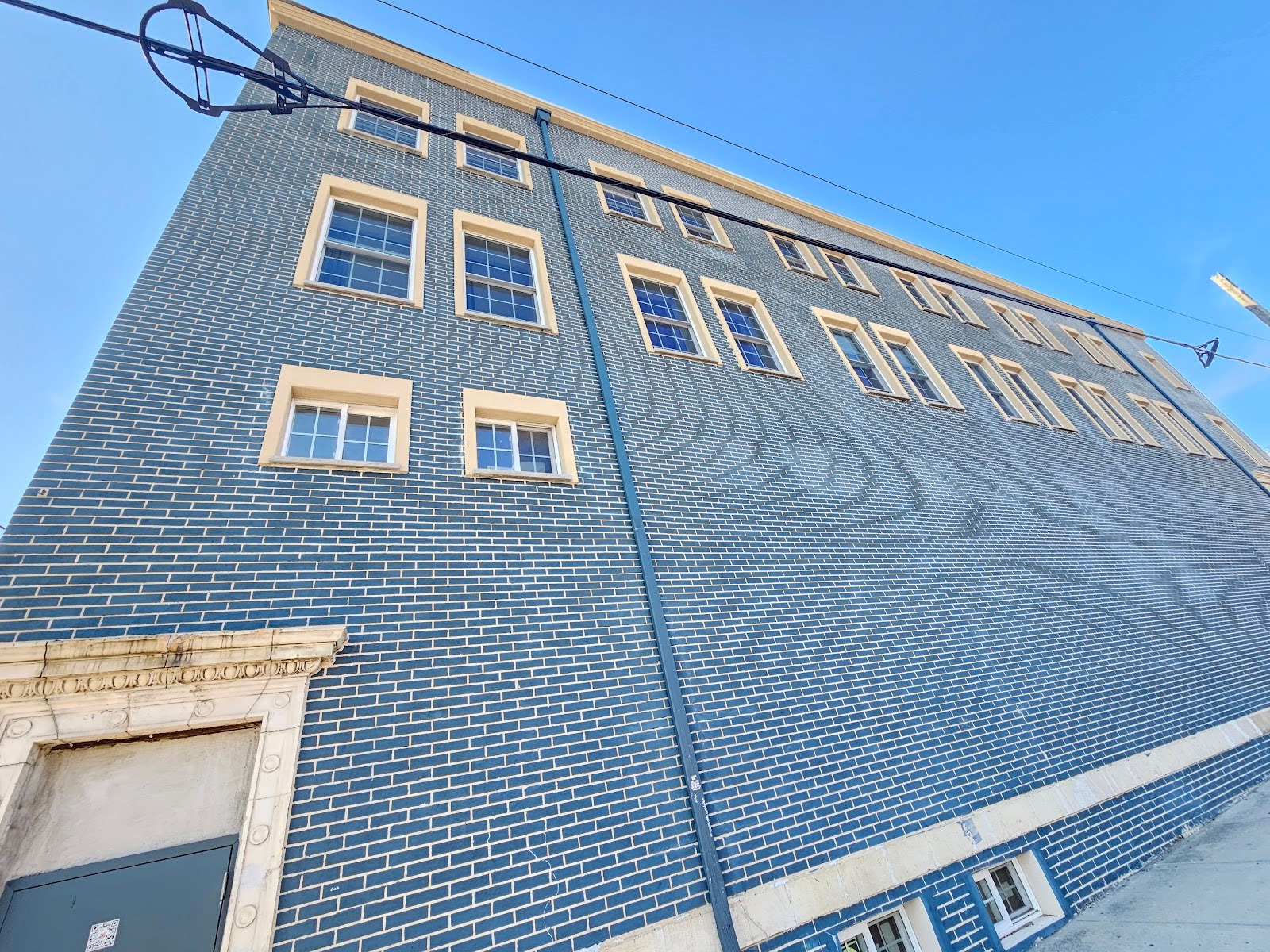
Here you can see the joints are white and the bricks are blue. Aside from a few imperfections, the overall look is very convincing. You almost have to step closer to see the detail.
As a side note, in the picture above, you can see a grouping of about 9 to 10 different window openings that were previously closed in or bricked up. The process of bricking up a window is essentially filling the opening with bricks after removing the window. Modifications are often done on the interior of buildings to change the wall plan. This can help update or modify the layout of the building, on the inside. However, it restricts her detracts from the amount of exterior light that’s allowed to enter into the building. Openings that allow light to enter into a building are generally referred to, in architectural terms, as fenestration.
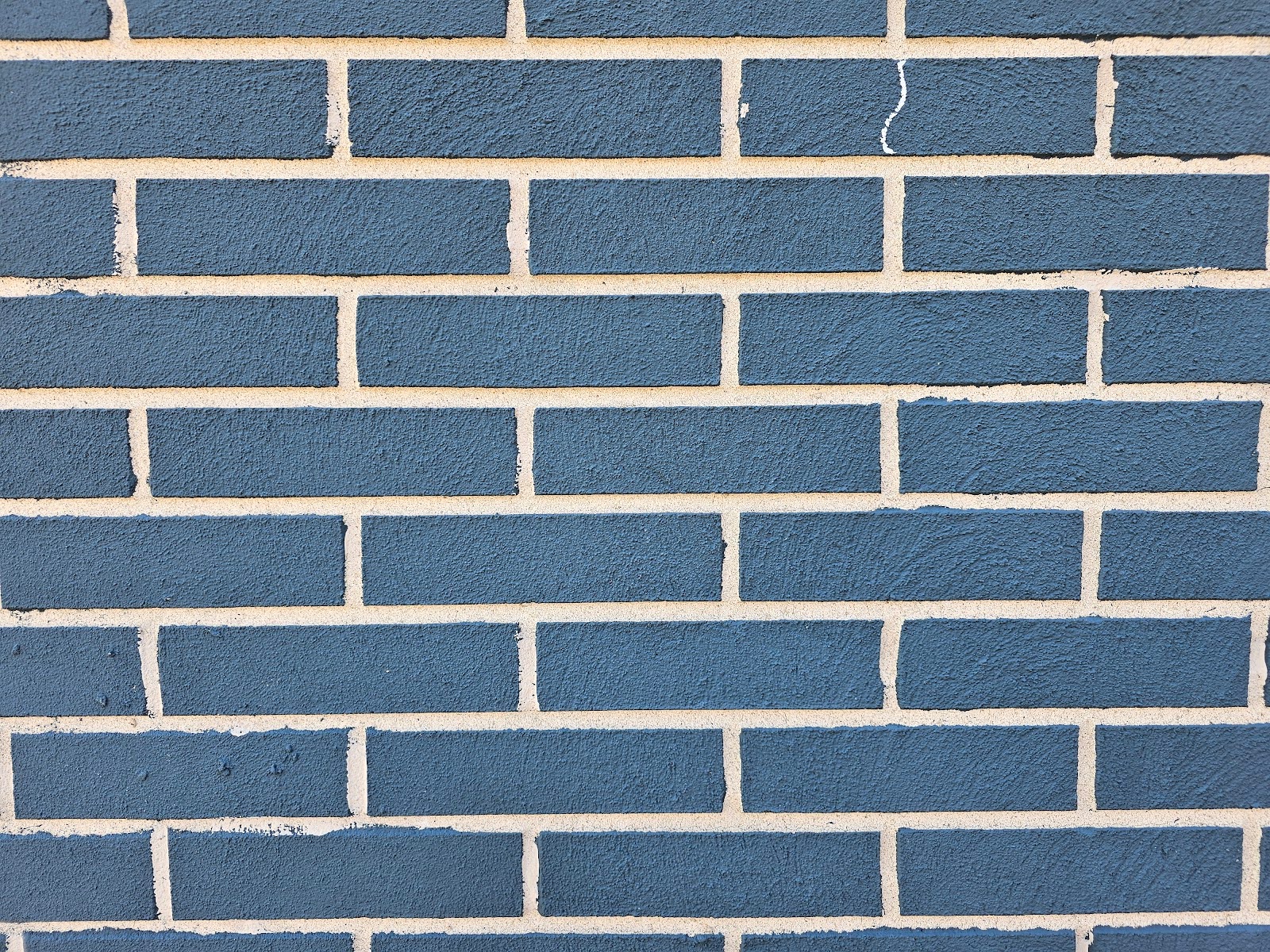
Even from a bit of a distance, you can start to see some of the imperfections. You also can notice there is a texture to the surface of the bricks.
Brick faces can be manufactured in a variety of textures and details. Many historic bricks that we look at here in Washington DC are mold formed. They generally have relatively smooth faces, but there are some distinctions and differences. Many of these facades that currently need repointing in Washington DC are built with common historic brick or with historic pressed bricks. These types of bricks are very similar, at the exposed face, but are different in composition and durability.
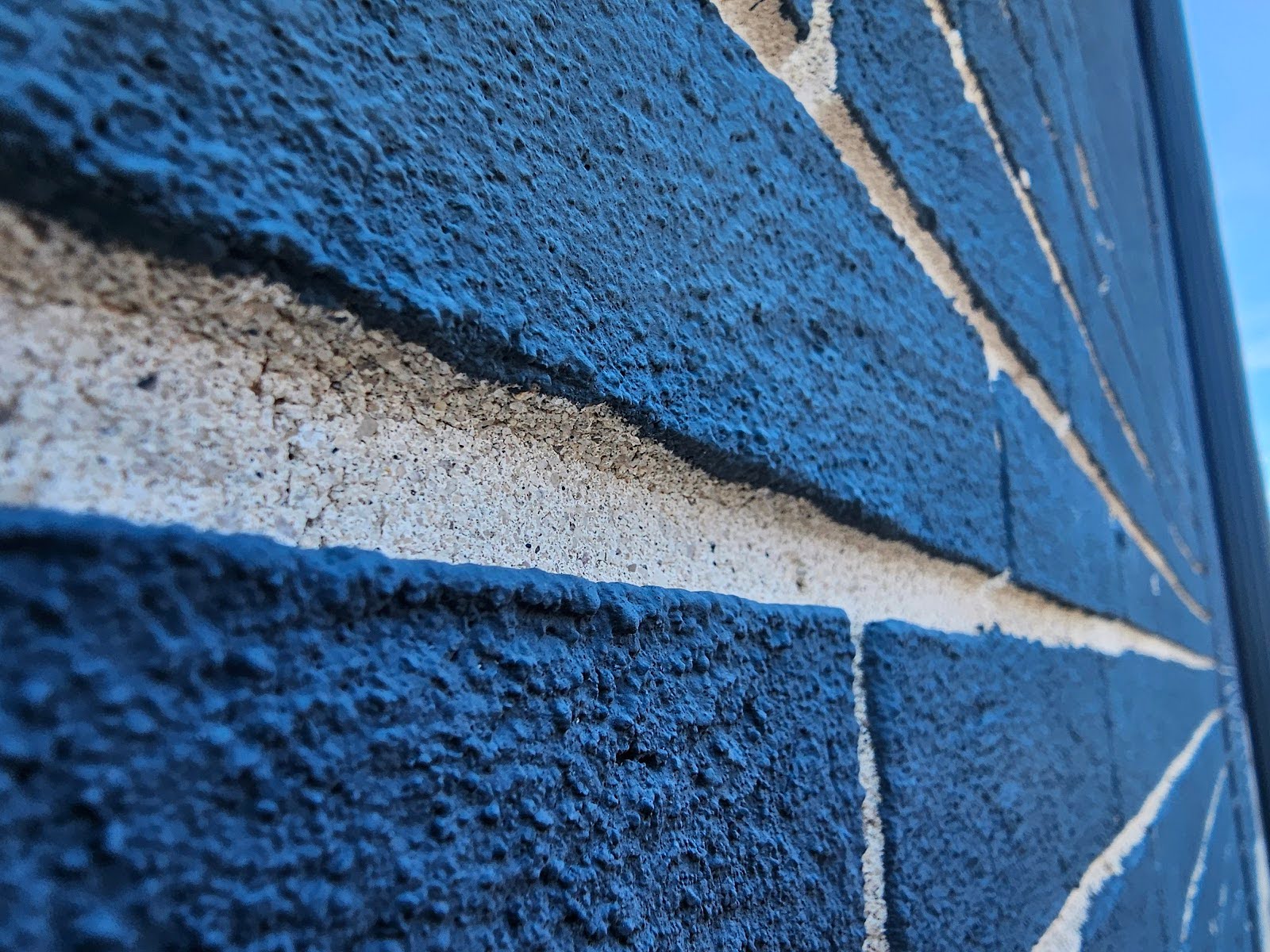
Since we’re looking at this building, after it was last modified, it’s difficult for us to say for certain how the coatings were applied.
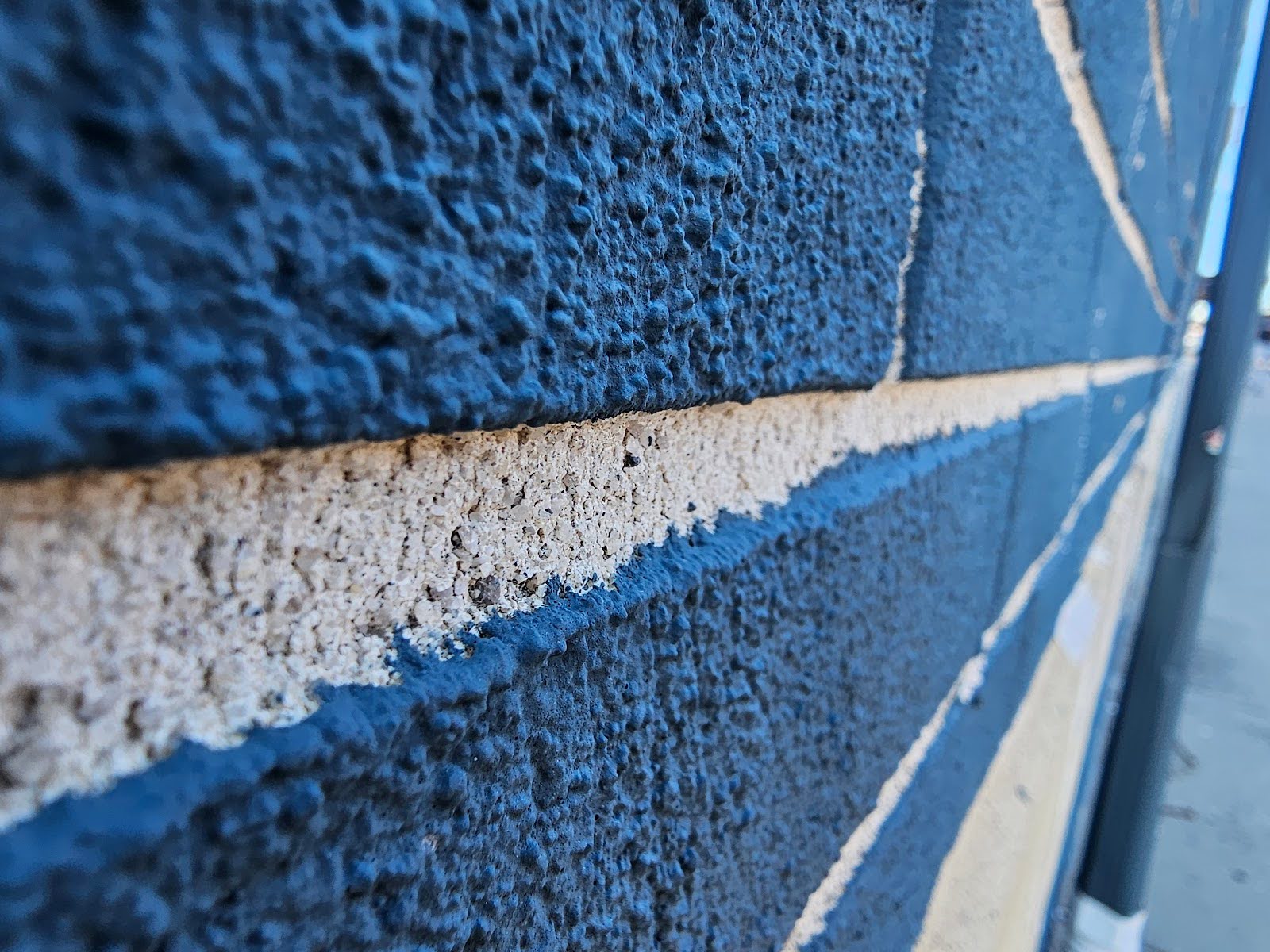
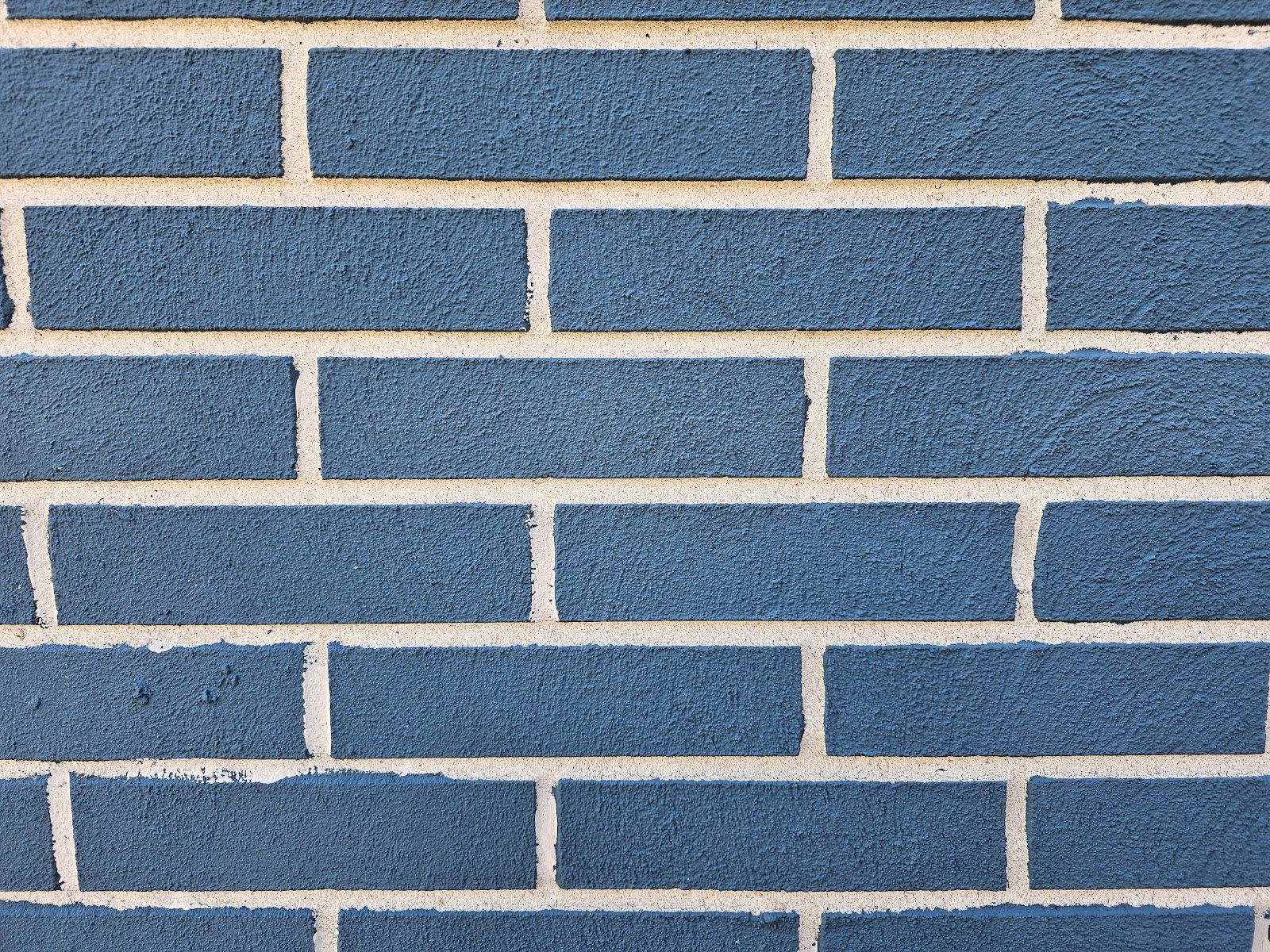
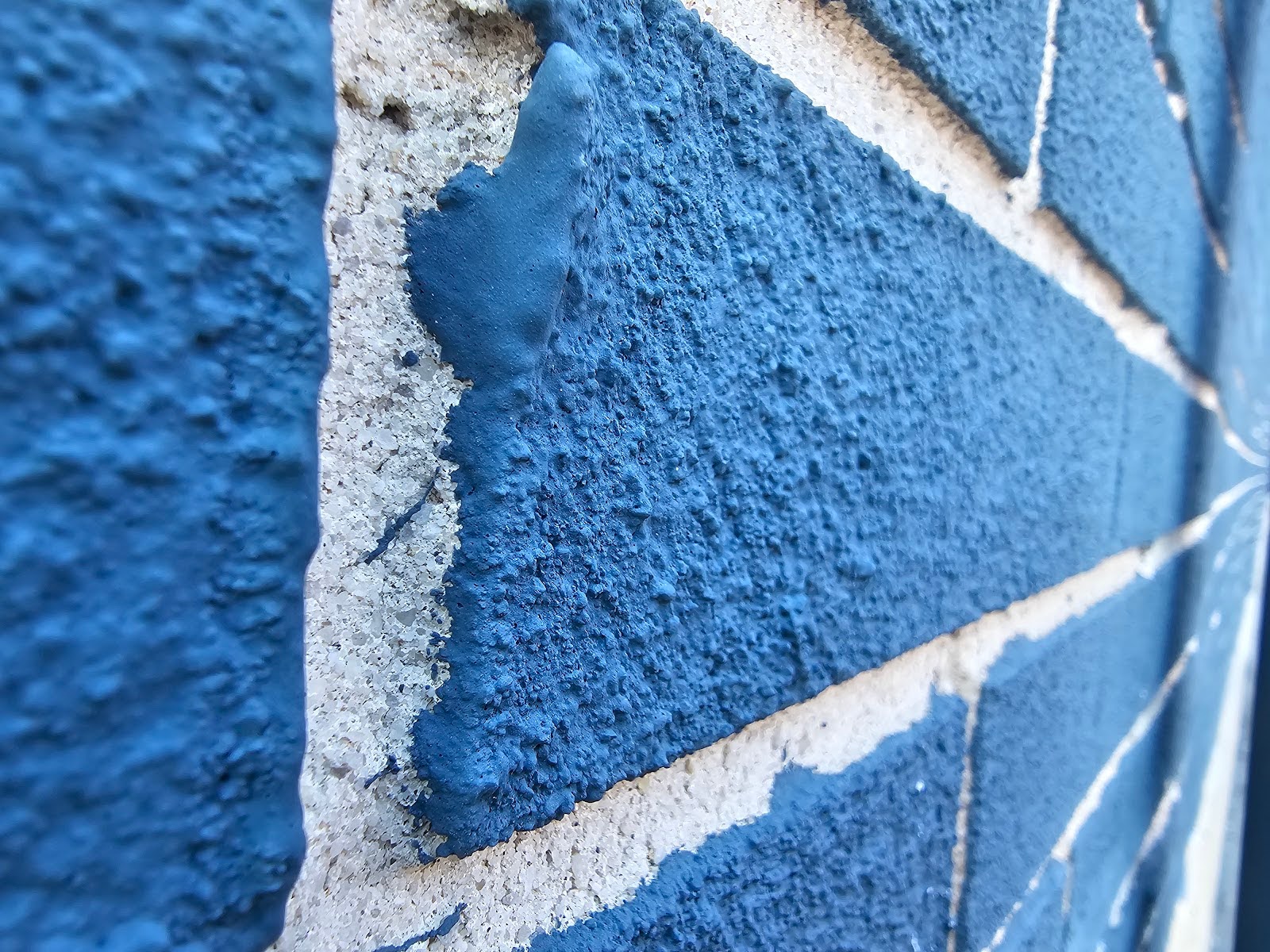
The picture below shows an area that gives us the most amount of insight on the texture. If you look at the vertical perpend joint between the brick shown and the picture below, closest to the foreground or left side of the picture, you can see a globule or thick drip of paint. Unlike a typical drip though, although there is excessive buildup of paint in this area, the paint did not run down with a typical drip trail.
Instead it stayed in that globule sort of shape. That area of the paint does not show the same texture. To us, that indicates that the paint was probably applied without a texture additive. Instead, the texture seen on the face of the bricks is likely a part of the original brick manufacturing.
This really close view also helps understand the process. When you look very closely, you can see individual grains of sand in the mortar joint. That indicates that the motor has not been painted. It would be very tedious to paint each of the motor joints, but nonetheless, the application shown is extremely tedious in itself.
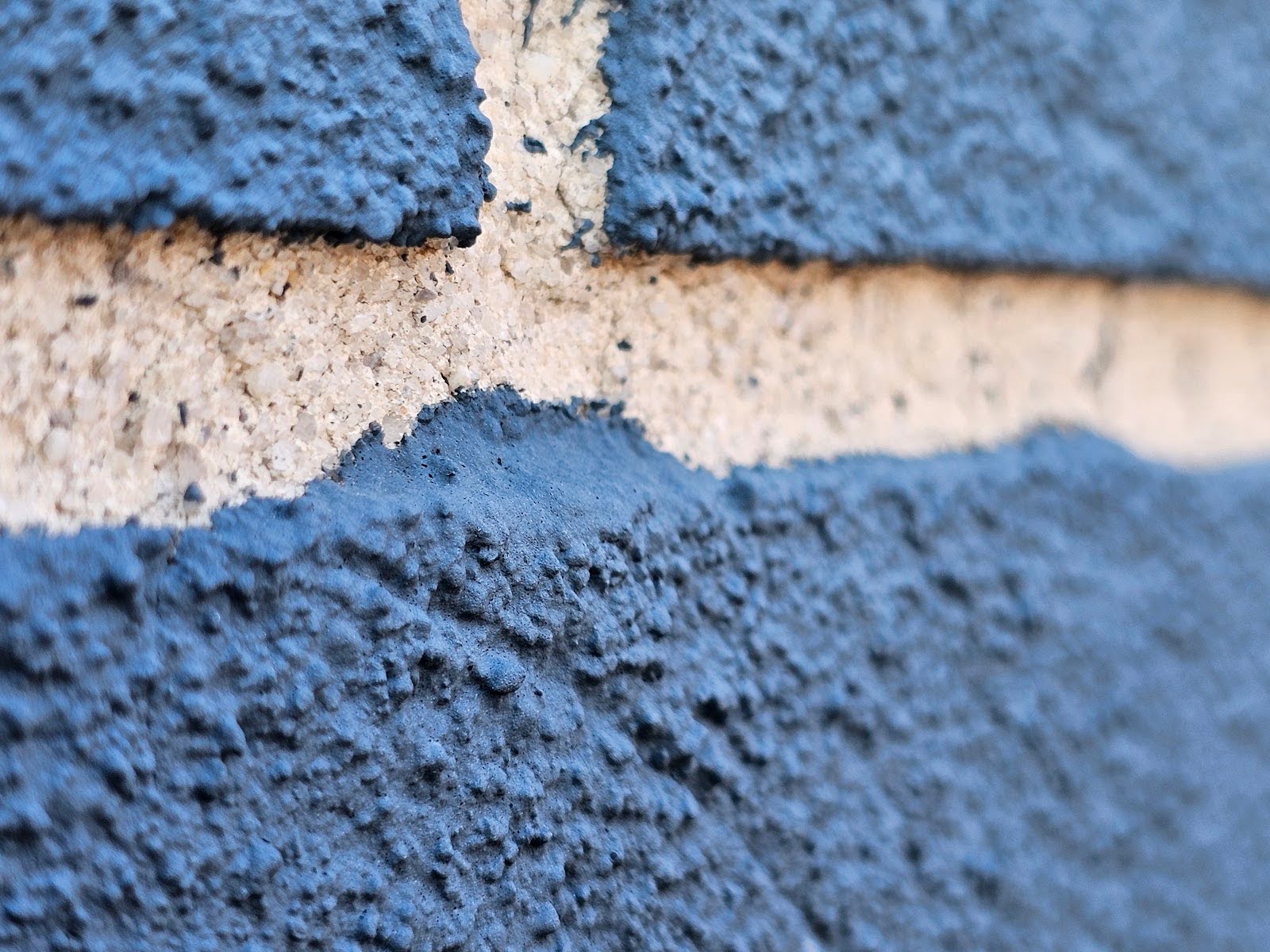
The next picture below shows an even closer view. You can see the dark and light aggregate in the sand used in the original mortar application. You can also see a buildup of paint at the bottom of the perpend joint.
At Dupont Tuckpointing and Masonry, we take pride in our work and strive to ensure that every project is executed with the utmost care and attention to detail. We are committed to preserving the rich heritage of Washington D.C.’s built environment for generations to come.
If you have any questions or needs regarding masonry restoration, historic brick repointing, or tuckpointing services, please do not hesitate to reach out to us. We would be delighted to assist you and provide you with the expertise and quality workmanship that your historic property deserves.
You can reach us by call us at (202) 796-7644 and you can reach us by email from the contact form on our website at https://duponttuckpointingmasonrydc.com/contact-us/.