Exploring the Art of Brick Ribbons and Facade Rustification for Architectural Detail
In some of our past articles here on our blog and website, we’ve talked about the history of brick masonry and how fine precision of masonry was a measure of wealth and craftsmanship of building construction and architecture, as recently as just 120 years ago. After that time, things changed drastically in the construction industry. New materials had taken over and even the binding mortars had changed.
Production construction became cheaper and faster than the historic methodologies of building and the labor force changed in an almost irreparable type of way to lose the level of craftsmanship found in the field of construction and architecture for hundreds of years prior. In the next several decades following that time period in that earlier transition, urban land became much less valuable as well, as the government incentivized segregation through urban sprawl.
In the last wave and last generations of the pinnacle of craftsmanship in masonry construction, the finest buildings of the east coast of the United States were built in the city centers. Some of these cities include our city here, Washington DC. Today we’re looking at a particular style of masonry construction that was intended to make a building stand out and emphasize the elegant details of the craftsmanship in the otherwise mundane brick bonds.
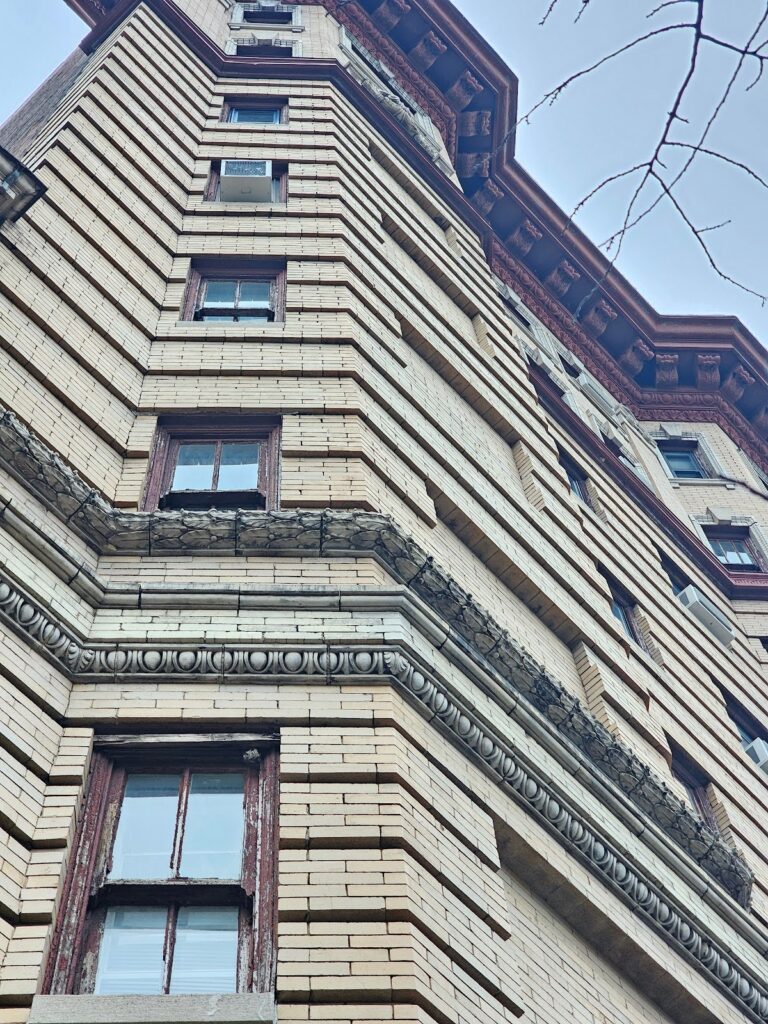
An example of a type of brick rustication follows below. Rustication is basically the tapering of a stone edge to give it an embossed type of look where the center of the stone has an additional three-dimensional appearance that adds a texture to the wall overall. It wasn’t done just with large stone masonry though, in the case of this building, shown below,, horizontal ribbons have been embellished by recessing every 6th course of brickwork.
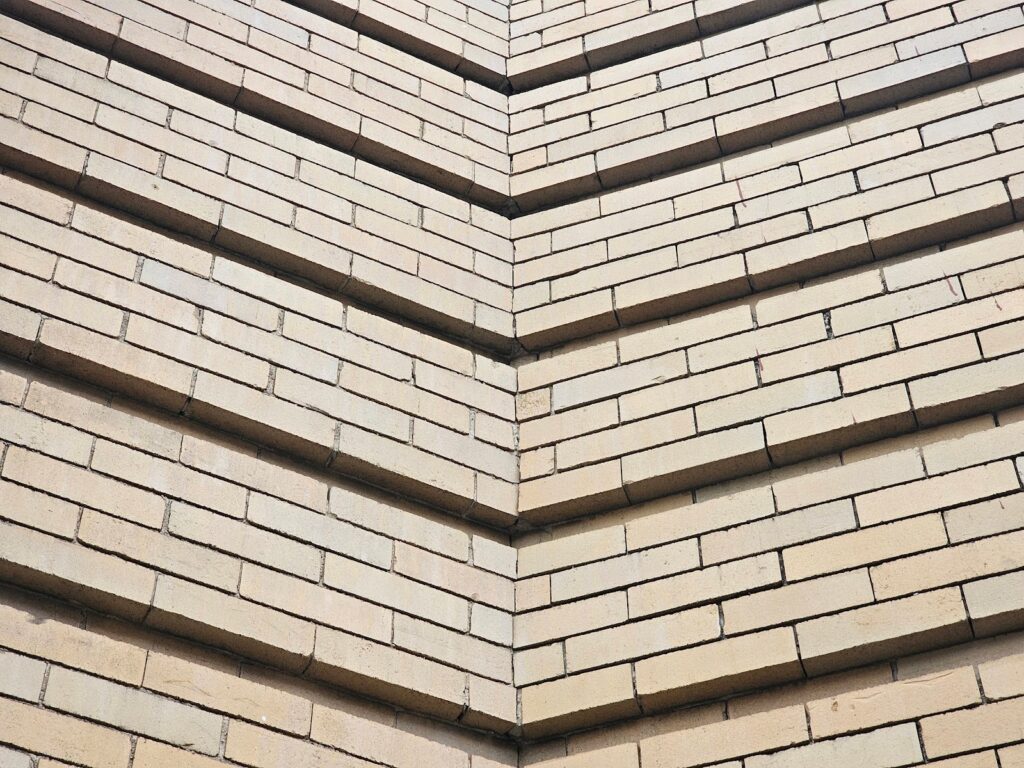
If you look at elements of the building in isolation, the detail of the recessed brick joints significantly increases the level of visual interest. In the picture below, where there would be just two walls meeting at a skewed angle, instead there is a much more interesting convergence of architectural lines.
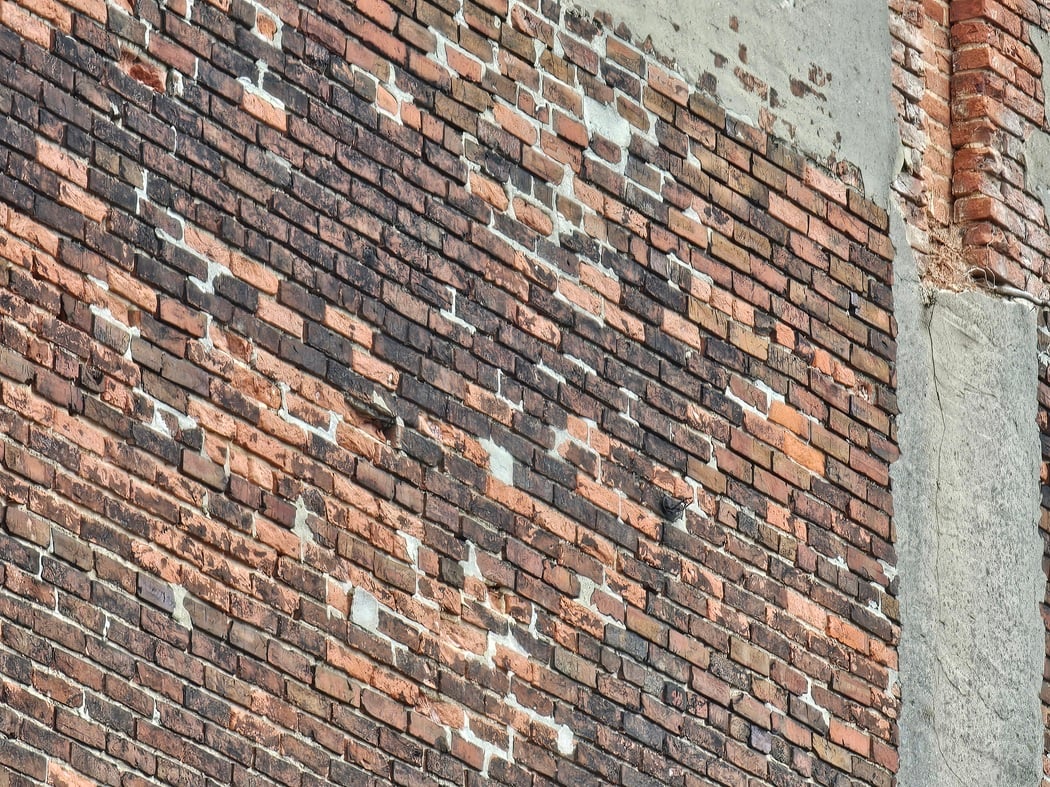
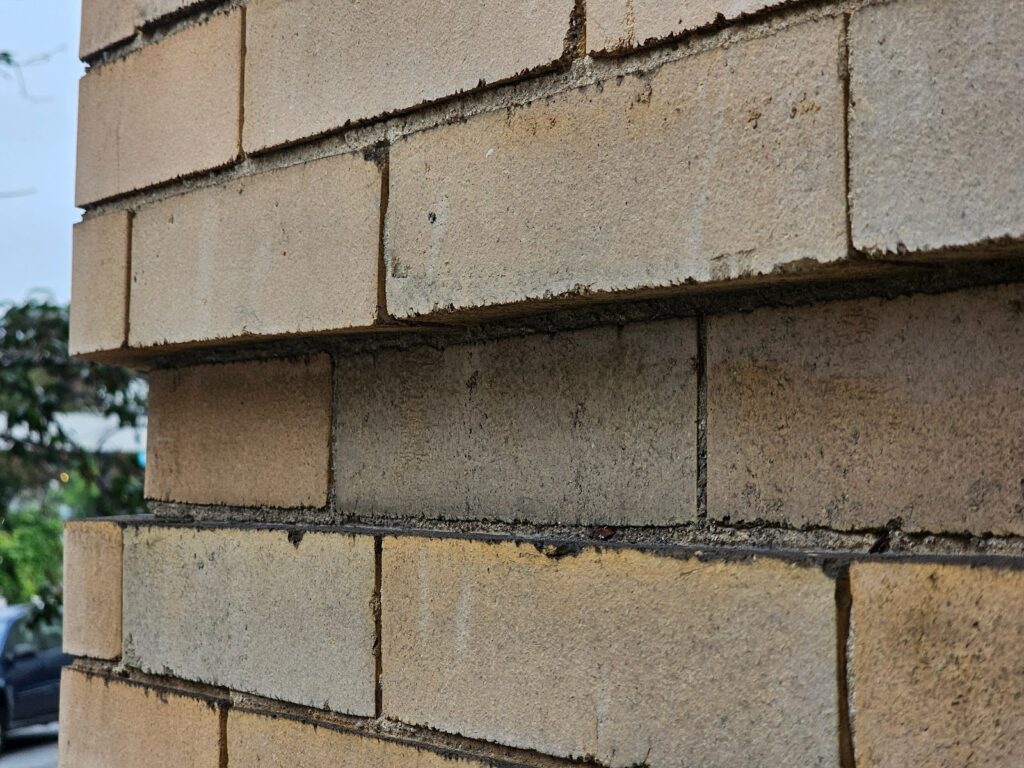
When looking closely at the individual mortar joints between these bricks, you can see some signs of deterioration that can only be addressed through repointing and or tuck pointing. Even though this building was built with a high degree of craftsmanship, it still needs regular upkeep and maintenance. Good building management practices will plan a schedule of renovation and refurbishment of the mortar joints and repointing.
By comparison, when looking at an adjacent area of a part of the building facade shown in the next picture below, you can see that there is a difference in these mortar joints. First, the building does have a visually striking architectural detail and flare, created by the ornamentation and embellishments, both applied with the egg and dart cornice and the corbels at the main cornice at the roof. You can see this clearly in the picture below, but the rustication of the recessed brick courses also makes a big difference in the overall visual impact of the building.
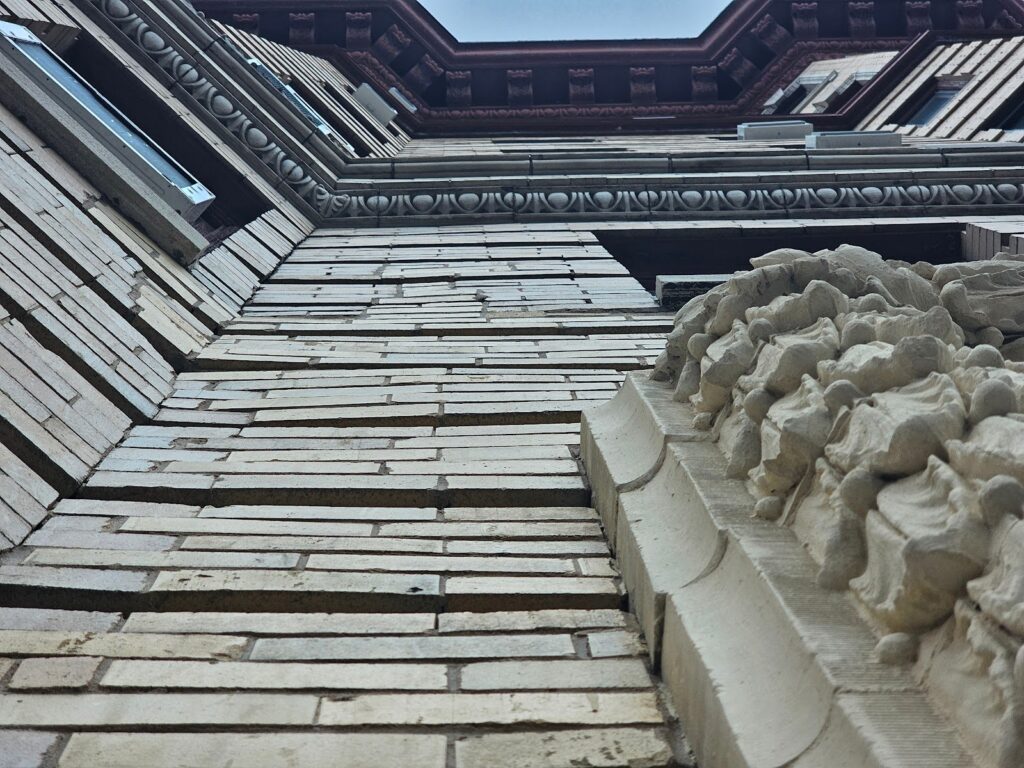
The pronounced and embossed type of look of the brick courses has a significant difference when you look at it from different angles. In the picture above, the lines together show a pronounced fade, almost like the 3-point perspective is more distinct. By comparison, when you look at the facade as shown in the next picture below, the effect that the lines make on the visual tapestry of the wall changes.
Here, by comparison, it looks much heavier because the visual weight of those lines is separated by a greater degree of proud faced brick between the recesses. It’s actually the same building and there’s no difference, we’re looking at the same facade but just from two different angles, but the lines created in this style of architecture look different from different angles.
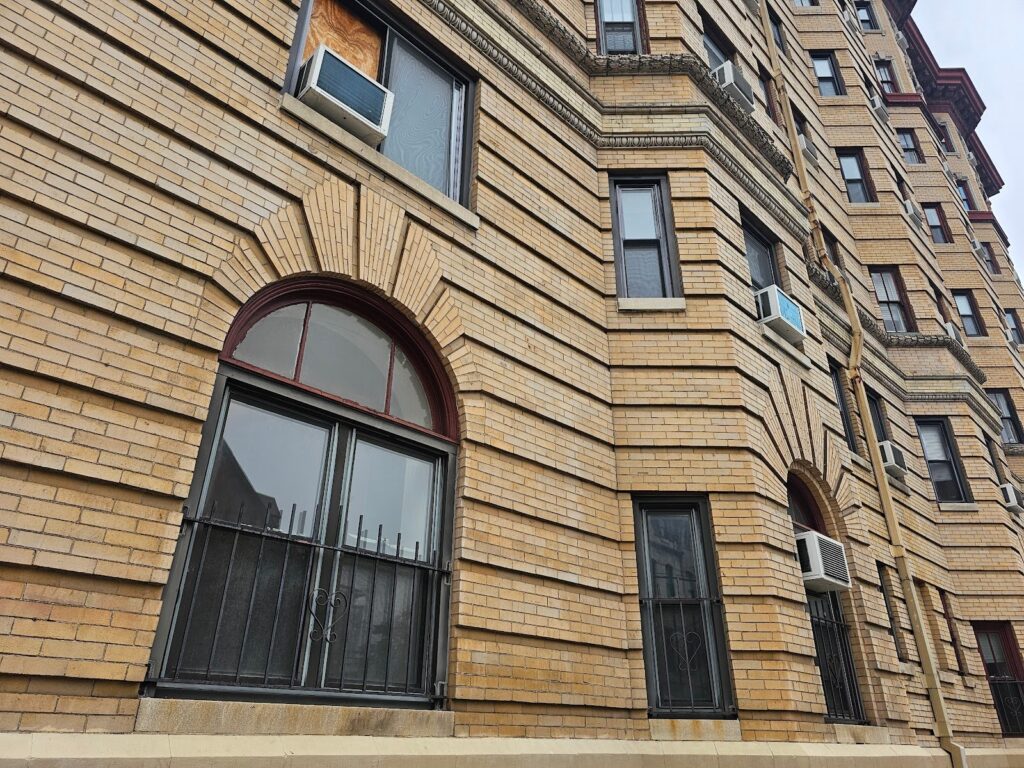
When you consider a basic, running bond or even a common bond that continues across the facade of a building, that more basic aesthetic doesn’t have a level of visual interest and especially doesn’t have a changing visual impact from different angles. This matters from an architectural perspective because it changes the visual impact to everyone who walks by. Especially as their position in relation to the building changes, the difference becomes more pronounced and apparent.
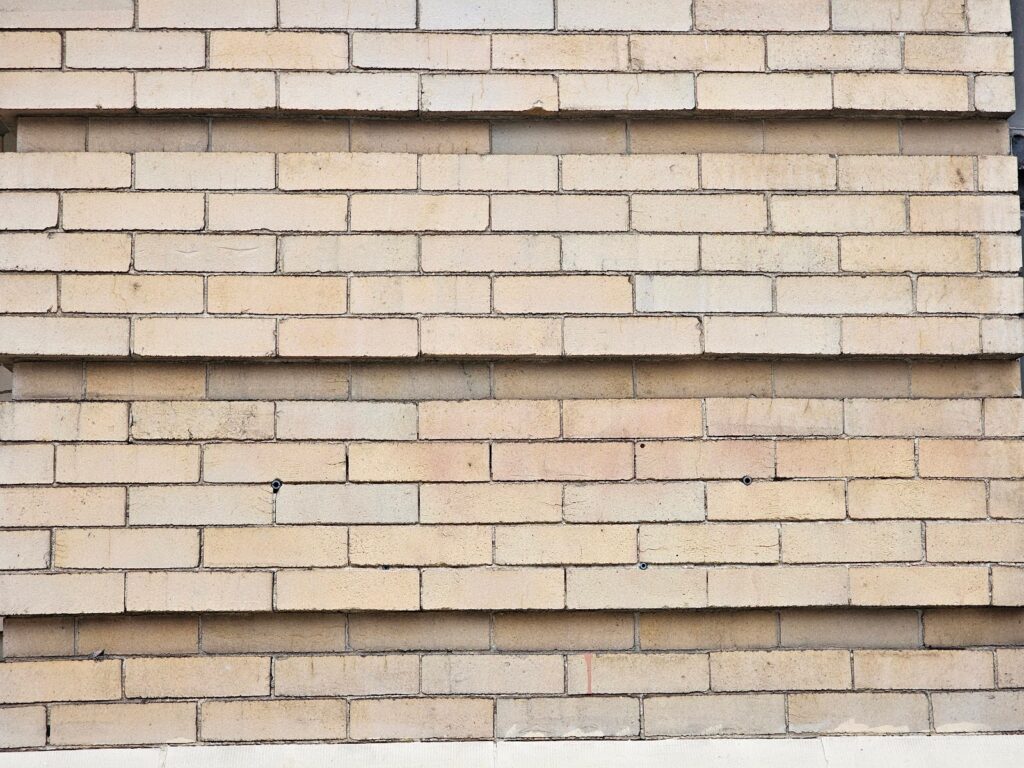
Now, looking at the next picture below, it has such a different perceived feel, but it’s the exact same building in the exact same wall, but here we’re looking at it at a direct angle, 90° from the plane of the surface.
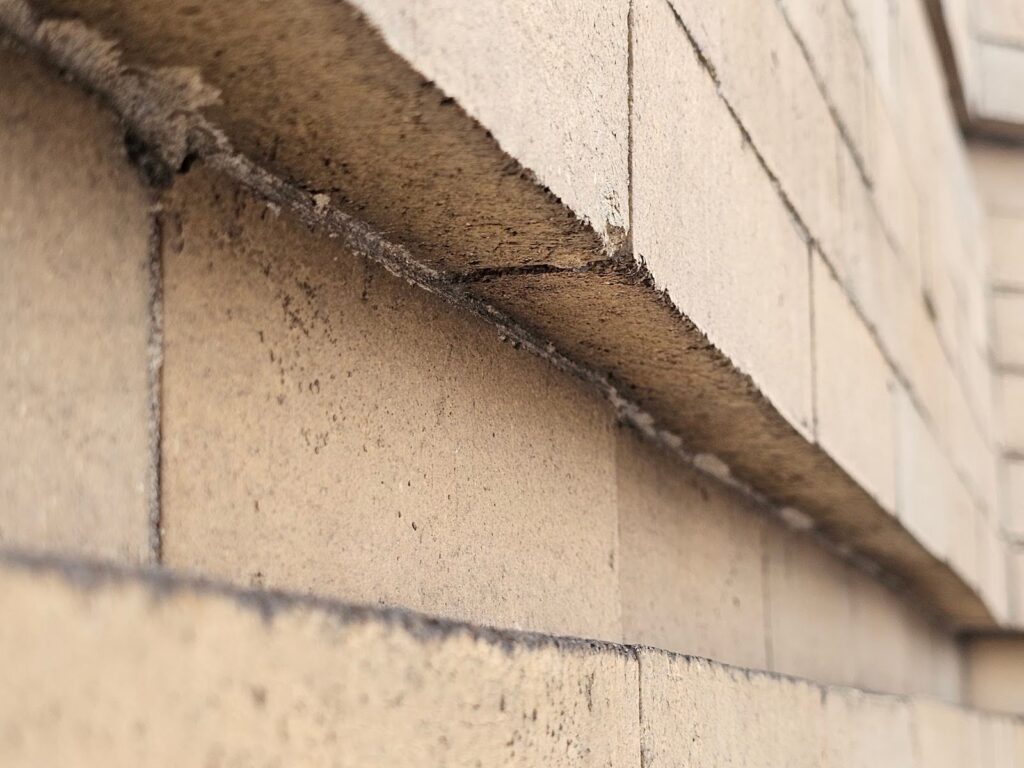
The next picture below shows up close view of one of the actual projection, here the projection is roughly one to one and a quarter of inch overall.
As you walk around and look at the historic buildings of Washington dc, you’ll see several examples of this style of historic masonry construction. Once in a while, we’ll also see examples where similar elements are used in contemporary construction as well, but it’s very rare and in most cases, replications are made with alternative methodologies that rely on non-structural brick facings.

If you are looking for a masonry restoration contractor that takes historic preservation seriously, and simply cares about doing things right, reach out to us. Our company can help.
You can reach us by telephone at (202) 796-7644 and you can reach us by email from the contact form on our website at https://duponttuckpointingmasonrydc.com/contact-us/.