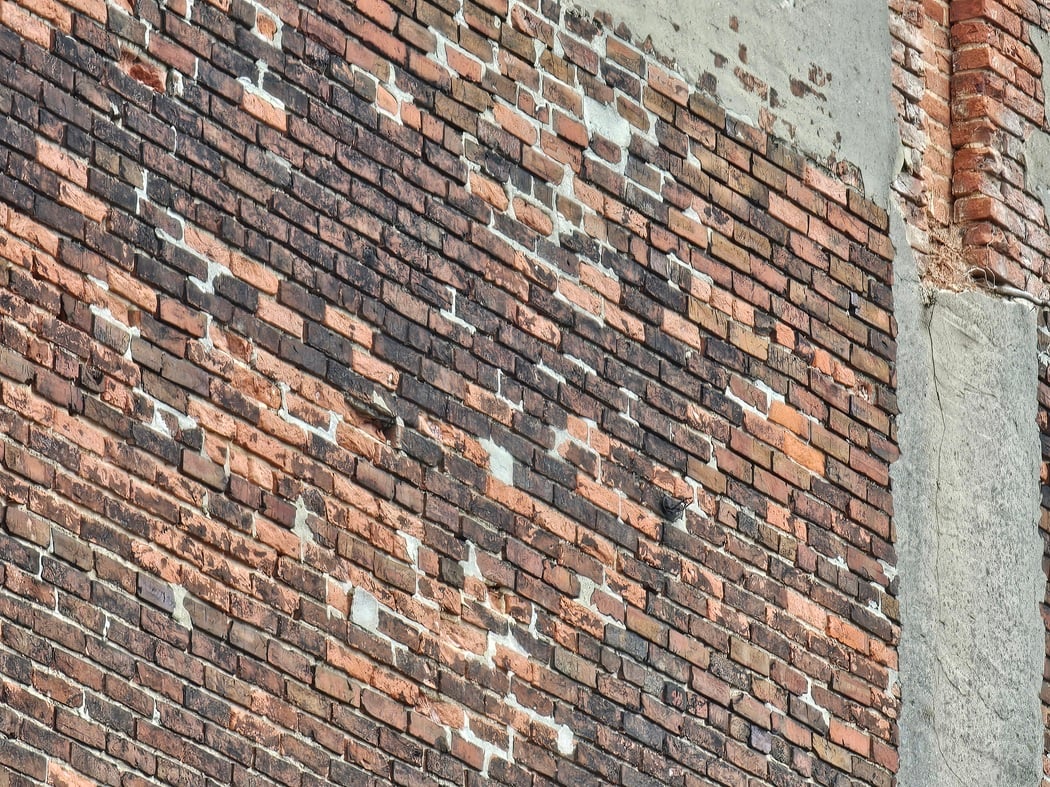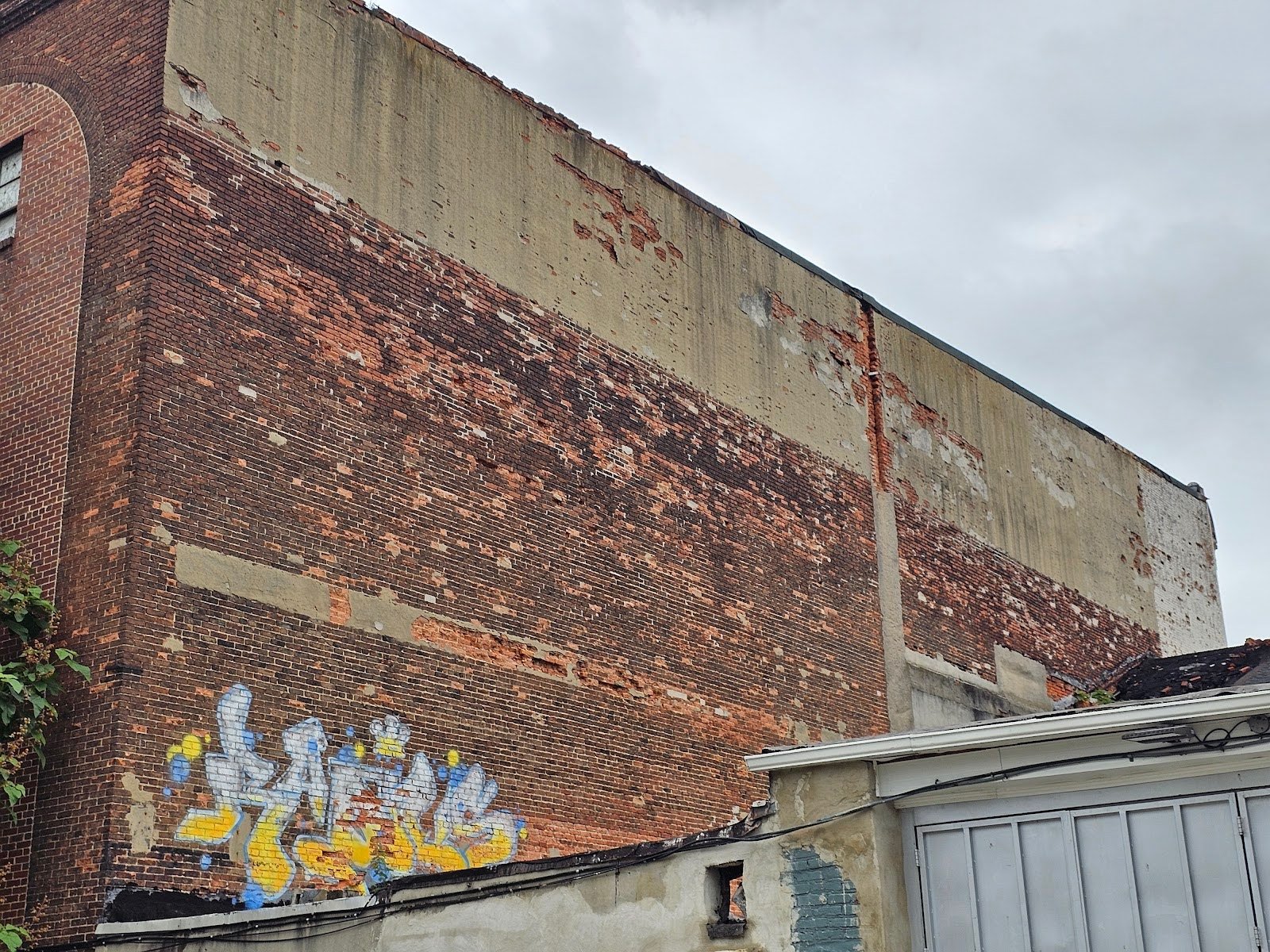
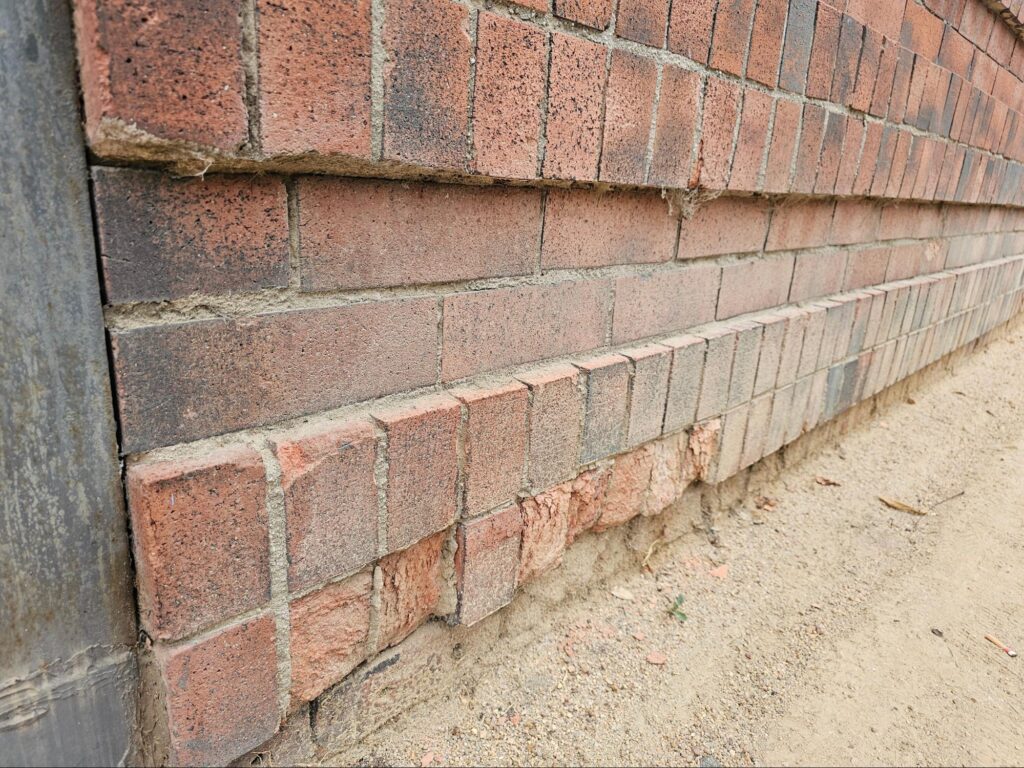
This past week, we took a close look at a particular wall with several small bricks. Some of them were so bad that there is no option for repair other than full replacement of almost everyone of the damaged bricks. Today, we’re looking at a different wall with similar conditions of excessive spalling and talking about some of the reasons behind the spalling and details that we use to identify bricks spalling causes and contributing factors.

Factors influencing spalling
The properties of the bricks themselves, their surrounding environmental conditions, and the quality of original construction all impact susceptibility to future spalling and deterioration. Key influencing factors include:
Brick Properties – The material composition, firing process and inherent physical qualities of the bricks determine durability. Lower fired bricks with higher porosity and permeability are more vulnerable to moisture damage and spalling. Higher firing temperatures produce properly vitrified, dense bricks that resist water penetration. Impurities and laminations in the clay body can lead to flaking or spalling with weathering. Strong, well-formed, properly cured bricks endure exposure better.
Environmental Conditions – The climate, pollution, and exposure to weathering and salts affect brick durability. Wet, freezing climates promote freeze-thaw damage. Industrial areas increase chemical and pollution degradation. Coastal sites expose masonry to saltwater and crystalline salts. Erosion is intensified in windy conditions with blowing sand or rain. Desert settings pose temperature extremes and minimal moisture. Environmental conditions profoundly influence spalling risks.
Water Exposure – Frequent rain wetting or rising damp provides the moisture for many deterioration mechanisms. Proper drainage, flashing and water management reduce saturation risks. Low-hanging eaves, tree cover and site topography affecting water flow also determine exposure.
Freezing Temperatures – Cold climates lead to repeating freeze-thaw damage, especially if masonry stays wet. The number of annual freeze-thaw cycles correlates to spalling risk. Extended freezing spells allow deeper water penetration before thawing.
Pollution – Industrial emissions and environmental pollutants chemically attack masonry surfaces. Acid rain is particularly damaging. Higher pollution levels accelerate chemical weathering. Historic pollution also caused degradation which may only now be exhibiting spalling.

Salts – Coastal areas or cold zones prone to deicing salts increase risks of salt weathering and subflorescence-induced spalling. Salt content relates to spalling damage.
Craftsmanship – Proper bricklaying, mortar selection, jointing and construction quality determine resistance to water infiltration and deterioration stresses. Poor workmanship accelerates failure. Knowledgeable builders select compatible materials and details to minimize damage.

Ongoing Maintenance – Regular inspections, timely repairs and appropriate maintenance reduce the likelihood of major spalling. Catching issues early prevents exacerbation. Sound maintenance preserves masonry integrity.
By understanding the various properties, conditions and practices influencing spalling, the factors affecting individual structures can be evaluated. This allows diagnosis of causal factors and prediction of future risks for preventative purposes. Some factors may be mitigated through maintenance and repair, while intrinsic properties are inherent. The combination of influential factors determines overall spalling risks.
Signs and appearance of Spalling
Spalling damage exhibits a variety of characteristic signs and appearances that can help identify affected areas. Common symptoms include:
Cracking – Networks of cracks spreading across brick surfaces often precede spalling. Cracks penetrate below the surface, creating fractures within the brick body. Continued stresses propagate cracks until fragments detach. Crack patterns reflect deterioration mechanisms:
- Freeze-thaw cracks run horizontally from water entry points.
- Diagonal and vertical cracks indicate structural stresses.
- Alligatoring crack patterns signal multi-directional stresses.
Pitting – Small cavities and holes in the brick surface result from loss of material. These pits enlarge and multiply as deterioration advances. Repointing damage often causes surface pitting but underlying moisture issues exacerbate growth.
Flaking – Surface pieces detach parallel to the wall plane, like layers peeling. De-lamination within flawed bricks or subsurface moisture penetration causes flaking spalls. Historic limewashes flaking off can mimic this effect.
Scaling – Surface material detaches in thin, planar fragments parallel to the masonry face. Scaling results from freeze-thaw cycling and manifests as continuous layers or patches peeling off.
Fragmentation – Larger chunks of material break away as deterioration penetrates deeper into the brick units. Fragmentation leaves voids and missing sections rather than just surface losses. Deterioration is extensive when entire units or corners are missing.
Erosion – A granular disintegration of the brick surface due to wind abrasion, pollution degradation or leaching of components. Eroded surfaces turn rough and sand-like, with grains loosely detaching.
Deformation – Bulging, displacement or sagging masonry surfaces signal deterioration. This distortion results from stresses exceeding brick strength. Indicative of extensive subsurface damage.

Missing Fragments – Partial or complete loss of material from brick faces produces gaps and missing sections. Typically the culmination of cracking, scaling and fragmenting processes.
Hollow Sound – Tapping spalled masonry produces a dull, hollow sound compared to intact areas. This helps locate loosely adhered or detached sections.
Previously Repaired Areas – Prior repairs may exhibit renewed or adjacent spalling as deterioration continues. Evidence of earlier interventions suggests an ongoing problem.
The pattern, origin and progression of distress provides insight into the damage extent. For example, isolated pits may precede cracks spreading across multiple bricks. Chronic spalling typically exhibits a mix of symptoms reflecting the cumulative damage process. Noting the range of conditions aids diagnosis and repair prioritization.
In this coming week, we will discuss the effect and long term risks of spalling and unabated masonry deterioration.
Understanding the chemical and material science behind these brick failures and defects is key to implementing effective preservation strategies and mitigating the long-term impact of moisture-related damage on historic buildings. As stewards of our built heritage, we remain committed to employing innovative solutions that address these challenges while preserving the building facades and historic masonry buildings assemblies here in historic Washington, DC.
You can reach us by telephone at (202) 796-7644 and you can reach us by email from the contact form on our website at https://duponttuckpointingmasonrydc.com/contact-us/.